Are Serengeti Migration Dates Exact?
August 26, 2026
Going on a Tanzania Safari in Serengeti National Park
August 28, 2026A Complete Map Guide to the Great Migration Route
A Complete Map Guide to the Great Migration Route introduces one of the world’s most extraordinary natural wildlife journeys. Every year, enormous herds travel across the famous Serengeti-Maasai Mara ecosystem.
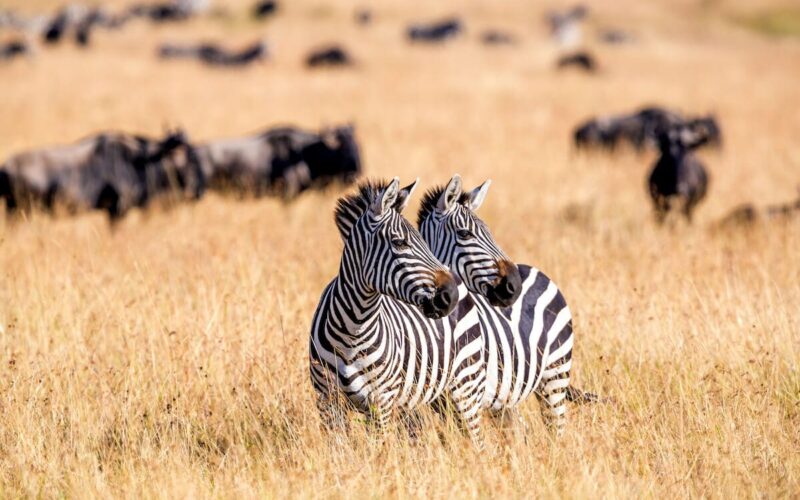
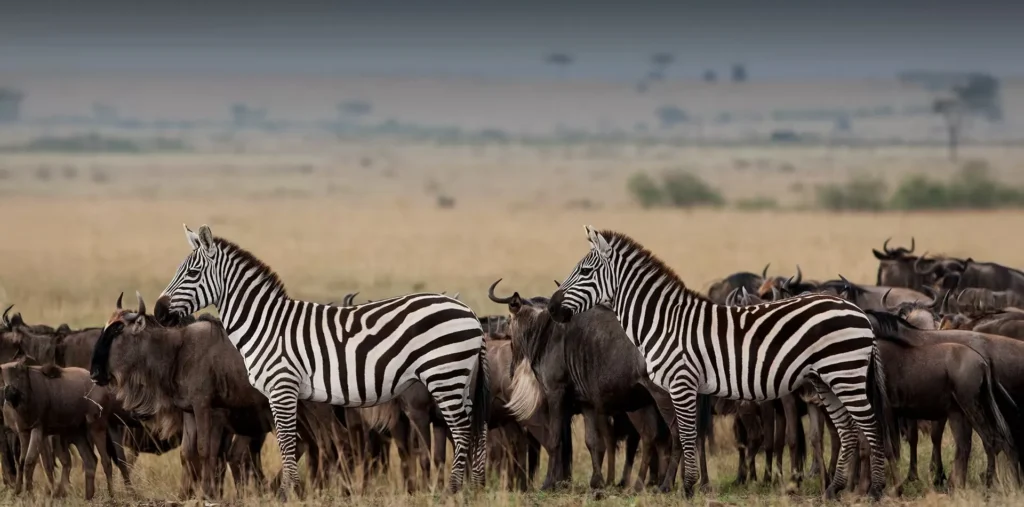
The Great Wildlife Migration follows seasonal rainfall and the search for fresh grazing. Wildebeest lead this remarkable journey alongside zebras, gazelles, and other grazing animals.
Understanding the migration route helps travelers plan better Great Migration Safaris. Each region offers unique wildlife encounters during different months of the year.
A Serengeti National Park Safari can provide calving experiences, predator encounters, river crossings, and spectacular game drives. However, the best location depends heavily on your travel dates.
The migration generally follows a vast circular movement across Tanzania and Kenya. Its route covers approximately 800 kilometers through diverse landscapes and ecosystems.
Therefore, A Complete Map Guide to the Great Migration Route gives travelers valuable knowledge before planning their African adventure.
Deks Africa Safaris and Tours Ltd provides carefully planned Tanzania Safaris for travelers seeking authentic wildlife experiences. Our safari expertise focuses on suitable destinations, seasonal planning, comfortable accommodation, and responsible African tourism.
This guide explores the Great Wildlife Migration Cycle month by month. It also explains important migration regions, cultural experiences, safari planning opportunities, and ways to combine Tanzania with Rwanda Gorilla Trekking.
Understanding A Complete Map Guide to the Great Migration Route
Following Nature’s Seasonal Path
A Complete Map Guide to the Great Migration Route begins with understanding one important principle. The migration follows nature rather than a fixed calendar.
Seasonal rainfall determines where fresh grass grows across the ecosystem. Consequently, the enormous herds move toward areas with better grazing conditions.
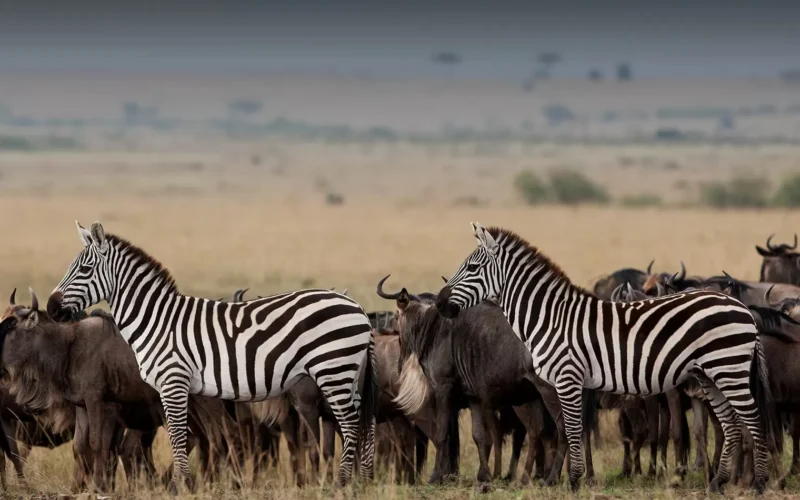
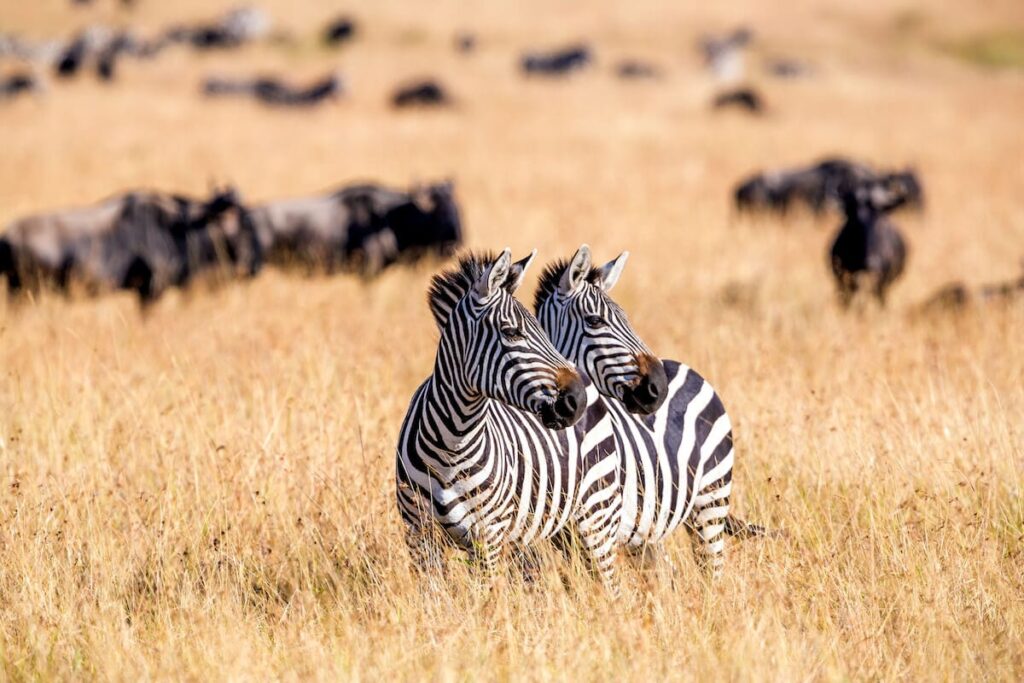
The Great Wildlife Migration includes more than wildebeest alone. Hundreds of thousands of zebras and gazelles travel alongside the main herds.
Different animal species benefit from traveling through the same ecosystem. Zebras often eat tougher grasses while wildebeest prefer shorter vegetation.
This natural relationship supports the continuous movement of large grazing populations. Predators also follow the migration because abundant prey creates excellent hunting opportunities.
Therefore, travelers should remain flexible when planning a Serengeti Great Migration Safari. Weather patterns can influence animal movements and change expected locations.
A Complete Map Guide to the Great Migration Route helps visitors understand these seasonal changes. Professional safari planning can then match travel dates with likely migration regions.
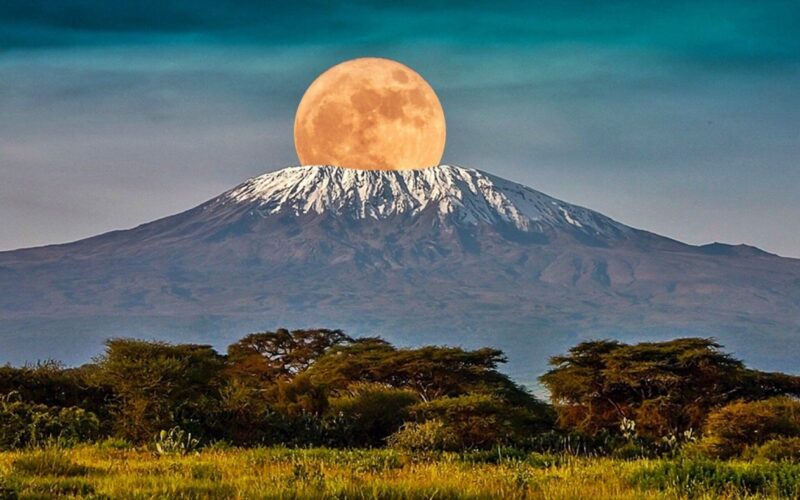
The Serengeti National Park remains the heart of this spectacular wildlife ecosystem. However, the journey eventually connects Tanzania’s Serengeti with Kenya’s Maasai Mara.
January to March: Southern Serengeti and Ndutu
The Beginning of New Life
A Complete Map Guide to the Great Migration Route takes travelers first toward Southern Serengeti and Ndutu. January through March creates one of the most exciting periods for wildlife enthusiasts.
Huge herds gather across the nutrient-rich short-grass plains. These open landscapes provide excellent grazing for pregnant wildebeest.
The calving season usually reaches its greatest intensity during this period. Hundreds of thousands of young wildebeest join the migration population.
Newborn calves can stand and move surprisingly quickly. Their early mobility helps them survive within a landscape full of predators.
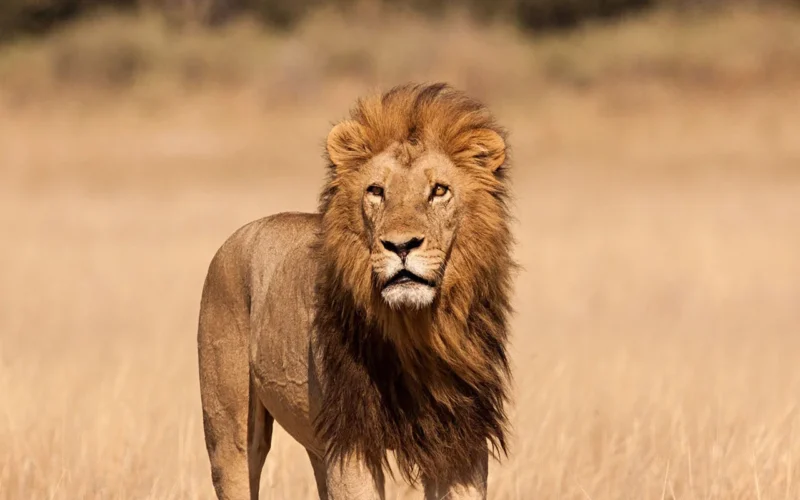
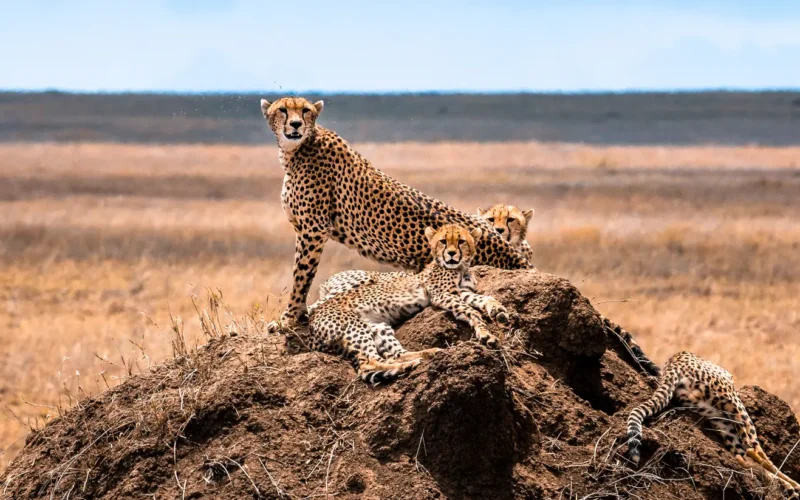
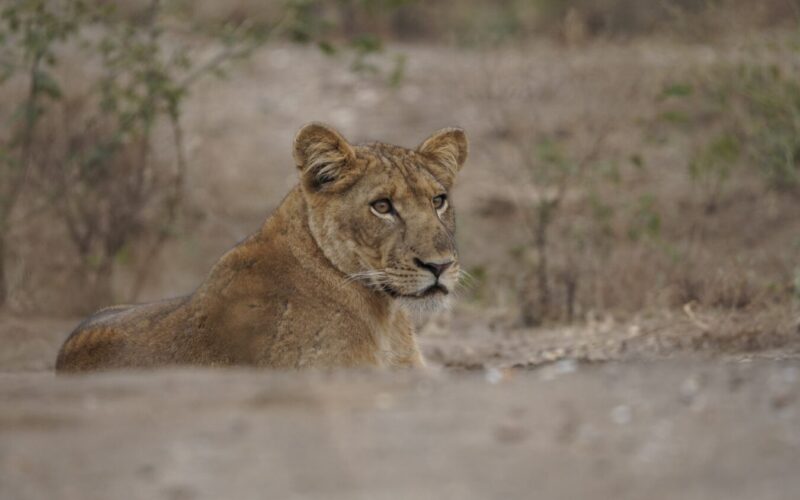
Consequently, this season creates exceptional opportunities for Tanzania wildlife safaris. Lions, cheetahs, hyenas, and other predators actively search for vulnerable animals.
Photographers enjoy the dramatic combination of newborn wildlife and predator activity. The wide-open plains also provide excellent visibility during game drives.
A Serengeti National Park Safari during the calving period offers powerful wildlife encounters. Visitors can experience the natural cycle of birth, survival, and adaptation.
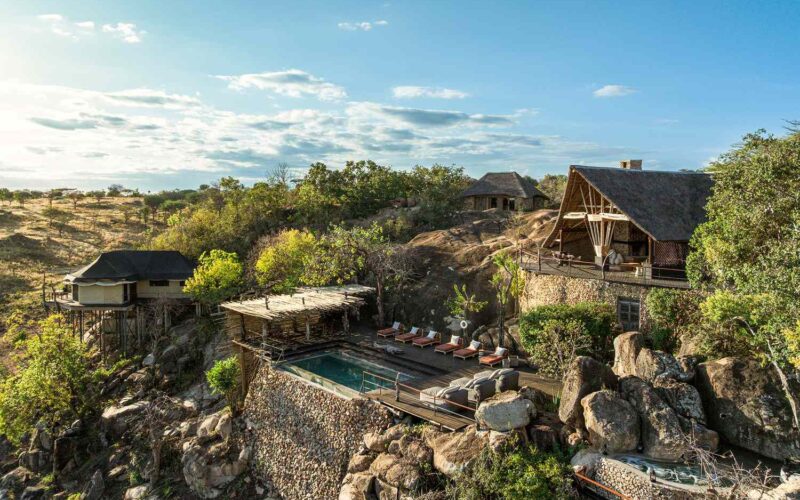
Deks Africa Safaris and Tours Ltd recommends accommodation near Ndutu for travelers visiting during this period. Strategic camp locations can reduce driving distances and increase time with wildlife.
April to May: Central Serengeti and the Western Journey
Following the Long Rains
During April and May, the Great Wildlife Migration begins changing direction. Seasonal rains influence fresh grazing opportunities across the Serengeti ecosystem.
Large herds gradually leave the southern plains and begin moving northward. Many animals travel through the Central Serengeti toward western areas.
The landscape often becomes greener during this period. Rain clouds can create dramatic scenery and beautiful photography conditions.
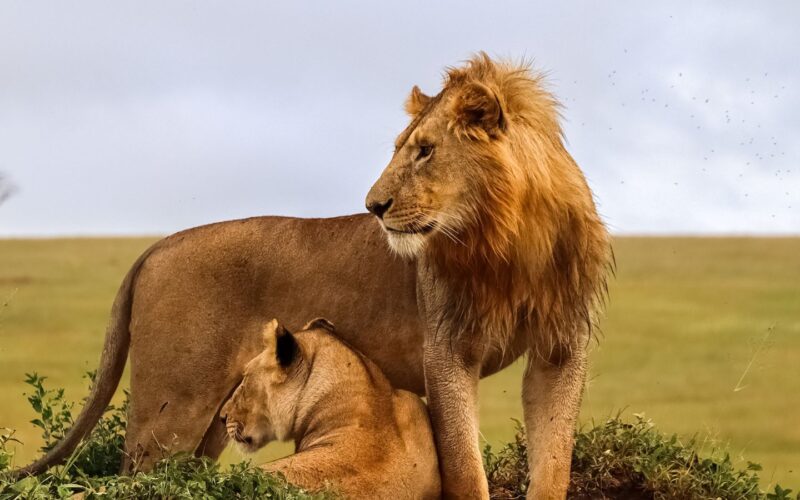
Central Serengeti remains one of the best regions for year-round wildlife viewing. Resident lions, leopards, elephants, giraffes, and buffaloes enrich every safari experience.
Therefore, a Serengeti Safari during April and May offers much more than migration viewing. Travelers can enjoy diverse wildlife throughout the region.
The movement of enormous herds creates impressive scenes across the plains. Long lines of animals may stretch toward distant horizons.
A Complete Map Guide to the Great Migration Route shows why seasonal location matters. Travelers should select safari camps according to the likely position of migrating herds.
Mobile camps can also provide excellent access to changing migration areas. These camps move seasonally to remain closer to important wildlife locations.
June to July: The Western Corridor and Grumeti River
Facing the First Major River Challenge
June and July bring the migration toward Tanzania’s Western Corridor. This stage creates another dramatic chapter in the Great Wildlife Migration Cycle.
Large concentrations of wildebeest gather across the western Serengeti. The herds prepare to continue their journey toward northern grazing areas.
The Grumeti River creates an important natural obstacle along this route. Some animals must cross difficult waters while predators wait nearby.
Nile crocodiles inhabit sections of the river system. Their presence adds another level of danger to this natural wildlife journey.
However, river crossings remain unpredictable and depend on animal movements. Visitors should never expect a crossing at an exact time.
A Serengeti Great Migration Safari during this season can offer exciting wildlife encounters. Patient travelers often experience impressive herd movements and predator activity.
The Western Corridor also provides beautiful landscapes and excellent game viewing. Elephants, giraffes, antelopes, and predators live throughout the ecosystem.
A Complete Map Guide to the Great Migration Route helps travelers appreciate the importance of this region. The journey through the Western Corridor connects southern grazing areas with northern migration destinations.
August to October: Northern Serengeti and Maasai Mara
The Famous Mara River Crossing Season
A Complete Map Guide to the Great Migration Route reaches one of its most famous stages in Northern Serengeti. August through October often attracts travelers seeking dramatic river crossings.
Many herds move toward the Mara River during this period. The river separates important migration landscapes between Tanzania and Kenya.
Animals gather along the riverbanks before attempting dangerous crossings. Their behavior can change quickly as thousands of wildebeest wait together.
Suddenly, movement can begin and create an extraordinary wildlife spectacle. Large groups enter the water while others follow from the surrounding banks.
Strong currents and crocodiles create serious dangers for migrating animals. Nevertheless, the herds continue their ancient journey toward fresh grazing areas.
Northern Serengeti locations, including Kogatende, offer excellent access to important migration areas. However, the exact position of animals changes constantly.
Therefore, longer stays provide greater flexibility for wildlife viewing. A four-night or longer stay can improve opportunities significantly.
The Maasai Mara in Kenya also becomes an important migration destination. Many travelers combine Tanzania Safaris with Kenya wildlife experiences during this period.
A Complete Map Guide to the Great Migration Route helps travelers understand this international wildlife connection.
November to December: The Great Return South
Completing the Annual Journey
November and December bring another important transition within the Great Wildlife Migration Cycle. Short rains begin changing grazing conditions across Tanzania.
Fresh grass encourages many animals to begin moving southward. The herds gradually travel through eastern and central parts of the Serengeti.
This period can offer excellent safari opportunities with fewer visitors. Travelers may enjoy peaceful landscapes and impressive wildlife encounters.
The migration continues moving toward Southern Serengeti and Ndutu. Eventually, the herds return to the short-grass plains.
Their arrival prepares the ecosystem for another calving season. The remarkable journey then begins another chapter.
A Complete Map Guide to the Great Migration Route demonstrates the continuous nature of this wildlife movement. The migration does not truly begin or end on one specific day.
Instead, animals follow rainfall and grazing opportunities throughout the ecosystem. Nature controls the route and determines the speed of movement.
Deks Africa Safaris and Tours Ltd helps travelers select suitable destinations according to their preferred travel month. Expert planning provides stronger opportunities for successful wildlife experiences.
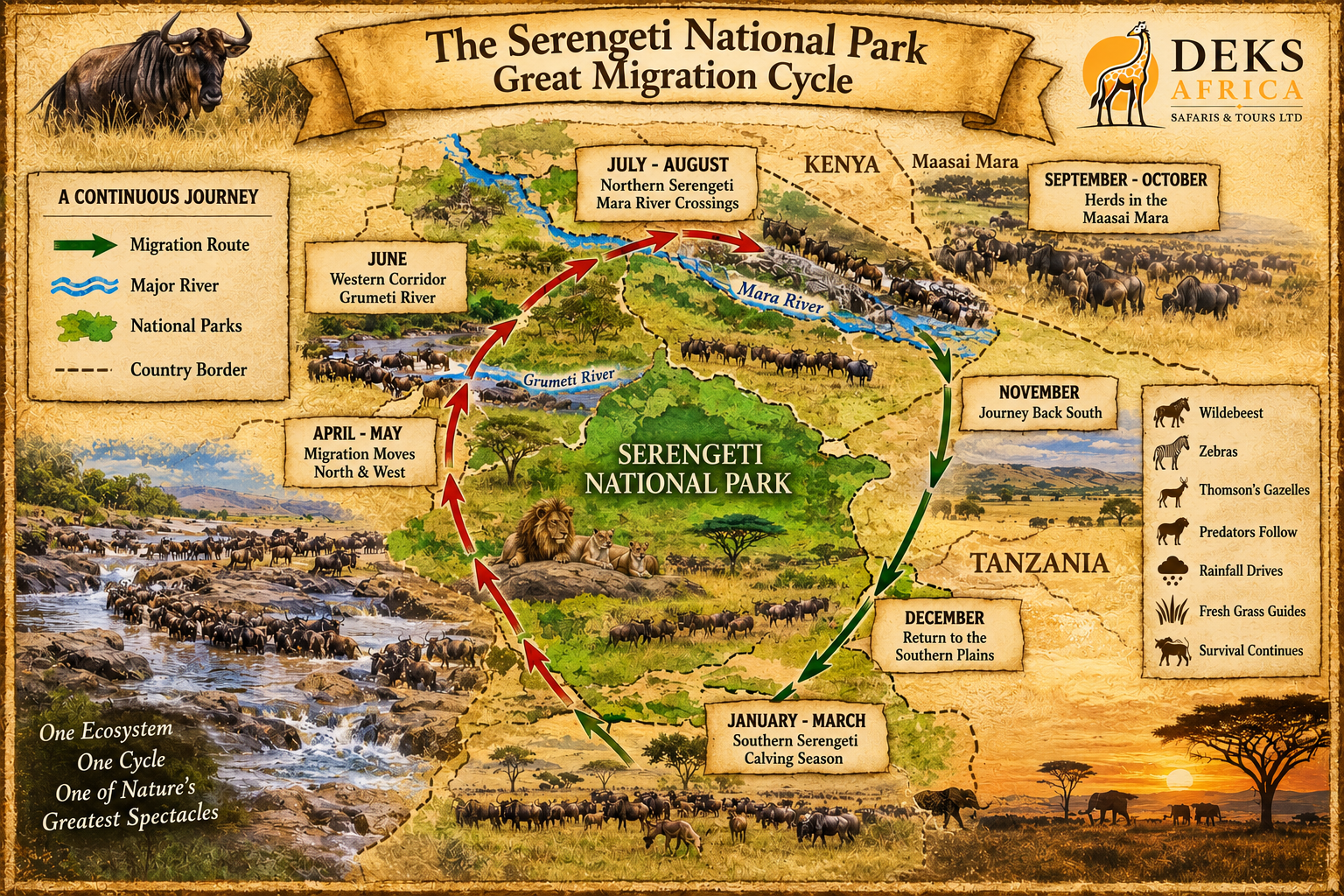
Serengeti Great Migration Cycle
Choosing the Best Serengeti Safari Region
Match Your Travel Dates Carefully
Choosing the right safari region represents one of the most important planning decisions. A Serengeti National Park Safari should match your available travel dates.
Southern Serengeti and Ndutu work well during the calving season. These regions offer remarkable concentrations of wildebeest and excellent predator activity.
Central Serengeti provides strong year-round wildlife viewing opportunities. Its location also makes it useful during several migration stages.
The Western Corridor becomes important during the northwestern movement. Travelers visiting during early migration stages can explore this dramatic region.
Northern Serengeti offers opportunities for river crossing experiences. This region remains popular during the northern migration period.
However, wildlife does not follow guaranteed schedules. Rainfall can change the timing and direction of the Great Wildlife Migration.
Therefore, travelers should work with knowledgeable safari specialists. Flexible itineraries often produce better wildlife experiences.
A Complete Map Guide to the Great Migration Route gives travelers a strong foundation for planning. Deks Africa Safaris and Tours Ltd can then help create an itinerary around individual travel goals.
Cultural Experiences Around Serengeti Safari Lodges
Discover Tanzania Beyond Wildlife
A Tanzania Safari becomes more meaningful when travelers experience local culture. Communities surrounding safari regions offer valuable opportunities to understand Tanzania’s living heritage.
Maasai cultural experiences remain among the most popular additions. Visitors can learn about traditional clothing, music, dance, crafts, and community lifestyles.
Many lodges and safari camps can arrange respectful community visits. These experiences should always support local people and protect cultural dignity.
Travelers may enjoy traditional dance performances and storytelling sessions. Local guides can explain aspects of community life and traditional knowledge.
Craft experiences provide opportunities to meet local artisans. Visitors can discover handmade beadwork, jewelry, clothing, and other traditional products.
Local markets also offer interesting cultural experiences. Travelers can explore Tanzanian foods, fabrics, crafts, and everyday community life.
Some safari itineraries include visits to villages around the Ngorongoro and Serengeti regions. These experiences create meaningful connections beyond wildlife viewing.
A Complete Map Guide to the Great Migration Route encourages responsible cultural tourism. Respectful interactions can benefit both travelers and host communities.
Tanzania Safaris and Wildlife Experiences Beyond Migration
Discovering the Complete Northern Circuit
Tanzania wildlife safaris offer extraordinary experiences beyond the Great Wildlife Migration. The Northern Safari Circuit contains several famous African destinations.
Ngorongoro Crater provides remarkable wildlife viewing within a spectacular volcanic landscape. Lions, elephants, buffaloes, zebras, and other animals inhabit the conservation area.
Tarangire National Park attracts travelers with large elephant populations. Ancient baobab trees also create unforgettable African scenery.
Lake Manyara offers beautiful landscapes, birdlife, and diverse habitats. Each destination adds variety to a longer Tanzania Safari itinerary.
Combining several parks creates a more complete African wildlife experience. Travelers can experience savannahs, forests, volcanic landscapes, and seasonal wetlands.
A Serengeti National Park Safari remains the highlight for many visitors. Nevertheless, Tanzania’s other protected areas create equally valuable travel experiences.
Deks Africa Safaris and Tours Ltd designs itineraries that combine destinations logically. Good routing reduces unnecessary travel and improves the overall safari experience.
A Complete Map Guide to the Great Migration Route can therefore become part of a broader Tanzania adventure.
Combine the Serengeti With Rwanda Gorilla Trekking
From Open Plains to Mountain Forests
Travelers seeking greater diversity can combine Tanzania with Rwanda Gorilla Trekking. This combination creates one of Africa’s most remarkable wildlife adventures.
The Serengeti offers endless grasslands and enormous wildlife populations. Rwanda offers volcanic landscapes and dense mountain forests.
Gorilla Trekking provides a completely different wildlife experience. Travelers enter protected forests with trained guides and park rangers.
Rwanda Gorilla Safaris focus mainly on Volcanoes National Park. The park protects important habitats for endangered mountain gorillas.
A Gorilla Trekking Safari creates unforgettable encounters with these powerful and intelligent animals. Small trekking groups follow strict conservation guidelines.
Combining Great Migration Safaris with Gorilla Trekking Safaris creates an exceptional East African journey. Visitors can experience two of Africa’s most iconic wildlife adventures.
This itinerary also supports travelers seeking photography, adventure, and conservation experiences. Deks Africa Safaris and Tours Ltd can organize multi-country journeys across East Africa.
A Complete Map Guide to the Great Migration Route becomes even more valuable when combined with broader African travel planning.
How to Plan Your Great Migration Safari?
Practical Safari Planning Essentials
Successful Great Migration Safaris require careful planning before arrival. Travelers should first identify their preferred travel month.
The travel month helps determine the most suitable Serengeti region. Next, travelers should consider their available budget and preferred accommodation level.
Safari options range from comfortable mid-range lodges to luxury tented camps. Mobile camps can provide excellent access to seasonal wildlife movements.
Travel duration also influences the overall experience. Longer itineraries allow greater flexibility when animal movements change.
International travelers often begin Tanzania Safaris through Kilimanjaro International Airport. Arusha serves as an important starting point for Northern Circuit adventures.
Domestic flights can connect travelers with different Serengeti airstrips. Road safaris provide another excellent option for visitors with sufficient time.
A Complete Map Guide to the Great Migration Route recommends booking popular seasons early. Accommodation near key migration areas can become limited.
Professional planning helps travelers select suitable camps, transportation, and safari routes. Deks Africa Safaris and Tours Ltd provides personalized guidance for travelers exploring East Africa.
Safari Inclusions
- Professional safari guide
- Private safari vehicle
- Accommodation
- Meals according to itinerary
- Airport transfers
- Game drives
- Drinking water
- Park entry arrangements
- Government taxes where applicable
- Cultural experiences where included
- Domestic flights where specified
Safari Exclusions
- International flights
- Visa fees
- Travel insurance
- Alcoholic drinks
- Personal expenses
- Laundry services
- Optional activities
- Hot air balloon safaris
- Tips and gratuities
- Personal shopping
A Complete Map Guide to the Great Migration Route: Final Thoughts
A Complete Map Guide to the Great Migration Route provides essential knowledge for planning Africa’s greatest wildlife journey. Understanding the route helps travelers choose the right destination.
January through March offers exceptional calving experiences in Southern Serengeti. April and May bring the movement toward Central and Western Serengeti.
June and July introduce the dramatic Western Corridor and Grumeti River. August through October often bring the migration toward Northern Serengeti and Maasai Mara.
November and December guide the herds back toward southern Tanzania. This continuous movement creates the remarkable Great Wildlife Migration Cycle.
A Complete Map Guide to the Great Migration Route reminds travelers that nature controls every stage. Rainfall, grazing, and environmental conditions determine where animals travel.
Therefore, flexible planning creates the best Serengeti Great Migration Safari experiences. Expert local knowledge can help match your travel dates with suitable safari regions.
Deks Africa Safaris and Tours Ltd creates memorable journeys for travelers seeking authentic African adventures. Our approach combines destination expertise, responsible tourism, wildlife knowledge, and personalized service.
Whether you dream about a Serengeti Safari, Tanzania wildlife safaris, Rwanda Gorilla Safaris, or Gorilla Trekking, Africa offers extraordinary experiences.
A Complete Map Guide to the Great Migration Route remains an essential resource for understanding this remarkable natural journey.
Plan your adventure with confidence and discover Africa’s greatest wildlife landscapes with Deks Africa Safaris and Tours Ltd.
Proposed East Africa Safari Holidays for the USA Travelers
- 9-Day Rwanda & Tanzania Luxury Wildlife Tour
- 10-Day Tanzania Safari Experience
- 9-Day Rwanda, Uganda & Tanzania Luxury Wildlife Safari
- 9-Day Rwanda Gorilla Trekking & Tanzania Safari
- 9-Day Tanzania Safari & Uganda Gorilla Trekking
- 10-Day Serengeti & Ngorongoro Crater Safari Experience
- 10-Day Tanzania and Rwanda Adventure Safari
- 11-Day Rwanda Uganda Tanzania Safari
- 20 Days Uganda, Tanzania, and Mafia Island Beach Safari
- 18 Days Uganda, Tanzania, and Mafia Island Beach Safari
- 14-Day Rwanda Uganda Tanzania Tour
- 14-Day Rwanda, Kenya, Tanzania & Beach Holiday
- 20-Day Rwanda Tanzania Zanzibar Safari Experience
- 16-Day Tanzania Safari & Rwanda Gorilla Trekking Experience
- 14 Days Kenya-Tanzania-Rwanda-Uganda Safari
- 24 Days Zanzibar-Uganda-Tanzania-Kenya Safari
- 5 Days Serengeti Great Migration Safari
- 6 Days Serengeti Great Migration Safari
- 7 Days Serengeti Great Migration Safari
- 8 Days Serengeti Great Migration Safari
- Hot Air Balloon serengeti
- 14 Days Uganda Tanzania and Kenya Safari
- What Should I Pack for a Tanzania Safari