
2-Week Tanzania & Zanzibar Safari: A Complete Tanzania Wildlife and Zanzibar Beach Experience
The 2-Week Tanzania & Zanzibar Safari creates an unforgettable journey through Tanzania’s most remarkable landscapes. This adventure combines wildlife, culture, nature, conservation, and tropical relaxation. Therefore, it offers much more than a traditional wildlife holiday.
Tanzania stands among Africa’s most rewarding safari destinations. The country combines spectacular national parks with diverse cultures and beautiful coastal islands. Moreover, its wildlife areas support some of Africa’s greatest animal concentrations.
This 2-Week Tanzania & Zanzibar Safari begins around Kilimanjaro and continues through northern Tanzania. The route includes Tarangire, Lake Manyara, Lake Natron, and Lake Eyasi. It then reaches Ngorongoro and the Serengeti before continuing to Zanzibar.
Travelers experience different ecosystems throughout the journey. Each destination presents its own wildlife, landscapes, communities, and cultural character. Consequently, every day brings a new experience.
The safari also creates opportunities for meaningful cultural encounters. Guests can meet local communities, explore traditional lifestyles, and learn about indigenous knowledge. These experiences add depth to the wildlife adventure.
2-Week Tanzania & Zanzibar Safari
Day | Activities | Accommodation |
Day 1 | Arrival at Kilimanjaro Airport Tanzania and Drive to Arusha for Overnight | Arusha Coffee Lodge or Arusha Planet Hotel |
Day 2 | Morning Road Transfer to Tarangire National Park and Have Afternoon Guided Game drives | Tarangire Safari Lodge or Tarangire Treetops |
Day 3 | Adventure in Tarangire National Park with Guided Game Drives, Nature Walks, and Afternoon Drive to Lake Manyara National Park | Mwi Village House or Eileens Tree Lodge |
Day 4 | Adventure in Lake Manyara National Park with Guided Game Drives to Spot the Tree-Climbing Lions | Mwi Village House or Eileens Tree Lodge |
Day 5 | Morning Road Transfer to Lake Natron (4 Hours Drive) and Enjoy Adventures Around the Lake with a Scenic Boat Cruise, Later Drive to Lake Eyasi (4 Hours Drive) | Kisima Ngeda Tented Camp or Lake Eyasi Safari Lodge |
Day 6 | Spend a Day with the Hadzabe & Datoga People, Go Hunting and Learn How they Live Daily | Kisima Ngeda Tented Camp or Lake Eyasi Safari Lodge |
Day 7 | Early Morning Road Transfer to Ngorongoro Crater (4 Hours Drive) and Have Guided Game Drives in the Crater | Ngorongoro Farm House or Eileens Tree Lodge |
Day 8-10 | Road Transfer to Serengeti National Park (Depending on the Great Migration Season, You Can Drive to Either Southern, Central, or Northern Circuits) | Ndutu Safari Lodge or Kontiki Serengeti Camp or Africa Safari Serengeti Ikoma |
Day 11 | Morning Air Transfer from Serengeti National Park to Zanzibar for a Beach Getaway | Pongwe Beach Hotel |
Day 12-14 | Adventure in Zanzibar with Different Optional Activities, Visit to Stone Town, Visit to Spice Town, and Beach Relaxation. Departure on Day 14 | Pongwe Beach Hotel |
Tour Quotation Based on Two People Sharing
| Number of People | 2 People | 4 People | 6 People |
| Rate Per Person | USD 9,156 | USD 7,824 | USD 7,380 |
Single Room Supplement: USD 770
Complete Tanzania Wildlife and Zanzibar Beach Experience
Meanwhile, Zanzibar provides a peaceful contrast after several days of safari exploration. White beaches, warm Indian Ocean waters, historic Stone Town, and spice experiences await. This combination creates a balanced African holiday.
A Tanzania Zanzibar Safari also works well for travelers seeking variety. Wildlife enthusiasts can enjoy extensive game viewing across northern Tanzania. Culture lovers can explore communities and historical destinations.
Beach lovers can relax along Zanzibar’s tropical coastline. Adventure seekers can add snorkeling, diving, boat trips, and other island experiences. Thus, travelers can personalize the final days.
At Deks Africa Safaris & Tours Ltd, we understand that every journey should feel meaningful. Our approach combines thoughtful planning with local knowledge and practical travel experience.
The 2-Week Tanzania & Zanzibar Safari reflects this philosophy. It balances wildlife encounters, cultural discovery, scenic exploration, and relaxation. Furthermore, the itinerary allows travelers to experience Tanzania beyond ordinary game drives.
Why Choose a 2-Week Tanzania & Zanzibar Safari?
A longer safari allows travelers to experience Tanzania at a comfortable pace. You do not need to rush between every major attraction. Instead, you can appreciate each destination more deeply.
The 2-Week Tanzania & Zanzibar Safari also provides excellent geographical variety. Northern Tanzania contains several ecosystems within relatively manageable travel distances.
Tarangire offers enormous elephant herds and striking baobab landscapes. Lake Manyara combines forests, open areas, and scenic views.
Lake Eyasi provides a powerful cultural experience with the Hadzabe and Datoga communities. Ngorongoro then delivers an extraordinary concentration of wildlife inside an ancient volcanic landscape.
The Serengeti adds another dimension through its expansive plains and seasonal wildlife movements. Depending on the season, different Serengeti areas can provide excellent game viewing.
Finally, Zanzibar changes the atmosphere completely. The safari vehicle gives way to beaches, ocean breezes, historic streets, and island culture.
This combination makes the itinerary suitable for couples, families, friends, and private groups. It can also suit honeymoon travelers seeking both adventure and relaxation.
Furthermore, Tanzania Safaris offer opportunities for both luxury and budget-conscious travelers. Accommodation choices can determine the overall travel style and cost.
The selected lodges provide different experiences along the route. Some emphasize nature, while others offer stronger cultural connections. Therefore, accommodation becomes part of the journey itself.
Detailed 2-Week Tanzania & Zanzibar Safari
Day 1: Arrival at Kilimanjaro Airport and Transfer to Arusha
The 2-Week Tanzania & Zanzibar Safari begins with arrival at Kilimanjaro International Airport. Your safari representative welcomes you before the transfer to Arusha.
Arusha serves as an important gateway to northern Tanzania’s safari destinations. The city sits near several major wildlife areas and cultural attractions.
After arrival, travelers transfer toward their accommodation. The journey provides an opportunity to settle into Tanzania’s atmosphere.
Depending on arrival time, guests can enjoy a relaxed evening. Rest becomes especially valuable before the following safari days.
Accommodation options include Arusha Coffee Lodge or Arusha Planet Hotel. Each option provides a comfortable base before entering the national parks.
Arusha Coffee and Cultural Experiences
Arusha offers several opportunities for cultural discovery. Travelers can explore local markets and interact with artisans.
A coffee experience can also introduce visitors to Tanzania’s coffee-growing traditions. Northern Tanzania supports important coffee-producing communities.
Guests can learn about coffee cultivation, harvesting, processing, and preparation. Such experiences connect travelers with local livelihoods.
Arusha also provides opportunities to purchase locally produced crafts. Handmade baskets, textiles, carvings, and artwork make meaningful souvenirs.
The city therefore offers more than an overnight stop. It introduces travelers to the people and economy surrounding northern Tanzania.
Day 2: Tarangire National Park Wildlife Safari
The second day begins with a morning road transfer toward Tarangire National Park. The journey gradually changes from urban surroundings to open landscapes.
Tarangire is famous for its elephants and ancient baobab trees. These features create some of Tanzania’s most recognizable safari scenery.
Upon arrival, travelers begin an afternoon guided game drive. Professional guides help guests understand animal behavior and the surrounding ecosystem.
Elephants often provide memorable encounters within Tarangire. Large family groups may gather around water sources during dry periods.
The park also supports giraffes, zebras, wildebeests, buffaloes, antelopes, and many bird species. Predators also occur within the ecosystem.
Exploring Tarangire’s Baobab Landscape
Baobab trees create a distinctive atmosphere throughout Tarangire. Their massive trunks and unusual shapes contribute to the park’s visual identity.
Photography enthusiasts can capture excellent landscape compositions during game drives. Morning and afternoon light can produce dramatic scenery.
Tarangire also supports important birdlife. Birdwatchers may encounter colorful species across woodland and wetland habitats.
The park becomes especially interesting when wildlife concentrates around remaining water sources. Seasonal conditions therefore influence daily sightings.
Accommodation options include Tarangire Safari Lodge or Tarangire Treetops. These properties provide different perspectives on the surrounding wilderness.
Cultural Experiences Around Tarangire
Communities near Tarangire maintain strong connections with pastoral traditions. A cultural visit can introduce travelers to local customs and livelihoods.
Guests may also explore traditional villages through organized community experiences. These visits should always respect local customs and community guidelines.
Traditional crafts provide another cultural opportunity. Visitors can support local artisans by purchasing authentic handmade products.
These interactions create meaningful connections beyond wildlife photography. They also help travelers understand the human landscape surrounding Tanzania’s national parks.
Day 3: Tarangire Adventure and Journey Toward Lake Manyara
Day three continues the 2-Week Tanzania & Zanzibar Safari with further exploration of Tarangire National Park.
A guided game drive can begin early in the morning. Early hours often provide favorable conditions for wildlife activity and photography.
Nature walks can add another dimension to the experience. Walking allows travelers to observe smaller details often missed from vehicles.
Guides can explain animal tracks, plants, insects, bird calls, and ecological relationships. Consequently, a walking safari encourages closer observation.
From Tarangire to Lake Manyara
Later, the journey continues toward Lake Manyara National Park. The landscape changes as the route approaches the Great Rift Valley.
Lake Manyara sits below dramatic escarpments within the Rift Valley system. Its combination of forest, woodland, open areas, and lake habitat supports diverse wildlife.
After arrival, guests settle into their accommodation. Options include Mwi Village House or Eileens Tree Lodge.
Cultural Experiences Around Lake Manyara
The Lake Manyara area offers strong opportunities for community tourism. Visitors can experience traditional village life and local food.
Cultural activities may include guided village walks and traditional craft demonstrations. Guests can also learn about farming practices.
Some community experiences introduce visitors to traditional dances and music. These activities provide insight into local identity and celebrations.
A responsible cultural visit should benefit local communities directly. Travelers can support this approach through locally owned experiences and purchases.
Day 4: Lake Manyara National Park Wildlife Experience
Lake Manyara forms an important part of this 2-Week Tanzania & Zanzibar Safari.
The day focuses on guided game drives across the park. The changing habitats create opportunities for diverse wildlife encounters.
Lake Manyara is particularly associated with tree-climbing lions. Seeing lions resting in trees can create an unusual safari experience.
However, the park offers much more than its famous lions. Elephants, buffaloes, giraffes, zebras, baboons, hippos, and numerous birds also occur.
Exploring Lake Manyara’s Diverse Ecosystem
The park contains groundwater forests that create a lush environment. These forests contrast strongly with the open landscapes found elsewhere.
Large elephant families can move through the woodland. Their presence adds another memorable dimension to the safari.
Birdwatchers can also enjoy the park’s varied habitats. Waterbirds may appear around the lake and wetland areas.
The escarpment provides dramatic scenery throughout the experience. Travelers can combine wildlife viewing with landscape photography.
Local Culture and Community Experiences
Lake Manyara’s surrounding communities offer cultural opportunities. Visitors can explore local villages with experienced community guides.
Traditional farming provides another interesting subject. Travelers can learn how families cultivate crops within the surrounding environment.
Local markets can also introduce visitors to everyday commerce. Purchasing locally produced goods can support community businesses.
Food experiences provide another cultural connection. Travelers can sample traditional dishes prepared with locally available ingredients.

Tanzania Cultural Experience
Day 5: Lake Natron Adventure and Transfer to Lake Eyasi
Day five introduces one of the itinerary’s most distinctive landscapes. The journey continues toward Lake Natron.
The drive takes approximately four hours, depending on road conditions and stops. The route provides changing views of northern Tanzania’s countryside.
Lake Natron presents a dramatic environment beneath the surrounding volcanic landscape. Its waters and surrounding terrain create striking photographic opportunities.
Exploring Lake Natron
A scenic boat experience can provide a different perspective of the area. Travelers can appreciate the lake’s landscape from the water.
The region also supports important birdlife. Flamingos can form spectacular gatherings under suitable seasonal conditions.
Lake Natron’s geological setting adds educational value to the visit. Travelers can appreciate the relationship between volcanic activity, water, and wildlife.
Later, the journey continues toward Lake Eyasi. Another approximately four-hour transfer brings travelers closer to important cultural experiences.
Accommodation includes Kisima Ngeda Tented Camp or Lake Eyasi Safari Lodge.
Cultural Experiences Near Lake Eyasi
Lake Eyasi offers one of Tanzania’s strongest community-based cultural experiences. The area supports the Hadzabe and Datoga communities.
Visitors can learn about traditional hunting, gathering, pastoralism, crafts, and daily life. These encounters require respect and responsible engagement.
The experience provides valuable insight into different approaches to natural resource use. It also demonstrates the diversity of Tanzanian cultures.
Day 6: Hadzabe and Datoga Cultural Experience
Day six focuses on cultural immersion rather than conventional game drives. This creates a major highlight within the 2-Week Tanzania & Zanzibar Safari.
Travelers spend time with members of the Hadzabe and Datoga communities. These communities maintain distinctive traditions and cultural practices.
Meeting the Hadzabe Community
The Hadzabe maintain a deep relationship with their surrounding environment. Their traditional knowledge includes hunting and gathering practices.
Visitors can learn about traditional tracking methods and local plant knowledge. Depending on community arrangements, guests may observe traditional hunting activities.
The experience should focus on learning rather than entertainment. Respectful photography and appropriate interaction remain essential.
Travelers can also learn about Hadzabe social structures and daily routines. This creates a deeper understanding of Tanzania’s cultural diversity.
Discovering Datoga Traditions
The Datoga provide another important cultural perspective. Their communities maintain strong pastoral traditions and distinctive craftsmanship.
Metalworking represents an important traditional skill among Datoga artisans. Visitors may observe demonstrations where community arrangements permit.
Jewelry and other handmade items can also provide opportunities for responsible souvenir purchases. Buying directly from artisans can support local livelihoods.
Why Lake Eyasi Matters
Lake Eyasi demonstrates why Tanzania Safaris should include cultural experiences. Wildlife represents only one part of the country’s tourism heritage.
Communities, traditions, landscapes, food, music, crafts, and history also shape the travel experience.
Therefore, this cultural day adds depth to the safari. It allows travelers to understand Tanzania through its people as well as its wildlife.
Day 7: Ngorongoro Crater Wildlife Safari
The 2-Week Tanzania & Zanzibar Safari continues toward the Ngorongoro Conservation Area.
The journey takes approximately four hours from Lake Eyasi. Early departure allows travelers to maximize their time around Ngorongoro.
Ngorongoro Crater represents one of Tanzania’s most extraordinary wildlife destinations. The volcanic landscape creates a remarkable natural setting.
Upon reaching the crater area, travelers descend for a guided game drive. The crater floor supports diverse wildlife across several habitats.
Wildlife Inside Ngorongoro Crater
The crater can provide opportunities to see elephants, buffaloes, zebras, wildebeests, hippos, and various antelopes.
Predators also inhabit the area. Lions and hyenas are among the species travelers may encounter.
The crater’s enclosed geography contributes to its high wildlife density. However, sightings always depend on natural conditions.
Photography opportunities can be exceptional. The crater walls create dramatic backgrounds for wildlife images.
Conservation and Responsible Tourism
Ngorongoro also demonstrates the importance of conservation. Wildlife tourism supports the protection of important ecosystems.
Visitors should follow park regulations throughout their visit. Staying on designated routes protects habitats and reduces disturbance.
Responsible tourism also involves respecting local communities. The conservation area contains important human and cultural landscapes.
Cultural Experiences Around Ngorongoro
Maasai communities live within the broader Ngorongoro landscape. Organized cultural visits can introduce travelers to pastoral traditions.
Guests can learn about livestock keeping, traditional homes, crafts, music, and community life.
Such experiences should occur through responsible community arrangements. Respect for local customs should guide every interaction.
Day 8: Journey into the Serengeti National Park
The Serengeti represents one of Africa’s most famous wildlife destinations. It forms a major highlight of the 2-Week Tanzania & Zanzibar Safari.
Travelers leave the Ngorongoro area and continue toward the Serengeti. The route provides spectacular scenery along the way.
The Serengeti covers an enormous ecosystem with several distinct safari circuits. The most suitable area depends heavily on seasonal wildlife movements.
Choosing the Serengeti Circuit
The itinerary can include southern, central, or northern Serengeti areas. Seasonal conditions help determine the most appropriate location.
Southern areas can become important during certain periods of the Great Migration. Central Serengeti provides year-round wildlife opportunities.
Northern Serengeti becomes especially important during some migration periods. It also offers beautiful landscapes and diverse wildlife.
Therefore, safari planning should consider the travel season carefully. A flexible route can improve the overall wildlife experience.
First Serengeti Game Drive
An afternoon game drive introduces travelers to the Serengeti ecosystem. Open plains create excellent opportunities for wildlife observation.
Zebras, wildebeests, giraffes, antelopes, elephants, and buffaloes can occur across different areas.
Predators also form an important part of the ecosystem. Lions, cheetahs, and leopards may appear during game drives.
Accommodation options include Ndutu Safari Lodge, Kontiki Serengeti Camp, or Africa Safari Serengeti Ikoma.
Day 9: Serengeti Wildlife Safari
Day nine provides a full day for a Tanzania Wildlife Safari experience.
The Serengeti rewards travelers who allow enough time for exploration. Longer stays reduce pressure to move between destinations every day.
Morning game drives can begin before sunrise. This period can provide excellent light and active wildlife.
Searching for the Big Five
The Serengeti supports all of Africa’s traditional Big Five species. These include lion, leopard, elephant, buffalo, and rhinoceros.
However, wildlife viewing should never become limited to a checklist. Every animal contributes to the ecosystem.
Predators demonstrate the complex relationships between species. Herbivores shape vegetation patterns and influence ecological processes.
Birdlife also adds another dimension to Serengeti exploration. Raptors, ground birds, and colorful smaller species occur throughout the ecosystem.
The Great Migration Experience
The Great Migration forms one of Tanzania’s most famous wildlife spectacles. Millions of wildebeests and other herbivores move through the wider ecosystem.
Migration patterns change throughout the year. Therefore, travelers should select their Serengeti area according to seasonal movements.
Calving periods can create important predator activity in southern areas. Other periods can bring large herds toward western or northern areas.
River crossings may occur during particular migration periods. Such events remain natural experiences with unpredictable timing.
Responsible safari planning avoids guaranteeing specific wildlife events. Nature always follows its own rhythms.
Day 10: Full-Day Serengeti Exploration
The 2-Week Tanzania & Zanzibar Safari continues with another full day inside the Serengeti.
This additional day allows travelers to explore beyond the busiest areas. Guides can adjust routes according to wildlife activity and guest interests.
A Deeper Tanzania Wildlife Safari
Morning game drives can focus on predators and active herbivores. Later hours can provide different scenery and wildlife behavior.
A picnic lunch can create a memorable experience within designated areas. Travelers can enjoy the landscape without returning to camp immediately.
Afternoon drives can explore different habitats. Open plains, rocky areas, woodland, and seasonal water sources all support different species.
Photography Opportunities
Serengeti provides outstanding opportunities for wildlife photography. Wide landscapes allow photographers to capture animals within their natural surroundings.
Early morning light can create beautiful silhouettes and long shadows. Sunset drives can also provide dramatic landscape scenes.
Travelers should always prioritize animal welfare during photography. Guides can help maintain appropriate distances and respectful viewing practices.
Cultural Connections Around Serengeti
Cultural experiences can complement the wildlife experience. Nearby communities maintain pastoral and agricultural traditions.
Travelers can learn about local food, crafts, music, and traditional livelihoods. Community visits also provide opportunities to purchase locally made products.
Responsible tourism can strengthen relationships between tourism and surrounding communities. Supporting local enterprises can create direct economic benefits.
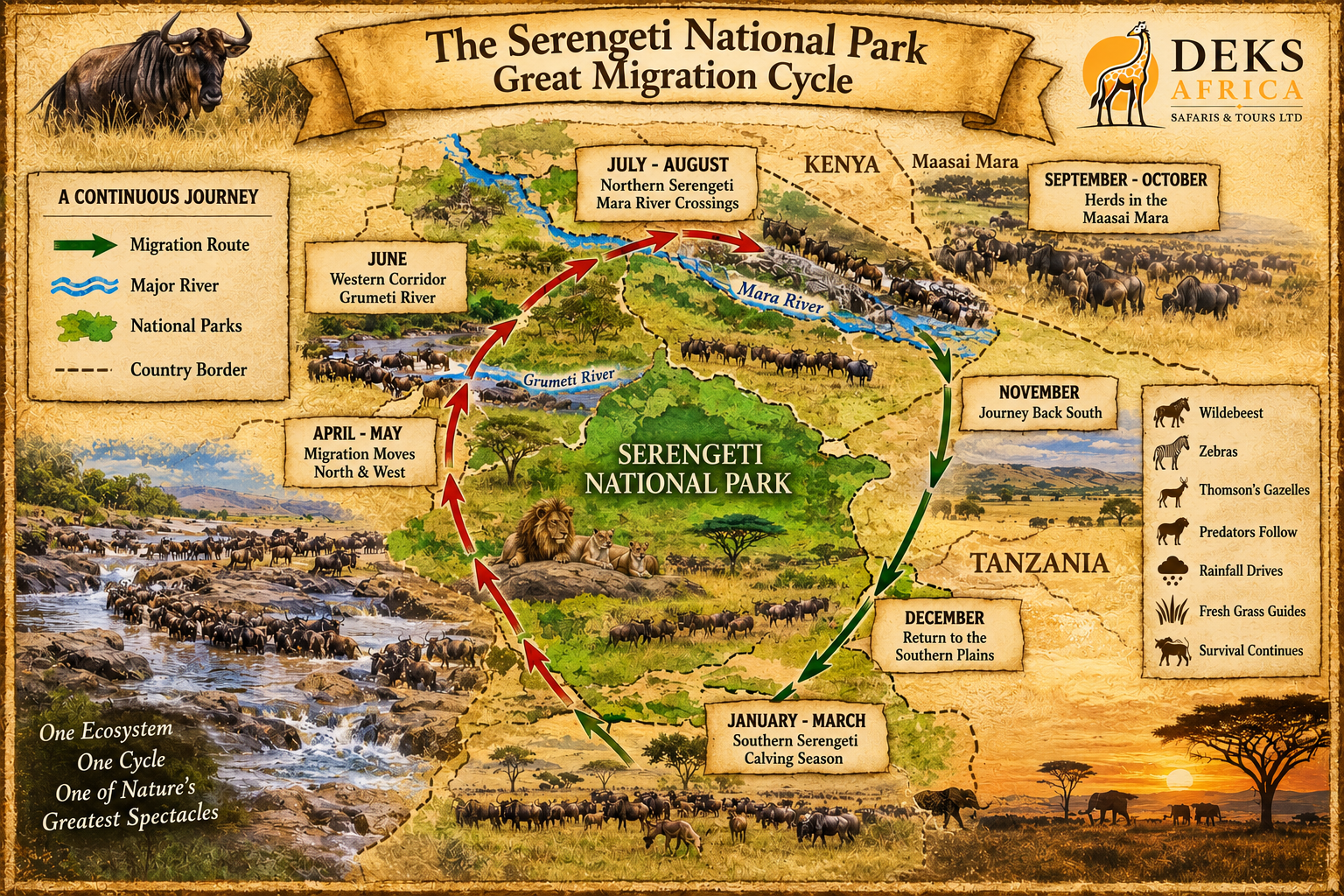
Serengeti Great Migration Cycle
Day 11: Air Transfer from Serengeti to Zanzibar
Day eleven changes the rhythm of the journey. A morning air transfer connects the Serengeti with Zanzibar.
This transition makes the Tanzania Zanzibar Safari particularly attractive. Travelers move from vast savannah landscapes to tropical Indian Ocean beaches.
The flight also reduces lengthy road travel. Therefore, guests can reach Zanzibar with more time for relaxation.
Upon arrival, travelers continue toward Pongwe Beach Hotel. The coastal environment provides an immediate change of atmosphere.
Beginning Your Zanzibar Beach Getaway
Zanzibar offers warm waters, sandy beaches, historic settlements, and rich cultural traditions. The island’s identity reflects centuries of African, Arab, Persian, Indian, and European influences.
Pongwe provides a peaceful coastal setting for relaxation. Guests can enjoy the beach, swim, read, or simply rest.
After several safari days, this slower pace becomes especially valuable. Travelers can enjoy the Indian Ocean without a demanding schedule.
Zanzibar Cultural Experiences
Zanzibar culture extends far beyond its beaches. The island’s history connects strongly with trade, spices, architecture, and maritime traditions.
Local communities also maintain rich culinary traditions. Visitors can explore traditional dishes through carefully selected food experiences.
Music and dance provide additional opportunities to understand island culture. Local performances can create memorable evenings.
Day 12: Zanzibar Exploration and Stone Town
The 2-Week Tanzania & Zanzibar Safari continues with a full day of island exploration.
Stone Town provides one of Zanzibar’s most important cultural experiences. Its narrow streets contain historic buildings, markets, courtyards, and cultural landmarks.
Discovering Stone Town
A guided walking tour can introduce travelers to the history of Stone Town. The experience reveals Zanzibar’s role within Indian Ocean trade networks.
Visitors can explore historic streets and local markets. The atmosphere changes constantly as residents move through the city.
Architecture provides another important attraction. Doors, balconies, courtyards, and old buildings reflect different cultural influences.
Local markets also provide opportunities to purchase spices and crafts. Travelers should choose authentic products from responsible sellers.
Zanzibar Food Experience
Food forms an important part of the island’s cultural identity. Spices such as cloves, cinnamon, cardamom, and vanilla contribute to local cuisine.
Travelers can sample traditional dishes through local restaurants or organized culinary experiences. Seafood also forms an important part of coastal dining.
A guided food experience can reveal the history behind different ingredients. Such experiences connect cuisine with Zanzibar’s trading heritage.
After exploring Stone Town, guests can return toward the coast. The evening provides time for relaxation at Pongwe.
Day 13: Zanzibar Spice Experience and Beach Relaxation
Day thirteen provides another flexible day within this Tanzania Zanzibar Safari.
Travelers can choose between cultural activities and pure relaxation. This flexibility makes the final part of the journey comfortable.
Exploring Zanzibar’s Spice Heritage
Zanzibar has long been associated with spice production. A guided spice experience can introduce travelers to tropical plants and traditional uses.
Visitors may see cloves, cinnamon, vanilla, nutmeg, ginger, and other plants. Guides can explain cultivation methods and culinary applications.
The experience also demonstrates how agriculture shaped Zanzibar’s economy and cultural identity.
Beach and Ocean Activities
After the spice experience, travelers can return to the beach. Pongwe provides an excellent environment for quiet relaxation.
Guests can swim in the Indian Ocean or enjoy time beside the water. Snorkeling can also introduce travelers to marine environments.
Boat excursions can provide another way to explore the coastline. Depending on conditions, visitors can enjoy scenic trips across the surrounding waters.
Diving provides an option for travelers seeking deeper marine experiences. Certified operators should always manage specialized water activities.
Responsible Zanzibar Tourism
Travelers can support responsible tourism through locally owned businesses. Choosing community-based experiences can help tourism benefits reach residents.
Respect for local customs also remains important. Zanzibar contains communities with strong cultural and religious traditions.
Visitors should dress appropriately when visiting towns and cultural sites. Such consideration creates more respectful travel experiences.
Day 14: Final Zanzibar Experience and Departure
The final day completes the 2-Week Tanzania & Zanzibar Safari.
Travelers can enjoy a relaxed morning before departure. Depending on flight schedules, additional activities may remain possible.
A final beach walk can provide a peaceful conclusion. Guests may also enjoy breakfast while taking in the coastal scenery.
Reflecting on the Journey
The journey began among the landscapes surrounding Kilimanjaro. It continued through Tarangire, Lake Manyara, Lake Natron, and Lake Eyasi.
Ngorongoro then introduced an extraordinary volcanic ecosystem. Serengeti added expansive plains and world-famous wildlife.
Finally, Zanzibar provided beaches, culture, history, spices, and ocean experiences.
This variety makes the 2-Week Tanzania & Zanzibar Safari more than a simple safari itinerary. It becomes a complete East African travel experience.
Tanzania Safaris: Understanding the Wildlife Experience
Tanzania Safaris provide access to some of Africa’s most important wildlife ecosystems.
The northern safari circuit remains particularly popular among international travelers. Its destinations combine strong wildlife opportunities with dramatic landscapes.
Tarangire introduces elephants and baobabs. Lake Manyara provides diverse habitats and scenic Rift Valley views.
Ngorongoro offers concentrated wildlife within a spectacular volcanic environment. Serengeti provides enormous open landscapes and seasonal wildlife movements.
Each destination requires a different safari approach. Therefore, knowledgeable planning remains essential.
Why Professional Safari Planning Matters
Wildlife movements change with seasons, rainfall, water availability, and vegetation. Consequently, safari routes should remain flexible.
Accommodation availability also influences itinerary planning. Transport distances and road conditions require careful consideration.
A knowledgeable safari company can coordinate these factors effectively. Professional planning also helps travelers understand realistic expectations.
At Deks Africa Safaris & Tours Ltd, we focus on practical and responsible safari planning. Our goal remains creating journeys that balance comfort, discovery, and authentic experiences.

Zanzibar Safaris in Tanzania
Tanzania Wildlife Safaris: More Than the Big Five
Tanzania Wildlife Safaris offer much more than famous predators.
Elephants create some of the most memorable experiences across northern Tanzania. Giraffes add elegance to open landscapes and woodland areas.
Zebras and wildebeests demonstrate the scale of Tanzania’s herbivore populations. Buffaloes remain important members of many ecosystems.
Smaller species also deserve attention. Mongooses, jackals, dik-diks, hyraxes, baboons, and numerous birds enrich every game drive.
The Importance of Birdlife
Birdwatching can add significant value to a Tanzania Wildlife Safari. Tanzania contains diverse habitats that support many bird species.
Wetlands attract waterbirds and waders. Woodlands support colorful forest species and raptors.
Open plains attract ground birds and birds of prey. Consequently, travelers should carry binoculars even when focusing primarily on mammals.
Understanding Safari Ecosystems
A safari becomes more meaningful when travelers understand ecological relationships. Predators depend on healthy prey populations.
Herbivores depend on vegetation and water. Birds contribute to seed dispersal and insect control.
Even small insects contribute to ecosystem processes. Therefore, every species plays a role in maintaining environmental balance.
Tanzania Wildlife Safari Planning by Season
Seasonal planning remains important when organizing a Tanzania Wildlife Safari.
Dry periods often make wildlife easier to locate around water sources. Vegetation can also become less dense during dry conditions.
Wet periods can transform landscapes dramatically. Green vegetation creates beautiful scenery and supports breeding activity among many species.
Migration movements also change throughout the year. Therefore, travelers should match their itinerary with their interests.
Migration-Focused Travel
Travelers interested in the Great Migration should plan around seasonal movements. The best location can change during different periods.
Southern Serengeti can become important during calving periods. Central areas offer strong wildlife opportunities throughout many months.
Northern Serengeti can become important during migration movements toward the Mara River region.
No itinerary can guarantee a specific animal encounter. However, informed seasonal planning can improve the opportunity for memorable sightings.
Zanzibar Safaris: Understanding the Island Experience
Zanzibar Safaris provide a different form of African adventure.
The island combines tropical scenery with centuries of cultural history. Visitors can explore beaches, spice farms, historic towns, and marine environments.
Stone Town Heritage
Stone Town remains one of Zanzibar’s most important cultural destinations. Its historic architecture reflects the island’s multicultural past.
Walking tours provide opportunities to understand local history. Markets also reveal aspects of everyday life.
Spice Experiences
Spice tours remain popular because they connect agriculture with culture. Visitors can see tropical plants and learn about traditional uses.
These experiences also provide excellent photography opportunities. Travelers can photograph gardens, markets, products, and local landscapes.
Marine Adventures
Zanzibar’s surrounding waters offer snorkeling and diving opportunities. Coral reefs support colorful marine life in suitable locations.
Boat excursions can also create peaceful coastal experiences. Travelers should choose responsible operators that prioritize marine conservation.
Zanzibar Beach Getaway: Relaxation After Safari
A Zanzibar Beach Getaway provides the perfect transition after intensive wildlife exploration.
Safari days often begin early and involve several hours of game viewing. Zanzibar introduces a slower rhythm.
Guests can wake without an early game-drive schedule. Breakfast can become a relaxed coastal experience.
The beach provides space for swimming, reading, walking, or resting. Meanwhile, optional activities allow adventurous travelers to remain active.
Why Combine Safari and Beach?
Combining wildlife and beaches creates greater variety within one holiday. Travelers experience two very different African environments.
The safari provides adventure, wildlife, landscapes, and conservation. Zanzibar provides relaxation, culture, food, history, and marine experiences.
Together, these experiences create a balanced itinerary. This combination works particularly well for honeymooners and couples.
Families can also benefit from the flexible beach portion. Guests can choose activities according to age, interests, and energy levels.
Cultural Experiences That Enrich the 2-Week Tanzania & Zanzibar Safari
Culture remains one of the strongest elements of the 2-Week Tanzania & Zanzibar Safari.
Tanzania contains many communities with distinct languages, traditions, livelihoods, crafts, and histories.
The Hadzabe experience near Lake Eyasi offers a unique cultural perspective. Datoga traditions provide another important connection.
Maasai communities around the northern safari circuit also contribute to Tanzania’s cultural landscape.
Supporting Local Communities
Responsible tourism should create meaningful benefits for local people. Travelers can support communities through carefully selected experiences.
Purchasing authentic crafts directly from artisans provides one form of support. Eating at locally owned establishments provides another.
Community-guided tours can also direct tourism revenue toward residents. Therefore, cultural tourism can become part of responsible travel.
Respecting Cultural Differences
Travelers should approach cultural experiences with curiosity and humility. Every community has its own customs and expectations.
Photography should respect individual preferences. Visitors should also follow guidance from local hosts.
Appropriate clothing remains important in many communities. Respectful behavior creates better experiences for everyone.
Accommodation Along the 2-Week Tanzania & Zanzibar Safari
Accommodation forms an important part of the overall safari experience.
The itinerary includes a mixture of lodges, tented camps, and beach accommodation. Each setting provides a different atmosphere.
Arusha provides comfortable city-based accommodation. Tarangire introduces guests to the wilderness environment.
Lake Manyara offers access to community and natural experiences. Lake Eyasi emphasizes cultural immersion.
Ngorongoro provides access to one of Tanzania’s most important wildlife areas. Serengeti accommodation places guests close to extensive wildlife landscapes.
Pongwe Beach Hotel then creates a peaceful coastal setting.
Why Lodge Location Matters
Location can influence the amount of time spent traveling each day. Properties closer to key activities can reduce unnecessary driving.
Lodge environments can also enhance the safari experience. Wildlife sounds, scenic views, and natural surroundings become part of the stay.
Cultural access can also vary according to location. Some properties sit closer to villages and community experiences.
Therefore, accommodation selection should consider more than room quality. Location, accessibility, atmosphere, and activity options all matter.
Responsible Travel on a Tanzania Zanzibar Safari
Responsible tourism should guide every stage of a Tanzania Zanzibar Safari.
Wildlife should always receive appropriate space and respect. Guides should follow park regulations and responsible viewing practices.
Travelers should avoid feeding wild animals. They should also avoid leaving waste within protected areas.
Supporting Conservation
National parks depend partly on tourism revenue. Entrance fees and tourism activities contribute to broader conservation systems.
Travelers can support conservation by following park rules. Responsible behavior also protects habitats for future generations.
Reducing Environmental Impact
Travelers can reduce unnecessary plastic use during safaris. Reusable water bottles provide a simple alternative.
Guests can also minimize unnecessary waste at camps and lodges. Switching off lights and air conditioning when unnecessary can reduce energy consumption.
Respecting Local Communities
Responsible travel also involves respecting people. Cultural visits should provide genuine value rather than staged experiences.
Travelers can choose community-owned businesses where practical. Local guides can provide deeper insight while supporting local employment.
Photography Tips for Tanzania Wildlife Safaris
Tanzania provides outstanding photography opportunities.
Travelers should prepare equipment before entering the parks. Extra batteries and memory cards remain useful during long game drives.
A telephoto lens can help photograph distant wildlife without disturbing animals. Binoculars also improve wildlife observation.
Photographing the Great Migration
Migration photography requires patience. Herds can move quickly or remain stationary for long periods.
Early morning light often provides excellent photographic conditions. Dust can also create dramatic atmosphere during large herd movements.
However, travelers should avoid crowding wildlife. Good photography should never compromise animal welfare.
Cultural Photography
Cultural photography requires additional sensitivity. Always respect local preferences before photographing people.
Ask permission when appropriate. Avoid intrusive photography during private or sacred activities.
This approach creates more respectful relationships between travelers and host communities.
Who Should Choose the 2-Week Tanzania & Zanzibar Safari?
The 2-Week Tanzania & Zanzibar Safari suits travelers seeking variety.
Couples can combine adventure with romantic beach relaxation. Honeymooners can enjoy wildlife experiences followed by tropical evenings.
Families can experience educational wildlife and cultural activities. Flexible Zanzibar days also provide opportunities for rest.
Photographers can benefit from extended time across different ecosystems. Birdwatchers can explore multiple habitats throughout the northern circuit.
Adventure travelers can enjoy walking experiences and cultural activities. Beach lovers can spend several days along Zanzibar’s coastline.
Travelers Seeking Authentic Experiences
The itinerary also suits travelers who want more than conventional sightseeing.
The Hadzabe and Datoga experiences provide deeper cultural understanding. Lake Natron introduces less conventional landscapes.
Serengeti and Ngorongoro provide iconic wildlife experiences. Zanzibar adds history and coastal culture.
Therefore, these itinerary balances famous destinations with meaningful local experiences.
Preparing for Your Tanzania Safari
Good preparation improves the overall travel experience.
Travelers should pack lightweight clothing suitable for warm daytime conditions. A warm layer can help during cooler mornings and evenings.
Comfortable walking shoes remain useful for nature walks and cultural visits. Sun protection also remains essential.
Essential Safari Items
Useful items include sunscreen, sunglasses, a hat, binoculars, and insect repellent.
A reusable water bottle can reduce plastic consumption. Travelers should also carry personal medication and basic travel essentials.
Camera equipment should include sufficient batteries and storage. A power bank can help during long travel days.
Health and Travel Preparation
Travelers should seek professional travel health advice before departure. Requirements can vary depending on personal circumstances and travel routes.
Travel insurance also provides important protection. Travelers should understand their coverage before beginning the journey.
A valid passport remains essential for international travel. Visa requirements should also receive attention before departure.
Why Choose Deks Africa Safaris & Tours Ltd?
Deks Africa Safaris & Tours Ltd focuses on creating meaningful African travel experiences.
Our approach combines destination knowledge with practical itinerary planning. We understand that travelers want more than transportation between attractions.
A well-designed safari should balance wildlife, culture, comfort, and time. Therefore, we create itineraries around the traveler’s interests.
Local Knowledge Matters
Africa contains enormous geographical and cultural diversity. Local knowledge helps travelers understand the differences between destinations.
Our safari planning considers route conditions, seasonal wildlife patterns, accommodation, and activity choices.
We also recognize the importance of realistic expectations. Wildlife encounters remain natural experiences rather than guaranteed performances.
Personalized Safari Planning
Every traveler has different priorities. Some guests focus on wildlife photography, while others prioritize culture.
Couples may prefer romantic accommodation and private experiences. Families may require flexible schedules and comfortable travel arrangements.
Our planning process can therefore adapt the itinerary to individual needs.
The Value of a Private Tanzania Wildlife Safari
A private Tanzania Wildlife Safari offers greater flexibility.
Travelers can discuss daily priorities with their guide. The itinerary can also respond to wildlife activity and personal interests.
Families may appreciate the ability to adjust game-drive durations. Photographers can spend more time observing particular subjects.
Couples can enjoy a more intimate experience. Small groups can also maintain a comfortable pace.
Flexible Game Drives
Wildlife does not follow a fixed schedule. Therefore, flexibility becomes an important part of safari planning.
An experienced guide can adjust routes based on current observations. This approach can improve the quality of wildlife viewing.
However, responsible guiding remains essential. Park regulations should always guide vehicle movement and animal interactions.
Combining Wildlife, Culture, and Beach Experiences
The greatest strength of the 2-Week Tanzania & Zanzibar Safari lies in its diversity.
The journey begins with wildlife and landscapes. It then introduces communities and traditional lifestyles.
Later, the Serengeti provides extensive wildlife exploration. Zanzibar completes the experience through beaches and cultural discovery.
This combination creates a stronger sense of place. Travelers experience Tanzania through multiple perspectives.
From Savannah to Ocean
The contrast between Serengeti plains and Zanzibar beaches creates a memorable transition.
One day can involve watching elephants across dry woodland. Another can involve walking beside warm Indian Ocean waters.
Such contrast makes the journey feel more complete. Travelers experience both Tanzania’s interior and coastal identity.
Practical Travel Tips for Your Tanzania Zanzibar Safari
Travelers should allow sufficient time between destinations. Northern Tanzania contains long distances despite excellent attractions.
Road conditions can vary depending on weather and location. Therefore, travel times can change.
Early starts often maximize wildlife opportunities. They also help travelers reach the next destination comfortably.
Communication and Connectivity
Mobile connectivity varies across safari areas. Some remote locations provide limited network coverage.
Travelers should inform family members about possible communication gaps. Lodges may provide Wi-Fi in selected areas.
Currency and Payments
Travelers should carry some local currency for smaller purchases. International cards may work at many established lodges and hotels.
However, remote communities may rely more heavily on cash. A combination of payment methods provides greater convenience.
Sustainable Cultural Tourism in Tanzania
Cultural tourism can contribute significantly to sustainable travel.
Community experiences create opportunities for residents to participate directly in tourism. Local guides can also share knowledge with visitors.
Travelers should prioritize experiences that respect community ownership. Authentic cultural interaction should benefit residents rather than exploit traditions.
Traditional Crafts
Tanzania has a rich tradition of handmade crafts. Travelers can find baskets, textiles, jewelry, carvings, and other products.
Buying directly from artisans can support local livelihoods. Visitors should also ask about the origin of products.
Avoiding illegal wildlife products remains essential. Travelers should never purchase items made from protected wildlife.
A Complete African Journey with Deks Africa Safaris & Tours Ltd
The 2-Week Tanzania & Zanzibar Safari brings together many elements of African tourism.
It begins with the landscapes around Kilimanjaro and Arusha. Tarangire then introduces elephants and baobab forests.
Lake Manyara provides diverse habitats and Rift Valley scenery. Exploring Lake Natron adds dramatic landscapes and birdlife.</p>
Lake Eyasi provides important cultural encoun
ters. Ngorongoro introduces extraordinary volcanic scenery and wildlife.
Serengeti delivers expansive plains and unforgettable wildlife opportunities. Zanzibar then provides beaches, history, spices, and marine experiences.
Every destination adds something different. Together, they create a complete Tanzania travel experience.
Tanzania Wildlife Safari Photography Tips
Photography forms an important part of many Tanzania Wildlife Safaris. However, good photography requires preparation and patience.
A telephoto lens can help capture wildlife without approaching animals too closely. Binoculars also improve viewing opportunities.
Protecting Your Equipment
Dust can become a challenge during dry-season game drives. Travelers should carry appropriate camera protection and cleaning equipment.
Spare batteries and memory cards remain essential. Remote safari areas may not provide convenient charging opportunities.
Photographing Responsibly
Never pressure a guide to approach wildlife illegally. A photograph should never come before animal welfare.
Respect vehicle positioning rules and maintain suitable distances. Patience often produces stronger photographs than aggressive positioning.
Best Time for a 2-Week Tanzania & Zanzibar Safari
The best time for a 2-Week Tanzania & Zanzibar Safari depends on personal priorities. Tanzania provides different experiences throughout the year.
The dry season generally runs from June through October. Wildlife can become easier to locate around remaining water sources.
Vegetation may also become thinner during dry periods. These conditions can improve visibility for wildlife viewing.
Great Migration Timing
Travelers interested in migration experiences should plan according to animal movements. River crossings usually attract attention during particular periods.
However, migration patterns respond to rainfall. Exact timing can therefore change from year to year.
Green Season
Rainy periods can produce greener landscapes and fewer visitors. Lower visitor numbers can create a quieter atmosphere.
Some accommodation properties may also adjust operations during heavier rains. Travelers should confirm seasonal availability before booking.
Shoulder Seasons
January and February can provide attractive safari conditions in many areas. June can also offer a transition between seasonal patterns.
Ultimately, travel dates should reflect the traveler’s priorities. There is no single perfect month for every Tanzania Wildlife Safari.
How Much Does a Tanzania Wildlife Safari Cost?
Safari costs vary significantly across Tanzania. Group size, accommodation, park selection, transport, season, and trip duration all affect pricing.
The source material indicates private safaris can start around $300 per person daily for two adults. Shared safaris can start around $180 per person daily.
These figures provide useful planning references rather than fixed quotations. Current supplier rates can change.
Group Size
Larger groups can reduce the cost per person because several fixed expenses become shared. Solo travelers usually carry a larger share of vehicle-related costs.
Park Selection
Serengeti and Ngorongoro can increase safari costs. Their fees and accommodation prices can influence the overall budget.
Lake Manyara and Arusha National Park can support different budget structures. A safari company can design routes around the available budget.
Accommodation
Accommodation creates another major difference. Budget properties can provide practical comfort.
Mid-range lodges can add stronger facilities and service levels. Luxury properties can significantly increase the total trip cost.
A transparent quotation should explain inclusions and exclusions. Travelers should understand park fees, accommodation, meals, transport, guiding, and transfers.
Tanzania Safari Transport and Logistics
Transport forms the backbone of a Tanzania Wildlife Safari. Most northern circuit safaris use specialized safari vehicles.
A professional vehicle should provide good visibility and suitable space for travelers. Comfort becomes especially important during longer game drives.
Private Safari Vehicles
Private vehicles offer flexibility. Travelers can decide departure times and spend longer at interesting sightings.
Families also benefit from having greater control over the daily schedule. Couples can create more personalized experiences.
Domestic Flights
Flights can connect safari destinations with Zanzibar. They can reduce travel time significantly.
Fly-in arrangements can also create more relaxed itineraries. However, flights may increase the overall cost.
A good safari planner should compare road and air options. The best choice depends on budget, time, and comfort preferences.
Tanzania Safari Visa and Entry Planning
International travelers should check current entry requirements before departure. Visa requirements depend on nationality and travel circumstances.
The source material identifies tourist visas as an important part of Tanzania trip planning. It also recommends checking official requirements before travel.
Passports should have adequate validity and available pages. Travelers should verify requirements well before departure.
Travel Health Preparation
Travel health planning should begin early. A qualified travel health professional can provide destination-specific guidance.
Malaria prevention may require discussion with a healthcare professional. Travelers should also prepare suitable personal medications.
A basic travel health kit can prove useful. Sunscreen, insect repellent, and first-aid supplies can also support comfort.
Requirements can change over time. Travelers should always confirm current health and entry information before departure.
What to Pack for a Tanzania Zanzibar Safari?
Packing for a Tanzania Zanzibar Safari requires preparation for two different environments.
Safari clothing should remain comfortable and practical. Neutral colors can help reduce visual distraction during wildlife viewing.
Lightweight layers work well because temperatures can change throughout the day. A warm layer can help during early morning drives.
Essential Safari Items
Consider carrying:
- Comfortable walking shoes
- Lightweight clothing
- Warm layers
- Sun protection
- Insect repellent
- Sunglasses
- Hat
- Binoculars
- Camera equipment
- Extra batteries
- Power banks
- Personal medication
- Small first-aid supplies
- Reusable water bottle
- Zanzibar Packing
Beachwear becomes useful after the safari. Travelers should also carry clothing suitable for cultural visits.
Respectful clothing can help when visiting communities and religious or historic areas. Lightweight fabrics work well in Zanzibar’s tropical climate.
Why Local Safari Expertise Matters
A professional local safari company provides more than transportation. Strong destination knowledge can improve logistics, accommodation selection, and daily planning.
Local teams understand road conditions, park layouts, seasonal patterns, and accommodation locations. They can also adjust plans when circumstances change.
Personalized Planning
Every traveler has different expectations. Some prioritize wildlife photography while others prioritize culture or relaxation.
Families may require different accommodation arrangements. Couples may want private experiences and romantic settings.
A customized Tanzania Zanzibar Safari should reflect these individual priorities.
Deks Africa Safaris & Tours Ltd can position its service around this personalized approach. Clear communication should remain central to every booking.
Tanzania Safaris for Couples and Honeymooners
Tanzania Safaris offer strong possibilities for couples seeking adventure and relaxation. A private safari can create an intimate travel environment.
Romantic lodge dinners, private experiences, and sunset moments can complement game drives. Zanzibar then provides a natural setting for beach relaxation.
Honeymoon Combination
A safari followed by Zanzibar creates a strong honeymoon structure. Couples can begin with wildlife adventure and finish with ocean relaxation.
The Zanzibar Beach Getaway can include private beach time and selected cultural experiences. Travelers can choose the balance between activity and rest.
Tanzania Safaris for Families
Families can also enjoy a carefully designed Tanzania Wildlife Safari. However, planning should consider children’s ages and daily travel requirements.
Shorter game drives can work well for younger travelers. Comfortable accommodation can also improve the overall experience.
Educational Value
Safari provides natural opportunities for learning. Children can observe animal behavior, ecosystems, geography, and conservation.
Guides can explain wildlife in age-appropriate ways. Cultural experiences can also broaden children’s understanding of African communities.
A family-friendly Tanzania Zanzibar Safari should avoid excessive daily transfers. More relaxed scheduling usually creates a better family experience.
Tanzania Wildlife Safaris for First-Time Visitors
First-time safari travelers often wonder how many parks they should visit. More parks do not always create a better experience.
Quality should take priority over quantity. Spending enough time in each destination allows deeper exploration.
A 2-Week Tanzania & Zanzibar Safari offers enough time for a balanced itinerary. Travelers can explore several major destinations without constant packing.
Setting Realistic Expectations
Wildlife remains unpredictable. No reputable safari company should guarantee specific sightings.
Experienced guides improve opportunities through knowledge and observation. However, nature always retains an element of uncertainty.
That uncertainty makes every safari unique. Two travelers visiting the same park can experience completely different moments.
Final Thoughts on the 2-Week Tanzania & Zanzibar Safari
The 2-Week Tanzania & Zanzibar Safari offers an exceptional balance of adventure and relaxation.
Travelers experience Tanzania’s wildlife, landscapes, communities, cultures, and coastline. Each destination contributes a different part of the story.
Tarangire brings elephants and baobabs. The Lake Manyara provides forests and diverse wildlife. Lake Natron introduces dramatic scenery. Lake Eyasi reveals important indigenous cultural experiences.
Ngorongoro combines wildlife with spectacular volcanic geography. Serengeti provides some of Africa’s most iconic safari landscapes.
Zanzibar then provides a peaceful tropical conclusion.
The 2-Week Tanzania & Zanzibar Safari therefore works as more than a wildlife itinerary. It becomes a journey through nature, culture, history, and coastal life.
Travelers leave with more than photographs. They gain memories connected to landscapes, communities, wildlife, and experiences.
At Deks Africa Safaris & Tours Ltd, we believe thoughtful travel creates stronger connections with Africa. Our role involves helping travelers explore responsibly while enjoying authentic experiences.
Whether you seek Tanzania Wildlife Safaris, cultural encounters, or a Zanzibar Beach Getaway, this itinerary provides variety.
The combination of Tanzania Safaris, Tanzania Wildlife Safaris, Tanzania Wildlife Safari, Zanzibar Safaris, and a Tanzania Zanzibar Safari creates a powerful African holiday.
Tour Quotation Based on Two People Sharing
| Number of People | 2 People | 4 People | 6 People |
| Rate Per Person | USD 9,156 | USD 7,824 | USD 7,380 |
Single Room Supplement: USD 770
Proposed East Africa Safari Holidays for the USA Travelers
- 9-Day Rwanda & Tanzania Luxury Wildlife Tour
- 10-Day Tanzania Safari Experience
- 9-Day Rwanda, Uganda & Tanzania Luxury Wildlife Safari
- 9-Day Rwanda Gorilla Trekking & Tanzania Safari
- 9-Day Tanzania Safari & Uganda Gorilla Trekking
- 10-Day Serengeti & Ngorongoro Crater Safari Experience
- 10-Day Tanzania and Rwanda Adventure Safari
- 11-Day Rwanda Uganda Tanzania Safari
- 20 Days Uganda, Tanzania, and Mafia Island Beach Safari
- 18 Days Uganda, Tanzania, and Mafia Island Beach Safari
- 14-Day Rwanda Uganda Tanzania Tour
- 14-Day Rwanda, Kenya, Tanzania & Beach Holiday
- 20-Day Rwanda Tanzania Zanzibar Safari Experience
- 16-Day Tanzania Safari & Rwanda Gorilla Trekking Experience
- 14 Days Kenya-Tanzania-Rwanda-Uganda Safari
- 24 Days Zanzibar-Uganda-Tanzania-Kenya Safari
- 5 Days Serengeti Great Migration Safari
- 6 Days Serengeti Great Migration Safari
- 7 Days Serengeti Great Migration Safari
- 8 Days Serengeti Great Migration Safari
- Hot Air Balloon serengeti
- 14 Days Uganda Tanzania and Kenya Safari
- What Should I Pack for a Tanzania Safari