
20-Day Uganda Birding Excursion Safari: Ultimate Birding, Wildlife and Primate Trekking Experience
Uganda offers one of Africa’s most rewarding birdwatching experiences, bringing together tropical rainforests, papyrus wetlands, freshwater lakes, open savannahs, riverine forests and spectacular mountain landscapes. For bird enthusiasts seeking diversity, excellent guiding and opportunities to explore several ecosystems in one journey, the 20-Day Uganda Birding Excursion Safari provides an exciting way to discover the country’s natural heritage. This carefully structured expedition combines guided birding excursions with wildlife viewing, chimpanzee tracking, mountain gorilla trekking, boat cruises and meaningful encounters with local communities.
From the shores of Lake Victoria to the forests of the Albertine Rift, each destination introduces a new habitat and a different selection of bird species. The journey begins around Entebbe, where wetlands and botanical gardens provide a gentle introduction to Uganda’s avifauna. It continues through Mabamba Wetland, Mabira Forest, Murchison Falls National Park, Budongo Forest, Kibale Forest, Semliki National Park, Queen Elizabeth National Park, Bwindi Impenetrable National Park, Mgahinga Gorilla National Park and Lake Mburo National Park.
20-Day Uganda Birding Excursion Safari Highlights
Day | Activities | Accommodation |
Day 1 | Arrival at Entebbe International Airport and Drive to the Hotel for a Relaxation After a Long Flight | Lake Victoria Hotel or Green Valley Guest House |
Day 2 | Go Birding in Mabamba Wetland on a Canoe to Track the Shoebill and Other Different Bird Species | Lake Victoria Hotel or Green Valley Guest House |
Day 3 | Morning Road Transfer to Mabira Rainforest Forest and Go Bird Watching on Footand Overnight | Mabira Forest Lodge |
Day 4 | Early Morning Road Transfer to Masindi and Birding along the Kafu–Masindi Route | Pakuba Safari Lodge or Elephant Oasis Lodge |
Day 5 | Budongo Forest Reserve Birding and Murchison Falls Launch Cruise | Pakuba Safari Lodge or Elephant Oasis Lodge |
Day 6 | Full-Day Birding and Wildlife Viewing in Murchison Falls National Park | Pakuba Safari Lodge or Elephant Oasis Lodge |
Day 7 | Transfer to Kibale Forest National Park and Evening Birding at Bigodi Wetland | Guereza Canopy Lodge or Kibale Forest Lodge |
Day 8 | Chimpanzee Tracking in Kibale Forest National Park and Afternoon Birding in the Forest | Guereza Canopy Lodge or Kibale Forest Lodge |
Day 9 | Transfer to Semliki National Park While Birding along the Way | Semliki Safari Lodge or Nyakagei Forest Lodge |
Day 10 | Full-Day Birding in Semliki National Park | Semliki Safari Lodge or Nyakagei Forest Lodge |
Day 11 | Transfer to Queen Elizabeth National Park and Kasenyi Plains Birding | Twin Lakes Safari Lodge or Enshama Game Lodge |
Day 12 | Morning Game Drive and Kazinga Channel Birding Cruise in Queen Elizabeth National Park | Twin Lakes Safari Lodge or Enshama Game Lodge |
Day 13 | Transfer to Bwindi Impenetrable Forest (Ruhija Sector), Birding Along the Way | Kiho Gorilla Lodge or Gorilla Mist Camp |
Day 14 | Go Mountain Gorilla Trekking in Bwindi Impenetrable Forest (Ruhija Sector) and Afternoon Batwa Cultural Experience | Kiho Gorilla Lodge or Gorilla Mist Camp |
Day 15 | Enjoy Half Day of Birding in Ruhija Sector (Mubwindi Swamp) and Later Road Transfer to Mgahinga Gorilla National Park | Mutanda Lake Resort or Ichumbi Hotel |
Day 16 | Full Day of Birding in Mgahinga Gorilla National Park | Mutanda Lake Resort or Ichumbi Hotel |
Day 17 | Morning Road Transfer from Mgahinga Gorilla National Park to Lake Mburo National Park While Birding Along the Way | Rwakobo Rock Lodge or Mpogo Safari Lodge |
Day 18 | Enjoy a Full Day of Bird Watching in Lake Mburo National Park, Guided Nature Walks, and a Boat Cruise on Lake Mburo | Rwakobo Rock Lodge or Mpogo Safari Lodge |
Day 19 | Morning Road Transfer Back to Entebbe City and Enjoy Afternoon Bird Watching in Entebbe Botanical Gardens | Lake Victoria Hotel or Green Valley Guest House |
Day 20 | Morning Relaxation at the Hotel and Later Road Transfer to Entebbe International Airport for a Flight Back Home |
How Much Does the 20-Day Uganda Birding Excursion Safari Cost?
| Number of People | Solo Traveller | 2 People | 4 People | 6 People |
| Rate Per Person | USD 19,389 | USD 12,879 | USD 8,985 | USD 7,876 |
Single Room Supplement: USD 1,076
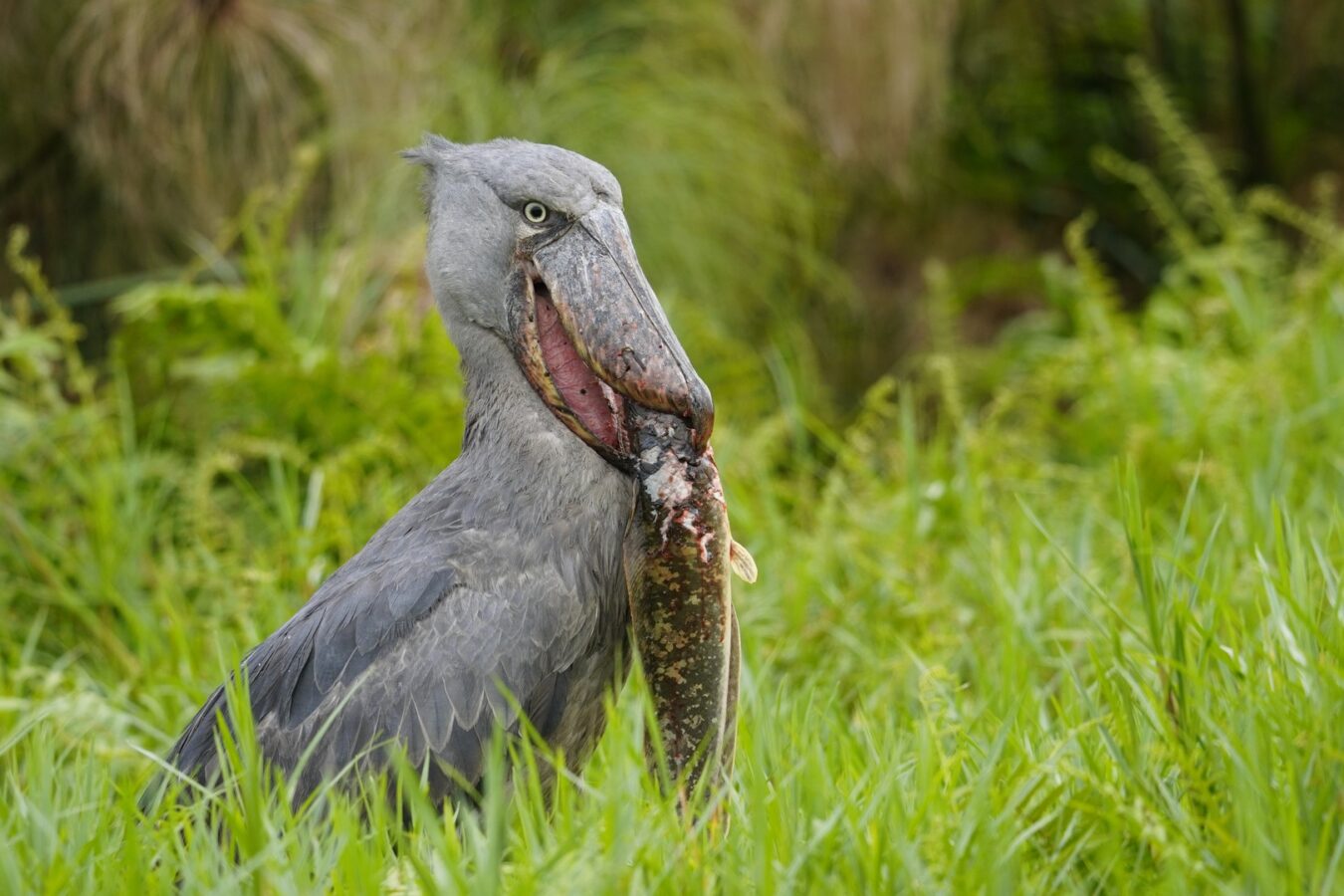
Shoebill Tracking on a Canoe
Discover Uganda on a 20-Day Uganda Birding Excursion Safari
Throughout the 20-Day Uganda Birding Excursion Safari, you can search for iconic species such as the Shoebill, Great Blue Turaco, African Fish Eagle, Rwenzori Turaco and a variety of colourful sunbirds, kingfishers, hornbills and forest specialists. The itinerary also provides opportunities to encounter chimpanzees and mountain gorillas in their natural habitats.
Deks Africa Safaris & Tours Ltd combines these experiences into an itinerary designed for international travellers, dedicated birders, wildlife photographers, nature enthusiasts and adventurous visitors. The aim is not simply to record birds, but to understand the habitats, conservation efforts and communities that make Uganda such a remarkable destination.
Why Choose Uganda for a Birding Safari?
A country with remarkable bird diversity
Uganda occupies a distinctive position between East African savannah ecosystems and the tropical forests of Central Africa. This geographical location, combined with substantial variations in altitude, rainfall and vegetation, creates habitats for an exceptional range of birdlife. Wetlands support waterbirds and papyrus specialists, while montane forests shelter range-restricted species that attract birders from around the world.
A Uganda Birding Safari allows visitors to explore several of these habitats within one country. Rather than concentrating on a single national park, the 20-Day Uganda Birding Excursion Safari connects wetlands, lowland rainforests, montane forests, lakeshores, riverbanks and open grasslands. Consequently, each new destination expands the range of potential sightings and gives travellers a better understanding of Uganda’s ecological diversity.
Beyond birds: Primates, mammals and scenery
Birding does not have to be an isolated activity. Uganda’s forests and wetlands also support monkeys, chimpanzees, mountain gorillas, otters and numerous other wildlife species. In savannah parks, elephants, buffaloes, antelopes and predators add another dimension to the experience.
The itinerary incorporates chimpanzee tracking in Kibale Forest National Park and mountain gorilla trekking in Bwindi Impenetrable National Park. It also includes boat cruises on the Nile, Kazinga Channel and Lake Mburo, where birdwatching takes place alongside observations of aquatic wildlife.
A rewarding experience for different types of travellers
Although the 20-Day Uganda Birding Excursion Safari is designed around birding, it can appeal to first-time visitors, experienced birders, photographers, conservation-minded travellers and people interested in Uganda’s landscapes and cultures. Experienced birdwatchers can focus on target species, while beginners can learn identification techniques, habitat recognition and field observation from their guide.
Travellers should remember that birds remain wild animals. No itinerary can guarantee every species on a checklist, and weather, season, habitat conditions and animal behaviour influence sightings. Nevertheless, the diversity of environments included in this journey creates many opportunities for memorable encounters.
What Makes the 20-Day Uganda Birding Excursion Safari Special?
Multiple habitats in one itinerary
One of the main strengths of the 20-Day Uganda Birding Excursion Safari is its broad geographical coverage. The journey starts in the Lake Victoria basin, moves through lowland forests and northern savannah, and continues into western Uganda’s forested valleys before reaching the Albertine Rift highlands. It then returns through savannah and wetland habitats towards Entebbe.
This progression gives birders opportunities to compare species across different ecosystems. For example, Mabamba Wetland offers papyrus and waterbird habitats, whereas Budongo and Kibale provide forest birding. Semliki introduces lowland tropical rainforest species, while Bwindi and Mgahinga offer high-altitude forest environments associated with Albertine Rift endemics and other montane specialists.
A balance of walking, driving and boat excursions
The itinerary combines forest walks, guided wetland trails, savannah game drives and boat cruises. Each activity offers a different way to observe birds. Walking allows close attention to calls, foliage and understory movement, while game drives cover larger areas and help locate birds in open habitats. Boat excursions provide access to waterbirds, riverbank species and wildlife that gather around water.
Primate experiences within a birding journey
The opportunity to combine birdwatching with chimpanzee tracking and gorilla trekking distinguishes this itinerary from a conventional birding holiday. Kibale Forest offers a chance to observe chimpanzees, while Bwindi provides an encounter with endangered mountain gorillas. Mgahinga adds the possibility of seeing golden monkeys, subject to suitable arrangements and availability.
Together, these experiences make the 20-Day Uganda Birding Excursion Safari an extensive exploration of Uganda’s natural heritage, connecting avian diversity with primate conservation and responsible wildlife tourism.
Detailed 20-Day Uganda Birding Excursion Safari Itinerary
Day 1: Arrival at Entebbe International Airport
Welcome to Uganda and your first birding opportunities
Your 20-Day Uganda Birding Excursion Safari begins with arrival at Entebbe International Airport, the principal international gateway to Uganda. A professional English-speaking guide from Deks Africa Safaris & Tours Ltd will welcome you and coordinate your transfer to the selected accommodation. After the journey, take time to settle in, refresh and receive an overview of the safari programme.
Depending on your arrival time and energy levels, you may enjoy a gentle introduction to the birdlife around your lodge or visit the nearby Entebbe Botanical Gardens. The gardens contain mature trees, flowering plants and shaded paths that attract a variety of birds. They provide a comfortable setting for beginning your bird list without the pressure of a demanding excursion immediately after an international flight.
Keep an eye out for African Grey Hornbills, African Paradise Flycatchers, Woodland Kingfishers, African Hoopoes, Bronze Sunbirds and Speckled Mousebirds. The exact species you encounter will depend on the season, local conditions and the time available for birding.
A relaxed start to the journey
The first evening also provides an opportunity to check your binoculars, cameras, bird identification guides and other equipment. Discuss your priority species with your guide, especially if you are interested in particular waterbirds, forest specialists or photographic subjects.
- Birds to look for: African Grey Hornbill, Red-throated Bee-eater, African Paradise Flycatcher, Woodland Kingfisher, African Hoopoe, Black-collared Barbet, Bronze Sunbird, Speckled Mousebird, African Golden Oriole and Tropical Boubou.
- Accommodation: Lake Victoria Hotel or Green Valley Guest House
- Meals: Dinner
Day 2: Mabamba Wetland Birding and Canoe Excursion
Search for the remarkable Shoebill
Mabamba Wetland is one of the most celebrated birdwatching destinations in Uganda and a major highlight of the 20-Day Uganda Birding Excursion Safari. Located near Lake Victoria, this extensive wetland contains papyrus channels, shallow water, reed beds and marsh vegetation. These habitats support numerous waterbirds and wetland specialists, making Mabamba an excellent location for an early-morning birding excursion.
After breakfast, travel to the wetland and board a locally operated canoe for a guided exploration of its narrow waterways. Moving quietly through the papyrus helps reduce disturbance and improves the chances of observing birds in their natural surroundings. The principal target is the Shoebill, an imposing bird known for its distinctive shoe-shaped bill and patient hunting behaviour.
Although the Shoebill attracts much of the attention, Mabamba supports a wider range of interesting species. Search for Papyrus Gonolek, African Swamphen, African Jacana, Malachite Kingfisher, Black Crake and White-faced Whistling Duck. The guide will help you distinguish birds by their calls, flight patterns, colours and preferred habitats.
Explore the wetland edge
After the canoe excursion, continue with a guided walk along suitable wetland-edge trails, depending on conditions and the day’s arrangements. This activity can reveal additional species among grasses, reeds and vegetation.
Return for lunch before enjoying optional afternoon birding or time to rest and organise photographs. Your guide can help you review sightings and update your bird list.
- Birds to look for: Shoebill, Papyrus Gonolek, African Jacana, African Swamphen, Malachite Kingfisher, Lesser Swamp Warbler, Black Crake, Long-toed Lapwing, African Reed Warbler and White-faced Whistling Duck.
- Accommodation: Lake Victoria Hotel or Green Valley Guest House
- Meals: Breakfast, lunch and dinner.
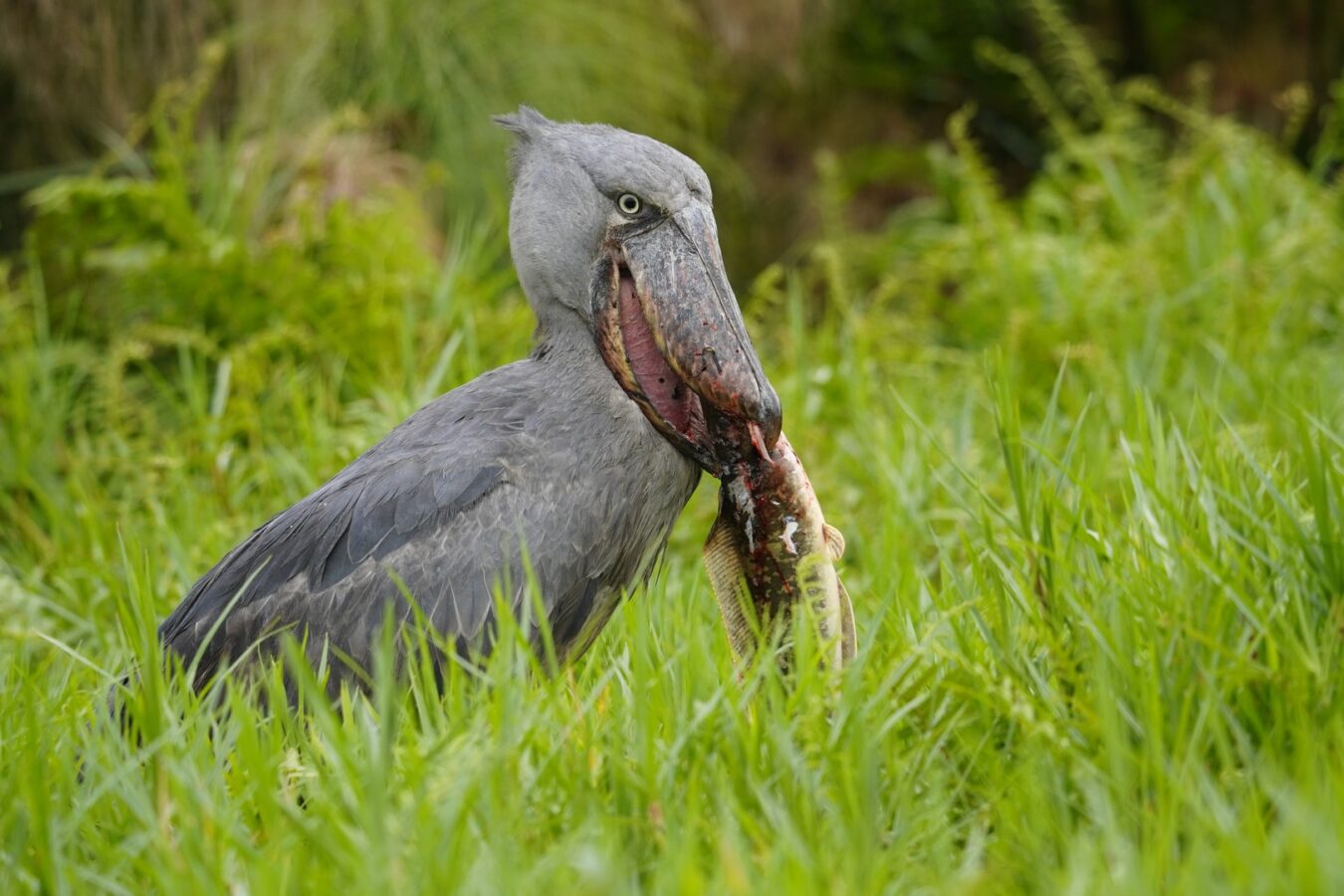
Uganda Birding Safari in the Savannahs
Day 3: Mabira Forest Birding on Foot
Discover the diversity of a lowland rainforest
The third day introduces the forest habitats of central Uganda. After breakfast, travel towards Mabira Forest, a substantial lowland tropical rainforest northeast of Kampala. Its network of trails, mature trees, forest edges and patches of secondary growth provides a different birding environment from the open waters and papyrus channels of Mabamba.
During guided walks, listen carefully for calls coming from the canopy and understory. Some forest birds remain hidden among leaves, so patience and careful observation often prove more useful than covering distance quickly. Your 20-Day Uganda Birding Excursion Safari guide will help identify birds through movement, plumage, calls and feeding behaviour.
Potential sightings include Black-billed Turaco, Grey-throated Barbet, African Blue Flycatcher, Yellow-throated Greenbul, Speckled Tinkerbird and Grey Apalis. Forest edges may also attract sunbirds and other species that feed on flowering plants or insects.
Understanding forest birding
Mabira is particularly useful for learning how different birds use different layers of the forest. Some species forage in the canopy, while others search for insects on branches or move through the lower vegetation. Mixed-species feeding flocks may pass through a section of forest, creating opportunities to observe several birds within a short period.
The afternoon can include further trail exploration, subject to timing and local conditions. Alternatively, take a break at the accommodation and review the morning’s observations.
Local communities and responsible visits
Mabira lies within a wider rural landscape that includes villages, farms and community activities. Depending on the location and arrangements, travellers may learn about local livelihoods and the importance of forest conservation. Any community visit should be arranged with local hosts rather than assumed to form part of the standard package.
- Birds to look for: Black-billed Turaco, Grey-throated Barbet, African Blue Flycatcher, African Paradise Flycatcher, Yellow-throated Greenbul, African Wood Owl, Speckled Tinkerbird, White-tailed Blue Flycatcher, Grey Apalis and Red-tailed Greenbul.
- Accommodation: Mabira Forest Lodge
- Meals: Breakfast, lunch and dinner.
Day 4: Transfer to Masindi and Birding along the Kafu–Masindi Route
Explore changing habitats on the journey north
After breakfast, depart Mabira and travel northwest towards Masindi. This transfer introduces the changing landscapes of central and western Uganda, where farmland, open woodland, scattered wetlands and riverine vegetation create varied conditions for birdwatching.
The planned Kafu–Masindi stretch provides opportunities to stop at suitable locations for roadside birding. Your 20-Day Uganda Birding Excursion Safari guide will select safe places where you can observe birds without disrupting traffic or entering private property without permission. The mixture of habitats may produce species that differ considerably from those seen in Mabira Forest.
Watch for White-crested Turaco, Brown-headed Parrot, African Harrier-Hawk, Lilac-breasted Roller, Senegal Lapwing and Violet-backed Starling. Woodland Kingfishers and other species may appear around trees and watercourses. Sightings will depend on the specific stops, weather and time available.
Transition towards Murchison Falls National Park
Continue towards the Murchison Falls area after the day’s birding stops. This journey prepares you for a major change in landscape, from the agricultural and woodland mosaic to the open savannah, riverine habitats and floodplains of northern Uganda.
After arrival, check in at the lodge, enjoy your meal and prepare equipment for the following day’s forest excursion and boat cruise. The evening is also a good time to discuss the next stages of the itinerary, including preferred bird targets and the practical requirements for walking in forest habitats.
Cultural encounters along the route
Rural communities along the journey provide a glimpse of everyday life in Uganda. Depending on the schedule, you may see local markets, roadside produce stalls and farming activities. A longer cultural stop requires advance agreement and should not be assumed unless the operator confirms it.
- Birds to look for: White-crested Turaco, Brown-headed Parrot, African Harrier-Hawk, Lilac-breasted Roller, Red-throated Wryneck, Senegal Lapwing, Violet-backed Starling, Red-collared Widowbird, Woodland Kingfisher and Black-headed Oriole.
- Accommodation: Pakuba Safari Lodge or Elephant Oasis Lodge
- Meals: Breakfast, lunch and dinner.
Day 5: Budongo Forest Reserve Birding and Murchison Falls Launch Cruise
Search for forest specialists in Budongo
Begin the day with a guided birding excursion in Budongo Forest Reserve. This extensive forest in northwestern Uganda supports a rich range of forest birds and provides habitat for chimpanzees and other wildlife. Its shaded trails and layered vegetation offer a striking contrast with the open savannah environments around Murchison Falls National Park.
Walk with your 20-Day Uganda Birding Excursion Safari guide through suitable forest trails, listening for calls and scanning branches for movement. Potential sightings include African Broadbill, Nahan’s Francolin, Blue-headed Sunbird and Black-capped Apalis. Some forest species can be elusive, so allow time for careful observation rather than expecting every target to appear immediately.
Budongo is also associated with chimpanzee research and conservation. However, a dedicated chimpanzee tracking activity is not separately listed in this day’s programme. Any primate activity beyond incidental sightings should be confirmed in advance, including whether it requires an additional permit or fee.
Discover the wildlife of the Victoria Nile
In the afternoon, travel to the appropriate departure point for a boat cruise on the Victoria Nile towards the base of Murchison Falls. The riverbanks attract waterbirds and other wildlife, making this an excellent complement to the morning’s forest birding.
Look for African Fish Eagles, Malachite Kingfishers, Woolly-necked Storks, Saddle-billed Storks, Pied Kingfishers and Little Egrets. Hippos may gather in the water, while Nile crocodiles sometimes rest along the banks. The scenery becomes increasingly dramatic as the river approaches the falls.
The cruise offers opportunities for photography, but passengers should follow the boat operator’s safety instructions and avoid disturbing wildlife.
- Birds to look for: African Broadbill, Nahan’s Francolin, Blue-headed Sunbird, Black-capped Apalis, African Fish Eagle, Malachite Kingfisher, Woolly-necked Stork, Saddle-billed Stork, Pied Kingfisher and Little Egret.
- Accommodation: Pakuba Safari Lodge or Elephant Oasis Lodge
- Meals: Breakfast, lunch and dinner.
Day 6: Full-Day Birding and Wildlife Viewing in Murchison Falls National Park
Explore northern Uganda’s savannah habitats
Dedicate the sixth day of the 20-Day Uganda Birding Excursion Safari to exploring Murchison Falls National Park. Uganda’s largest national park contains open grasslands, woodland, riverbanks, floodplains and forest patches. This variety attracts a broad selection of birds and supports large mammals, creating opportunities for both dedicated birding and conventional wildlife viewing.
An early morning game drive offers favourable conditions for observing birds before temperatures rise. Scan trees and open ground for raptors, bustards, rollers, bee-eaters, weavers and other savannah species. Martial Eagles and Bateleurs are among the notable birds to look for, although sightings depend on conditions and individual animal movements.
The drive may also reveal elephants, buffaloes, giraffes, antelopes and other mammals. Your guide can help you understand how these animals use different habitats and how the park’s seasonal water sources influence wildlife distribution.
Birding near floodplains and woodland
After a break for lunch, continue with suitable vehicle-based birding or guided walks where permitted. Waterholes, woodland edges and floodplains can attract additional species, while open areas provide opportunities to scan for birds of prey and ground-dwelling species.
The day offers a useful opportunity to compare the birds of Murchison’s savannah with those encountered in the forests earlier in the itinerary. Keep your binoculars accessible and note habitat details alongside each sighting.
- Birds to look for: Martial Eagle, Bateleur, Black-bellied Bustard, Long-crested Eagle, African Jacana, African Hoopoe, Grey-headed Kingfisher, Red-throated Bee-eater, White-bellied Kingfisher and Red-faced Cisticola.
- Accommodation: Pakuba Safari Lodge or Elephant Oasis Lodge
- Meals: Breakfast, lunch and dinner
Day 7: Transfer to Kibale Forest National Park and Evening Birding at Bigodi Wetland
Journey towards Uganda’s primate capital
After breakfast, leave the Murchison Falls area and travel southwest towards Kibale Forest National Park. The 20-Day Uganda Birding Excursion Safari passes through changing landscapes that include rural settlements, cultivated land, woodland and rolling countryside. Depending on traffic, road conditions and the final starting point, the transfer may take a substantial part of the day.
Roadside birding stops can add value to the journey when suitable locations and sufficient time permit. However, the main objective is to reach Kibale safely and preserve enough time for the planned afternoon excursion.
On arrival, check in at your lodge and prepare for a guided walk at Bigodi Wetland Sanctuary. This community-managed wetland near Kibale Forest provides an important contrast to the forest interior. Papyrus, swamp vegetation, streams and forest edges create a range of habitats for birds and other wildlife.
Discover Bigodi’s wetland birdlife
During the walk, search for Papyrus Gonolek, Black-headed Gonolek, Grey-capped Warbler, Papyrus Canary and other wetland species. The dense vegetation requires patient observation, so your guide may pause to listen for calls or scan the edges of the trail.
Bigodi also offers opportunities to learn about community-based conservation. Local initiatives connect tourism with wetland protection and community livelihoods. If the visit includes an approved cultural or community component, local hosts may explain aspects of everyday life and conservation work. The specific activities and any additional fees should be confirmed before travel.
Return to the lodge for dinner and prepare for the following day’s chimpanzee tracking.
- Birds to look for: Papyrus Gonolek, Black-headed Gonolek, Grey-capped Warbler, Papyrus Canary, African Green Pigeon, Purple-breasted Sunbird, Little Bee-eater, African Broadbill, Red-chested Cuckoo and White-spotted Flufftail.
- Accommodation: Guereza Canopy Lodge or Kibale Forest Lodge
- Meals: Breakfast, lunch and dinner.
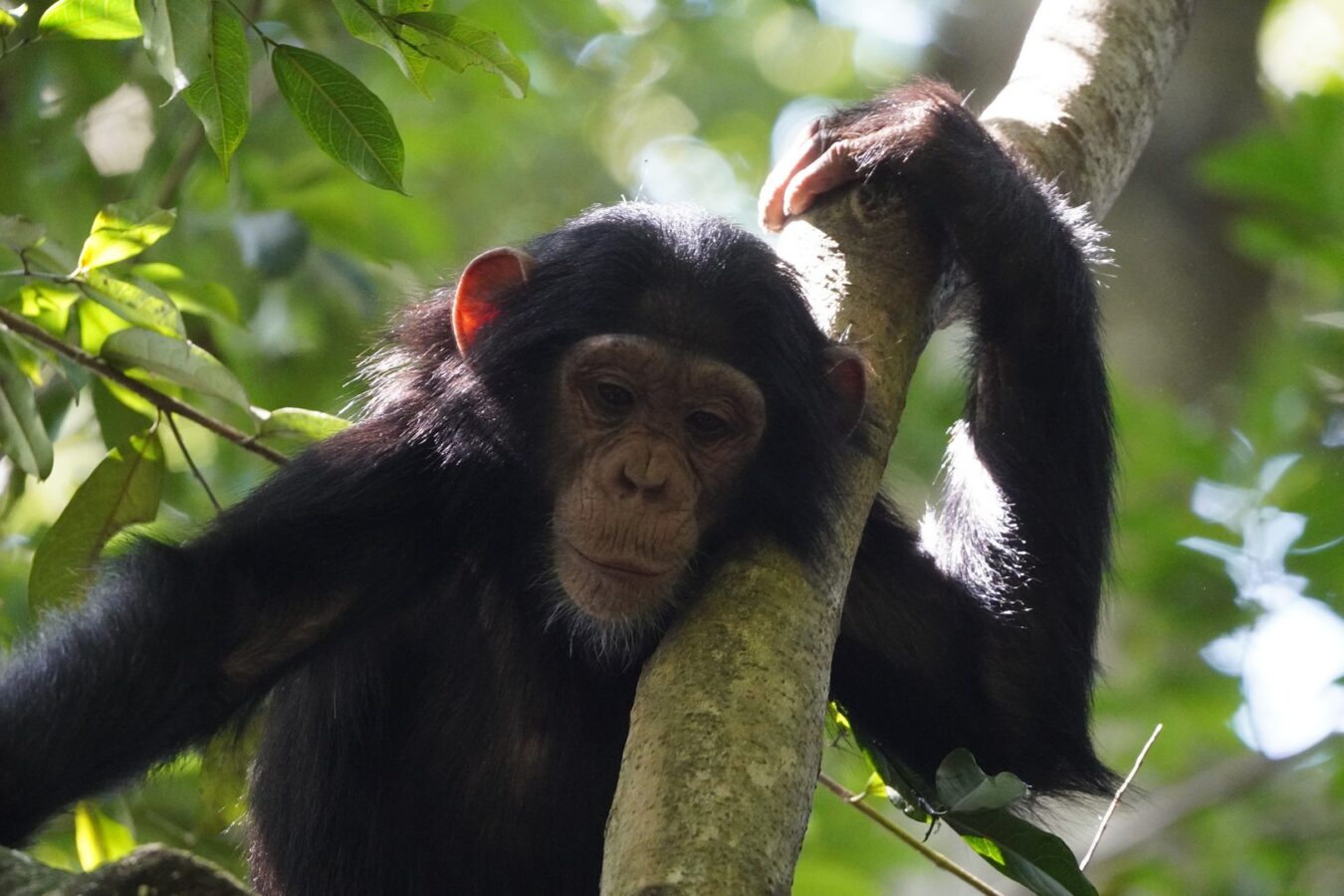
Chimpanzee Tracking in Kibale
Day 8: Chimpanzee Tracking in Kibale Forest and Afternoon Birding
Encounter chimpanzees in a tropical rainforest
Kibale Forest National Park is one of Uganda’s best-known destinations for chimpanzee tracking. Its tropical forest supports numerous primate species alongside a diverse bird community. The eighth day combines this remarkable wildlife experience with further birdwatching, creating one of the central highlights of the 20-Day Uganda Birding Excursion Safari.
Begin with the required briefing and follow your ranger or authorised guide into the forest. Trackers use their knowledge of chimpanzee movements, calls and feeding activity to locate the animals. Once the group finds them, you may observe their behaviour, social interactions and movement through the trees, subject to park rules and the permitted viewing period.
The walk can vary in duration and difficulty. Trails may become muddy, and the forest floor can contain roots, uneven ground and dense vegetation. Suitable footwear, drinking water and clothing that protects against rain and insects can make the experience more comfortable.
Combine primate tracking with birdwatching
The forest offers opportunities to observe birds during the trek, although the main objective remains the authorised chimpanzee activity. Potential sightings include Great Blue Turaco, African Broadbill, Blue-throated Roller, African Emerald Cuckoo and African Dwarf Kingfisher.
After the activity, return for lunch and enjoy an afternoon birding session around suitable forest edges or secondary habitats, depending on time and conditions. Your 20-Day Uganda Birding Excursion Safari guide can focus on species that remain on your target list.
Chimpanzee tracking requires a valid permit and adherence to health and wildlife-protection rules. Confirm the permit date and activity details before departure.
- Birds to look for: African Broadbill, Great Blue Turaco, Blue-throated Roller, African Emerald Cuckoo, African Dwarf Kingfisher, Yellow-bellied Wattle-eye, Red-tailed Greenbul, Forest Weaver, Dusky Crimsonwing and Black-and-white-casqued Hornbill.
- Accommodation: Guereza Canopy Lodge or Kibale Forest Lodge
- Meals: Breakfast, lunch and dinner.
Day 9: Transfer to Semliki National Park
Enter the lowland rainforest landscape
After breakfast, travel from Kibale towards Semliki National Park in western Uganda. The route crosses varied countryside, with agricultural land, small settlements, wooded areas and views towards the western Rift Valley. Depending on the final route and road conditions, the journey can take several hours, so allow sufficient time for arrival and rest.
Semliki lies near Uganda’s border with the Democratic Republic of Congo and protects lowland tropical rainforest that differs from the montane forests of the Albertine Rift. Its position and habitat make it an attractive destination for birders interested in species associated with Central African forest ecosystems.
After checking in, prepare for a guided forest walk if timing, weather and park arrangements allow. Forest birding requires patience because many species remain under dense cover. Your 20-Day Uganda Birding Excursion Safari guide will help you recognise calls and scan branches, trunks and understory vegetation for movement.
An introduction to Semliki’s specialist birdlife
Potential sightings include Red-throated Alethe, Blue-headed Crested Flycatcher, Rufous-sided Broadbill, White-thighed Hornbill and Green-tailed Bristlebill. These species may not appear on every visit, so treat the list as a selection of targets rather than a guarantee.
The park’s forests also support other wildlife, including primates and small antelopes. Their presence reinforces the importance of maintaining connected habitats and minimising disturbance.
Spend the evening reviewing the day’s sightings and preparing for a full day of birding. Confirm the next day’s walking arrangements with your guide, particularly if rain has affected trail conditions.
- Birds to look for: Red-throated Alethe, Blue-headed Crested Flycatcher, Rufous-sided Broadbill, Black-billed Turaco, Yellow-crested Woodpecker, Grey-headed Oliveback, White-thighed Hornbill, Forest Robin, African Blue Flycatcher and Green-tailed Bristlebill.
- Accommodation: Semliki Safari Lodge or Nyakagei Forest Lodge
- Meals: Breakfast, lunch and dinner.
Day 10: Full-Day Birding in Semliki National Park
Search for lowland forest specialists
Spend the tenth day exploring Semliki’s lowland rainforest through guided birding walks. This destination adds important habitat diversity to the 20-Day Uganda Birding Excursion Safari, particularly for travellers interested in species associated with Central African forests.
Start early, when many birds become active and calls can help reveal their locations. Your guide will select suitable trails based on the day’s conditions and your priority species. Look for movement in the canopy, listen for hornbills and woodpeckers, and examine lower branches where forest specialists may forage.
The potential target list includes Grauer’s Broadbill, African Emerald Cuckoo, White-headed Wood Hoopoe, Dusky Crimsonwing and Yellow-eyed Black Flycatcher. The precise mix of species will depend on the habitat visited, seasonal conditions and the success of the search.
Afternoon exploration and recovery
After the morning walk, return to the lodge for lunch and a rest. Continue with an afternoon session along suitable forest edges or other authorised birding areas. This second outing may provide opportunities to observe species that remained elusive earlier in the day.
Wetland-associated birds may occur in appropriate habitats around the wider area, but specific sightings depend on the location and route chosen. Your 20-Day Uganda Birding Excursion Safari guide should select stops based on habitat suitability rather than promise particular birds.
Semliki also offers opportunities to appreciate the ecological connections between forest, water and surrounding landscapes. Responsible birding means remaining on permitted routes, avoiding playback when inappropriate, and refraining from disturbing nests or sensitive species.
- Birds to look for: Grauer’s Broadbill, African Emerald Cuckoo, White-headed Wood Hoopoe, Dusky Crimsonwing, Yellow-eyed Black Flycatcher, Red-tailed Bristlebill, Little Bittern, Purple Heron, Black-and-white Shrike-flycatcher and African Grey Parrot.
- Accommodation: Semliki Safari Lodge or Nyakagei Forest Lodge
- Meals: Breakfast, lunch and dinner.
Day 11: Transfer to Queen Elizabeth National Park and Kasenyi Plains Birding
Travel through western Uganda’s diverse landscapes
After breakfast, depart Semliki and travel south towards Queen Elizabeth National Park. The route crosses rural landscapes and areas of woodland before reaching the park’s southern Kasenyi Plains. Road conditions and transfer times vary, so the guide will manage stops according to the day’s schedule.
The Kasenyi Plains is famous for its tree-climbing lions, although sightings are never guaranteed. The wider landscape also supports elephants, antelopes and numerous bird species. Open grasslands, riverine vegetation and woodland edges create opportunities to search for species that differ from those found in the lowland rainforest.
Potential bird targets include Crowned Eagle, Northern Carmine Bee-eater, Red-necked Falcon, African Pygmy Kingfisher and Abyssinian Ground Hornbill. Your 20-Day Uganda Birding Excursion Safari guide can help identify birds by their calls, flight patterns and preferred habitats.
Afternoon birding in Kasenyi Plains
If time permits, enjoy an afternoon birding drive or guided excursion in suitable areas. Scan the grasslands for ground-dwelling birds and watch riverine trees for kingfishers, rollers and other species. Wetland edges can attract waders and waterbirds, while open savannahs offer views of raptors and other large birds.
The Kasenyi Plains also provides an opportunity to appreciate how local communities and protected areas coexist within a wider rural landscape. Any formal cultural visit should be arranged in advance, with clear details about the host community, activity and cost.
Return to your lodge for dinner and prepare for the next day’s game drive and Kazinga Channel boat cruise.
- Birds to look for: Crowned Eagle, Northern Carmine Bee-eater, Red-necked Falcon, African Pygmy Kingfisher, White-bellied Go-away-bird, Abyssinian Ground Hornbill, Black-bellied Bustard, Lilac-breasted Roller, Black-winged Stilt and Yellow-billed Stork.
- Accommodation: Twin Lakes Safari Lodge or Enshama Game Lodge
- Meals: Breakfast, lunch and dinner.
Day 12: Morning Game Drive and Kazinga Channel Birding Cruise
Search for birds and mammals in Queen Elizabeth National Park
Begin the day with an early morning game drive in Queen Elizabeth National Park. The park’s varied habitats include savannah, woodland, wetlands and forest patches, supporting an impressive mix of birds and mammals. Early hours often provide comfortable conditions for wildlife viewing and photography.
Scan open ground and trees for birds such as Grey-headed Sparrow, Red-billed Quelea and Black-winged Lapwing. The wider park is also home to elephants, buffaloes, antelopes, lions and other wildlife. Sightings depend on animal movements, habitat conditions and the route selected by your guide.
Cruise along the Kazinga Channel
Later, travel to the Kazinga Channel for a boat cruise. This natural waterway connects Lake Edward and Lake George and supports a rich collection of aquatic and wetland wildlife. The cruise provides a different perspective from land-based birding because many birds feed, rest or nest near the shoreline.
Look for African Fish Eagles, Goliath Herons, Saddle-billed Storks, African Jacanas, Malachite Kingfishers, Hamerkops and Little Egrets. Hippos often gather in the water, and crocodiles may rest along the banks. Keep your camera ready, but follow the boat crew’s safety guidance and avoid actions that could disturb wildlife.
Appreciate the park’s ecological richness
The contrast between savannah game drives and water-based birding makes this a particularly rewarding day. It also offers time to review the species recorded so far and identify any remaining targets for the 20-Day Uganda Birding Excursion Safari.
Return to the lodge in the afternoon or evening according to the final schedule.
- Birds to look for: African Fish Eagle, Goliath Heron, Saddle-billed Stork, African Jacana, Grey-headed Sparrow, Red-billed Quelea, Black-winged Lapwing, Malachite Kingfisher, Hamerkop and Little Egret.
- Accommodation: Twin Lakes Safari Lodge or Enshama Game Lodge
- Meals: Breakfast, lunch and dinner.
Day 13: Transfer to Bwindi Impenetrable Forest (Ruhija Sector)
Journey towards a celebrated montane forest
After breakfast, leave Queen Elizabeth National Park and travel towards Bwindi Impenetrable National Park. The 20-Day Uganda Birding Excursion Safari takes you from open savannah and woodland into increasingly green, elevated landscapes associated with southwestern Uganda. Depending on the route and road conditions, the transfer can take several hours.
Where timing permits, the itinerary includes a stop in the Ishasha sector for additional birding. Forest edges and transitional habitats may provide opportunities to observe White-browed Crombec, Black Bee-eater, Dusky Tit and other species. Your guide will choose suitable stops according to safety and the available time.
Prepare for Bwindi’s birding and primate experiences
Bwindi is a UNESCO World Heritage Site recognised for its biodiversity and mountain gorilla conservation. Its steep terrain, dense vegetation and range of forest habitats also make it one of Uganda’s most important destinations for forest birding.
After arrival, settle into the lodge and prepare for the following day’s gorilla trekking. If time and conditions allow, enjoy a short birding walk around suitable areas near the accommodation. Potential sightings include African Broadbill, Black-billed Turaco, Bar-tailed Trogon and Red-capped Robin-Chat.
Cultural experiences in the Bwindi region
Communities around Bwindi have strong connections with the surrounding landscape. Depending on the final programme, visitors may have opportunities to learn about local crafts, farming, food traditions and community conservation initiatives. The supplied itinerary specifically lists a Batwa cultural experience later in the Bwindi section, so confirm its exact timing, location and cost.
Avoid assuming that every lodge offers the same cultural activities. A community experience should identify the host group and explain how the visit supports local participation.
- Birds to look for: White-browed Crombec, Black Bee-eater, Dusky Tit, Dusky Crimsonwing, Green-tailed Bristlebill, Red-capped Robin-Chat, Black-billed Turaco, African Broadbill, Bar-tailed Trogon and African Blue Flycatcher.
- Accommodation: Kiho Gorilla Lodge or Gorilla Mist Camp
- Meals: Breakfast, lunch and dinner.
Day 14: Gorilla Trekking in Buhoma and Transfer to Ruhija via the NECK
Experience mountain gorillas in Bwindi
Mountain gorilla trekking is one of the defining experiences of the 20-Day Uganda Birding Excursion Safari. The day begins with the required briefing at the relevant park facility in the Buhoma sector of Bwindi Impenetrable National Park. Rangers explain trekking procedures, conservation rules and the behaviour expected when visitors encounter a gorilla family.
After the briefing, follow the authorised guides and trackers into the forest. The trek may involve steep slopes, muddy trails, thick vegetation and uneven ground. The duration depends on the location of the assigned gorilla family and the terrain between the trailhead and the encounter site.
When the group locates the gorillas, observe them quietly and follow all instructions about distance, movement, photography and permitted viewing time. These rules protect both visitors and gorillas. A trekking permit is essential, and the permit date and sector must match the final itinerary.
Birding during the forest experience
Bwindi’s forest habitats also support remarkable birdlife. While gorilla trekking focuses on the primates, you may encounter African Broadbills, Dusky Crimsonwings, Red-throated Alethes, Bar-tailed Trogons and other forest species along the trail. Bird sightings depend on conditions and should never interfere with the ranger’s instructions.
Continue to Ruhija
After the trek and lunch arrangements, travel towards Ruhija through the NECK route, subject to road and itinerary conditions. The Ruhija sector lies at a higher elevation and is well known among birders for its montane forest habitats.
The transfer introduces another important birding area while positioning you for the following morning’s excursion to Mubwindi Swamp.
- Birds to look for: Dusky Crimsonwing, Red-throated Alethe, African Broadbill, Yellow-eyed Black Flycatcher, Grauer’s Rush Warbler, Bar-tailed Trogon, Mountain Illadopsis, Cinnamon-chested Bee-eater, Black-faced Rufous Warbler and White-bellied Robin-Chat.
- Accommodation: Kiho Gorilla Lodge or Gorilla Mist Camp
- Meals: Breakfast, lunch and dinner.
Day 15: Birding in Mubwindi Swamp and Transfer to Mgahinga Gorilla National Park
Search for Albertine Rift Forest specialists
Begin the morning with a guided birding excursion in Mubwindi Swamp, one of Bwindi’s best-known high-altitude birding locations. The surrounding montane forest, swamp vegetation and forest edges support a variety of birds associated with the Albertine Rift.
The trail can be wet, muddy and uneven, so sturdy footwear and suitable rain protection are important. Move at a pace that allows you to listen for calls, examine vegetation and scan for birds moving through the understory. Your 20-Day Uganda Birding Excursion Safari guide will help focus the search on target species while maintaining a practical pace for the group.
Potential sightings include Yellow-eyed Black Flycatcher, Rwenzori Turaco, Grauer’s Warbler and Dusky Crimsonwing. These birds attract dedicated birdwatchers, but their presence is not guaranteed on any particular visit. A patient approach and good communication with the guide can improve the quality of the experience.
Travel to the Virunga volcanic landscape
After the morning excursion and lunch, drive towards Mgahinga Gorilla National Park in southwestern Uganda. The Park forms part of the Virunga volcanic landscape and protects montane forest, bamboo zones and other highland habitats. Its dramatic scenery provides a fitting contrast to the wetlands and lowland forests visited earlier.
After checking in, enjoy a short birding walk near the lodge if time, weather and arrangements permit. Rwenzori Double-collared Sunbirds and other forest-edge species may be present in suitable habitats.
Respect the landscape and local communities
The communities around Mgahinga maintain cultural traditions and livelihoods connected to the highland environment. Depending on the final arrangements, visitors may learn about local farming, crafts or community conservation initiatives. Confirm the activity with the operator rather than assuming it forms part of the standard itinerary.
- Birds to look for: Yellow-eyed Black Flycatcher, Rwenzori Turaco, Grauer’s Warbler, Dusky Crimsonwing, Red-throated Alethe, Black Bee-eater, Rwenzori Double-collared Sunbird, Bar-tailed Trogon, Mountain Illadopsis and White-bellied Robin-Chat.
- Accommodation: Mutanda Lake Resort or Ichumbi Hotel
- Meals: Breakfast, lunch and dinner.
Day 16: Full-Day Birding in Mgahinga Gorilla National Park
Explore the montane forests and bamboo zones
Spend the sixteenth day exploring the birding habitats of Mgahinga Gorilla National Park. Its varied elevations and vegetation zones create opportunities to search for forest and montane species within a relatively compact protected area. The Virunga volcanoes also provide a spectacular backdrop for bird photography and quiet observation.
Your 20-Day Uganda Birding Excursion Safari guide will select trails based on conditions, target species and the time available. Pay attention to the understory, bamboo edges and canopy, where different birds feed and move. Some forest specialists remain difficult to locate, so listening carefully often helps reveal their presence.
The potential target list includes Grauer’s Warbler, Rwenzori Turaco, Mountain Masked Apalis and Red-collared Mountain Babbler. Raptors such as Augur Buzzards and Black Sparrowhawks may also appear above the forest or along open slopes.
Look beyond the bird list
Mgahinga supports golden monkeys, a distinctive primate associated with the bamboo forests of the Virunga region. The source itinerary identifies golden monkeys as a possible wildlife highlight, but it does not list a separate golden monkey tracking permit or dedicated tracking session. Confirm any planned primate activity, including availability and additional charges, before booking.
During breaks, enjoy the scenery and learn about the ecological importance of the volcanic highlands. These forests provide habitat for specialised wildlife and contribute to wider conservation efforts across the region.
An opportunity for focused birding
The full day provides flexibility to spend longer searching for particular birds, photographing suitable subjects or reviewing species identified earlier. Your guide can adapt the emphasis according to the group’s experience and the target list, subject to park regulations and practical conditions.
- Birds to look for: Grauer’s Warbler, Rwenzori Turaco, Mountain Masked Apalis, Red-collared Mountain Babbler, Augur Buzzard, Black Sparrowhawk, White-bellied Robin-Chat, Bar-tailed Trogon, Black Bee-eater and Cinnamon-chested Bee-eater.
- Accommodation: Mutanda Lake Resort or Ichumbi Hotel
- Meals: Breakfast, lunch and dinner.
Day 17: Transfer to Lake Mburo National Park and Evening Birding
Return to Uganda’s savannah and wetland habitats
After breakfast, depart Mgahinga and travel northeast towards Lake Mburo National Park. The journey passes through the highlands and rural landscapes of southwestern Uganda before reaching the park’s mosaic of acacia woodland, grassland, rocky outcrops and wetlands.
Roadside birding stops may provide opportunities to observe common farmland and woodland species. However, the schedule should prioritise a safe and timely arrival at the park. Once you reach your lodge, settle in and prepare for an evening excursion.
Lake Mburo is smaller than many of Uganda’s other national parks, yet its variety of habitats makes it rewarding for birdwatching. Wetlands and lakeshores attract aquatic birds, while acacia woodland and open grassland support different species. The park’s birdlife complements the forest specialists encountered in Bwindi and Mgahinga.
Enjoy an evening birding walk
If conditions permit, explore suitable areas around the lodge or within the authorised park zones. Search for African Jacanas, Malachite Kingfishers, African Fish Eagles, Red-headed Weavers and other species associated with the park’s habitats.
The late afternoon can also provide pleasant light for photography. Nevertheless, follow your guide’s instructions, particularly when walking in wildlife areas or near water.
Community life around Lake Mburo
The wider region includes pastoral and farming communities with longstanding connections to cattle keeping and rural trade. Depending on the final arrangements, a community visit may provide insight into local livelihoods, traditional food and the relationship between people, livestock and wildlife. Do not assume that a specific cultural performance or lodge activity is included without confirmation.
- Birds to look for: African Jacana, Malachite Kingfisher, African Fish Eagle, Red-headed Weaver, Black-crowned Tchagra, Yellow-throated Leaflove, Lesser Jacana, Long-toed Lapwing, Grey-capped Warbler and Red-necked Spurfowl.
- Accommodation: Rwakobo Rock Lodge or Mpogo Safari Lodge
- Meals: Breakfast, lunch and dinner.
Day 18: Morning Birding and Afternoon Boat Cruise on Lake Mburo
Explore the park’s wetlands and woodland
Begin the morning with birding around Lake Mburo National Park. The combination of lakeshore vegetation, papyrus, open grassland and acacia woodland creates opportunities to observe species from several ecological groups within one area.
Your guide can focus on the birds that remain on your target list while also explaining the habitats where they occur. Brown-chested Lapwings, Black-winged Lapwings and African Finfoots are among the species of interest, although sightings depend on conditions and the locations visited. Scan the water’s edge carefully, as some birds remain partially concealed by vegetation.
Walking and vehicle-based birding may both contribute to the morning, depending on the final arrangements and park rules. Take time to observe feeding behaviour and calls rather than rushing between locations.
Cruise on Lake Mburo
In the afternoon, enjoy the planned boat cruise on Lake Mburo. The excursion provides a different viewing angle and can reveal birds that remain near the water. Potential sightings include African Darters, Grey Herons, Little Egrets, Malachite Kingfishers and African Fish Eagles.
Hippos and Nile crocodiles may also appear along the lake. The boat operator will provide safety instructions, and passengers should avoid leaning beyond the vessel or attempting to approach wildlife.
Reflect on the safari’s bird diversity
The cruise offers an opportunity to compare wetland species with the forest birds recorded earlier in the journey. By this stage of the 20-Day Uganda Birding Excursion Safari, your bird list may include representatives from papyrus swamps, lowland rainforest, montane forest, savannah and open water.
Return to the lodge for dinner and prepare for the journey back towards Entebbe.
- Birds to look for: Brown-chested Lapwing, Black-winged Lapwing, African Finfoot, African Darter, Grey Heron, Little Egret, Malachite Kingfisher, African Fish Eagle, African Jacana and Black-headed Heron.
- Accommodation: Rwakobo Rock Lodge or Mpogo Safari Lodge
- Meals: Breakfast, lunch and dinner.
Day 19: Morning Road Transfer Back to Entebbe City and Enjoy Afternoon Bird Watching in Entebbe Botanical Gardens
Return to a familiar forest with fresh targets
After breakfast, depart Lake Mburo and travel towards Entebbe, returning to one of the lowland rainforest environments introduced near the beginning of the 20-Day Uganda Birding Excursion Safari. The transfer can take several hours, so the feasibility of a substantial forest excursion depends on the departure time, traffic and the route agreed with your operator.
If the schedule permits, enjoy a guided birding session along suitable forest trails. This return visit provides an opportunity to search for species missed earlier and revisit promising habitats. African Broadbills, Black-and-white-casqued Hornbills, Blue-headed Sunbirds, African Green Pigeons and other forest birds may feature among the day’s targets.
A second visit does not guarantee additional species, but it can be useful for birders who prefer to spend more time observing forest behaviour and refining identification skills. Ask your guide to prioritise the species most important to you.
Continue towards Entebbe
After the forest excursion, continue towards Entebbe and the accommodation arranged for the final night. Roadside birding or cultural stops may be possible if time allows, but avoid adding activities that risk a late arrival before an international flight.
The route passes through a wider landscape of villages, farms and settlements. Depending on the agreed schedule, a brief stop may provide opportunities to observe local markets or learn about everyday life in central Uganda. Any formal cultural activity should be confirmed in advance.
Use the evening to review your bird list, back up photographs and prepare your luggage. Your guide can help organise the final morning’s transfer and confirm the airport departure time.
- Birds to look for: African Broadbill, Black-and-white-casqued Hornbill, Blue-headed Sunbird, African Green Pigeon, Red-tailed Ant Thrush, White-throated Bee-eater, Olive Woodpecker, African Blue Flycatcher, Yellow-rumped Tinkerbird and Green Crombec.
- Accommodation: Lake Victoria Hotel or Green Valley Guest House
- Meals: Breakfast, lunch and dinner.
Day 20: Transfer to Entebbe International Airport and Departure
Conclude your Uganda birding adventure
Enjoy breakfast before preparing for your transfer to Entebbe International Airport. Depending on your flight time, the final morning may allow a short stop at the Uganda Equator Crossing in Kayabwe, as indicated in the 20-Day Uganda Birding Excursion Safari. This popular landmark offers an opportunity to take photographs and reflect on the journey through Uganda’s forests, wetlands, mountains and savannahs.
The stop should remain subject to your flight schedule and the distance from the final accommodation to the airport. For international departures, leave sufficient time for traffic, check-in and airport procedures. If the flight departs early, a direct transfer may be more appropriate than additional sightseeing.
Review the highlights of the journey
Over the previous 20 days, you have explored habitats ranging from Mabamba’s papyrus wetlands to Semliki’s lowland rainforest, the montane forests of Bwindi and Mgahinga, and the savannah and aquatic environments of Murchison Falls, Queen Elizabeth and Lake Mburo.
The itinerary offers opportunities to seek the Shoebill, Great Blue Turaco, African Fish Eagle, Rwenzori Turaco and many other birds. It also combines birding with chimpanzee tracking, mountain gorilla trekking and boat cruises.
The original 20-Day Uganda Birding Excursion Safari describes the potential to encounter more than 1,050 bird species across Uganda’s diverse habitats. Actual sightings depend on season, weather, habitat conditions, time spent at each site and the birds’ movements. The value of the safari lies not only in the final species count, but also in the depth of observation and the diversity of environments explored.
- Birds to look for around suitable stops: Common Bulbul, African Grey Parrot, Speckled Mousebird, African Thrush, Pied Crow, Woodland Kingfisher, Little Bee-eater and other species present in the selected habitats. Rare sightings, including species such as the African Pitta, should be treated as possibilities rather than expectations.
- Meals:
- Accommodation: None after the scheduled departure, unless an extra night has been arranged.
Birding Highlights of the 20-Day Uganda Birding Excursion Safari
Mabamba Wetland: Uganda’s Famous Shoebill Destination
Mabamba Wetland provides a strong opening to the 20-Day Uganda Birding Excursion Safari because it introduces visitors to one of Uganda’s most sought-after birds. The Shoebill attracts attention through its unusual appearance, impressive size and specialised hunting behaviour. A guided canoe excursion through papyrus channels provides a practical way to explore the wetland while searching for this remarkable species.
However, Mabamba offers much more than one bird. African Jacanas, Malachite Kingfishers, African Swamphens, Black Crakes and other waterbirds use the wetland’s varied habitats. Papyrus Gonoleks and other reed-associated species can also attract experienced birders who want to study specialised wetland birds.
Birdwatching here rewards patience and quiet movement. Birds may remain hidden in dense vegetation, and sightings depend on water levels, weather and seasonal conditions. A responsible guide will prioritise wildlife welfare and avoid actions that unnecessarily disturb the birds.
The wetland also demonstrates the importance of conserving freshwater ecosystems. Papyrus habitats provide feeding and nesting areas for birds while supporting wider ecological processes. Responsible tourism can help maintain awareness of these environments and the livelihoods associated with them.
Mabira Forest: Lowland Rainforest Birding
Mabira Forest introduces birders to a forest ecosystem where observation relies on listening, patience and understanding how birds use different vegetation layers. The forest canopy, understory, edges and patches of secondary growth each support different species and feeding patterns.
A guided walk may reveal turacos, barbets, flycatchers, greenbuls, sunbirds and other forest birds. Mixed-species feeding flocks can create particularly rewarding moments, with several birds moving through the same area. Nevertheless, the dense vegetation means that some birds may be heard without being seen clearly.
For photographers, Mabira offers opportunities to work with natural light filtering through the canopy. Use appropriate camera settings and avoid disturbing birds in pursuit of a closer image. A good birding guide can help locate subjects while keeping the group on authorised trails.
The forest also offers an opportunity to discuss conservation and the pressures that affect tropical habitats. Where a suitable community visit has been arranged, travellers can learn about local livelihoods and forest protection. The 20-Day Uganda Birding Excursion Safari does not guarantee a specific cultural performance or community activity, so confirm these arrangements before travel.
Murchison Falls National Park: Savannah, River and Woodland Birds
Murchison Falls National Park adds broad habitat diversity to the 20-Day Uganda Birding Excursion Safari. The park’s open savannah, woodland, riverbanks and floodplains support birds with different feeding strategies, from ground-foraging species to large raptors and waterbirds.
Game drives allow visitors to cover extensive areas and search for species such as Martial Eagles, Bateleurs, rollers, bee-eaters and bustards. The river cruise offers a different experience, focusing on birds that use the Nile and its banks. African Fish Eagles, kingfishers, storks and herons may appear alongside hippos and crocodiles.
This combination helps birders understand how habitat structure influences bird distribution. Open grassland species may be easier to observe from a vehicle, while riverbank birds can be easier to approach visually from a boat, subject to wildlife behaviour and operating conditions.
Murchison Falls itself adds dramatic scenery to the journey. The Nile forces its way through a narrow gorge before continuing downstream, creating one of Uganda’s most recognisable natural landmarks. The combination of scenery, wildlife and birding makes the park an important component of a comprehensive Uganda Wildlife Safari.
Budongo Forest: Forest Birds and Chimpanzee Habitat
Budongo Forest introduces a different set of birding challenges. Unlike open savannah, dense forest requires attention to calls, movement and small differences in plumage. Species such as African Broadbills, sunbirds and forest specialists may occupy different layers of vegetation, making a knowledgeable guide especially valuable.
The forest is also associated with chimpanzee conservation. Although the supplied 20-Day Uganda Birding Excursion Safari includes birding in Budongo, it does not explicitly include a separate chimpanzee tracking permit for this day. Visitors interested in a dedicated primate activity should confirm whether it can be added and whether additional costs or time are required.
Budongo’s value lies in its combination of biodiversity and forest ecology. Observing birds in this environment can help travellers appreciate the role of mature trees, forest structure and connected habitats in supporting wildlife. Remaining on permitted trails and following the guide’s instructions helps minimise disturbance.
Kibale Forest and Bigodi Wetland: Birding with Primates
Kibale and Bigodi create a rewarding combination for birders who also want to experience Uganda’s primates. Kibale’s forest supports chimpanzees and a diverse bird community, while Bigodi’s papyrus wetlands, streams and forest edges attract wetland and forest-edge species.
The 20-Day Uganda Birding Excursion Safari includes an afternoon walk at Bigodi followed by chimpanzee tracking in Kibale. These experiences provide different perspectives on the landscape. Bigodi’s more open sections may offer views of birds along vegetation edges, whereas Kibale’s dense forest requires closer attention to calls and movement.
The community-managed nature of Bigodi also provides an opportunity to learn about the relationship between tourism, wetland conservation and local livelihoods. The precise cultural activities depend on the local arrangements, so travellers should confirm any additional community visit or contribution.
Semliki National Park: Lowland Rainforest Specialists
Semliki offers a distinctive lowland rainforest experience within the western Rift Valley. Its ecological character differs from the higher-altitude forests visited later in the safari, creating opportunities to search for birds associated with Central African forest habitats.
Forest birding here requires time and concentration. Some target species remain hidden, while others reveal themselves through calls or brief movement between branches. The 20-Day Uganda Birding Excursion Safari guide’s knowledge of habitat and bird behaviour can help visitors make the most of each excursion.
The Park also demonstrates why Uganda’s bird diversity benefits from its position between different biogeographical regions. Travellers can encounter markedly different bird communities without crossing an international border.
Queen Elizabeth National Park: Birding and Wildlife by Water
Queen Elizabeth National Park combines savannah wildlife with wetland and riverine habitats. The Kazinga Channel boat cruise is a key highlight because it brings visitors close to shorelines where herons, storks, kingfishers, jacanas and other birds feed or rest.
The surrounding park also supports elephants, buffaloes, antelopes and predators, so a morning game drive adds variety to the birding programme. The combination of vehicle and boat excursions creates opportunities to compare species and habitats within the same destination.
Responsible wildlife viewing remains important. Follow the guide’s instructions, avoid loud or disruptive behaviour and never attempt to feed animals. During boat excursions, remain seated as directed and maintain a safe distance from wildlife.
Bwindi Impenetrable National Park: Gorilla Trekking and Albertine Rift Birding
Bwindi is one of the most important destinations on the 20-Day Uganda Birding Excursion Safari. Its mountain gorilla population attracts visitors from around the world, while its montane forests support a wide range of birds, including species associated with the Albertine Rift.
The itinerary combines gorilla trekking in Ruhija with further birding opportunities in the Ruhija sector and Mubwindi Swamp. This provides a useful contrast between the primate-focused trekking experience and dedicated searches for forest specialists.
Gorilla trekking requires a valid permit and compliance with park regulations. The forest terrain can be demanding, so travellers should prepare for steep paths, mud and changing weather. Birders should carry lightweight equipment that does not interfere with the trekking activity or ranger instructions.
Mgahinga Gorilla National Park: Volcanic Scenery and Montane Birding
Mgahinga adds the dramatic landscapes of the Virunga volcanic range to the journey. Bamboo and montane forest habitats support birds adapted to highland conditions, while the park’s wider environment also supports golden monkeys and mountain gorillas.
For birders, the park provides opportunities to search for species such as Rwenzori Turaco, Grauer’s Warbler and Mountain Masked Apalis. These are target species, not guaranteed sightings. Weather, elevation, trail conditions and the time spent at each location influence the results.
The volcanic scenery provides an excellent backdrop for photography, but travellers should dress for cooler temperatures and possible rain. Follow Park rules and use only authorised trails.
Lake Mburo National Park: Wetlands, Acacia Woodland and Lakeshore Birds
Lake Mburo offers a different setting from Uganda’s tropical and montane forests. Its mosaic of grassland, acacia woodland, wetlands and lakeshore support a wide range of birds and mammals. The itinerary includes morning birding and an afternoon boat cruise, giving visitors opportunities to observe both terrestrial and aquatic species.
The cruise may reveal darters, herons, egrets, kingfishers and other water-associated birds. Hippos and crocodiles may also be present. On land, look for species associated with open grassland and acacia woodland.
Lake Mburo’s varied habitats make it a valuable final birding destination before returning towards Entebbe. It also provides opportunities to reflect on the differences between the wetlands, forests and savannahs encountered throughout the 20-Day Uganda Birding Excursion Safari journey.
Cultural Experiences During the 20-Day Uganda Birding Excursion Safari
Learn About Community Conservation at Bigodi Wetland
Bigodi Wetland Sanctuary is associated with community-based conservation and local participation in tourism. A guided visit can help travellers understand how wetland protection, birdwatching and community livelihoods intersect.
Depending on the activity arranged, local hosts may explain aspects of agriculture, traditional foods, crafts or everyday community life. The exact programme should be confirmed with the operator, including the duration, guide arrangements and any contribution or activity fee.
Visitors should approach community experiences with respect. Ask permission before photographing people, follow local guidance and avoid treating daily life as a staged performance. Where possible, support legitimate community enterprises by purchasing locally made products or using approved guiding services.
Discover Local Life Around Bwindi and Mgahinga
The communities around Bwindi and Mgahinga live within landscapes shaped by agriculture, forest conservation and tourism. A cultural visit can provide insight into local food traditions, crafts, farming practices and the relationship between communities and protected areas.
The supplied 20-Day Uganda Birding Excursion Safari specifically lists a Batwa cultural experience in the Bwindi section. The exact timing and format should be confirmed before travel. The experience should centre local participation and cultural interpretation, with clear information about the host community and any fees.
Travellers should recognise that communities are diverse and that cultural traditions evolve. A respectful visit allows hosts to determine what they wish to share and how they wish to present their heritage.
Explore Rural Markets and Everyday Life
Road journeys through Uganda may pass villages, roadside produce stalls, trading centres and agricultural areas. These landscapes reveal aspects of daily life beyond the national parks and forests.
A brief stop may be possible when it fits the schedule and the operator has identified a suitable location. However, the 20-Day Uganda Birding Excursion Safari does not promise a particular market visit or cultural activity along every transfer route.
Travellers who wish to spend more time with local communities should discuss this before booking. The operator can assess whether an additional visit fits the schedule without compromising birding activities or required transfers.
Cultural Experiences Near Safari Lodges
The accommodation properties listed in this itinerary serve as practical bases for exploring the surrounding habitats. Some lodges may be able to help arrange local guides, craft visits, community walks or other cultural activities. Availability varies by property and location, so travellers should not assume that every lodge provides the same experiences.
Before booking a cultural activity, confirm the host community, location, duration, transport arrangements and cost. Ask how the activity supports local participants and whether the visit requires advance arrangements.
Deks Africa Safaris & Tours Ltd can help coordinate cultural experiences that fit the route, subject to availability and agreement with local hosts. The priority should remain an authentic, respectful experience that complements the birding itinerary rather than an unverified promise of a specific performance or lodge activity.
Practical Guide to Planning Your 20-Day Uganda Birding Excursion Safari
Best Time to Visit Uganda for Birding
Uganda supports birdwatching throughout the year, although conditions vary by region and season. Rainfall influences vegetation, water levels, road conditions and bird activity, so the best dates depend partly on your target species and preferred travel style.
Some visitors favour relatively drier periods because trails may be easier to navigate and road transfers can be more straightforward. Other birders appreciate greener conditions, when landscapes become lush and some birds show breeding activity. Migratory species may also influence the range of birds present during particular periods.
The 20-Day Uganda Birding Excursion Safari covers multiple ecosystems, so no single month guarantees ideal conditions at every stop. Wetland water levels, forest access, highland weather and the timing of breeding activity can vary considerably.
Discuss your travel dates and priority species with the operator before booking. If you have a specific target list, share it in advance so the guide can advise on the most appropriate route and realistic expectations. Seasonal conditions may also influence the time needed for certain activities.
What to Pack for a 20-Day Uganda Birding Excursion Safari?
Good preparation improves comfort and helps you make the most of every excursion. Bring binoculars suitable for birdwatching, a camera if desired, spare batteries, memory cards and a notebook or digital checklist for recording sightings.
Lightweight clothing that dries quickly works well in warm and humid environments. Include long-sleeved shirts and long trousers for forest walks, a waterproof jacket, comfortable walking shoes with good grip, socks and a hat. Cooler highland destinations such as Bwindi and Mgahinga may require warmer layers, especially during early-morning outings.
A small daypack can hold drinking water, snacks, a field guide, insect repellent, sunscreen and personal medication. Waterproof protection for cameras, phones and binoculars is particularly useful in rainforests and wetlands.
If you plan to photograph birds, consider the weight of your equipment before packing. Forest walks may involve steep terrain, and a heavy camera setup can become tiring. Choose gear that suits your experience and physical comfort.
For gorilla trekking, follow the operator’s guidance on clothing, footwear and any recommended personal equipment. Keep your hands free where possible and avoid carrying unnecessary items into the forest.
Birding Equipment and Field Skills
You do not need professional equipment to enjoy the 20-Day Uganda Birding Excursion Safari, but a reliable pair of binoculars can significantly improve your experience. Choose a model that feels comfortable, focuses easily and performs well in changing light.
A regional bird guide or identification app can help you review species, compare field marks and keep records. However, avoid relying solely on photographs or digital tools. Listening to calls and observing habitat can be equally important, especially when birds remain hidden in dense vegetation.
A notebook allows you to record the date, location, habitat and circumstances of each sighting. These details can be useful when distinguishing similar species or reviewing observations after the safari.
For photographers, practise adjusting exposure and focus before the trip. Forest environments can present difficult lighting, while wetland and savannah locations may involve bright sun or reflections from water. Patience and respect for wildlife should always take priority over getting a photograph.
Physical Fitness and Trekking Preparation
The itinerary combines vehicle transfers with walking excursions, forest birding, chimpanzee tracking and mountain gorilla trekking. Some walks may involve uneven ground, steep slopes, mud, roots and humid conditions.
You do not need to be an elite athlete to enjoy every part of the 20-Day Uganda Birding Excursion Safari, but a reasonable level of mobility and stamina will improve comfort. Regular walking before travel can help prepare you for longer excursions. If you have concerns about mobility, communicate them to the operator before confirming the trip so that practical arrangements can be discussed.
Gorilla trekking can be particularly demanding because the location of the gorillas determines the route and duration. Chimpanzee tracking also involves walking through forest terrain, and the time needed to locate the animals can vary.
Wear appropriate footwear, carry water and follow the guide’s instructions. Take breaks when needed and inform your guide if you experience difficulty. Never leave the group or enter restricted areas to pursue a bird or primate.
Birding Etiquette and Responsible Wildlife Viewing
Responsible birding protects wildlife and improves the experience for other visitors. Keep a respectful distance from birds, avoid disturbing nests and refrain from handling eggs, chicks or wild animals. Do not remove feathers, plants or other natural objects from protected areas.
Playback of bird calls can disturb wildlife, particularly during breeding periods or when used repeatedly. Use it only when permitted and appropriate, following your guide’s advice. Avoid crowding a bird, blocking its movement or causing it to leave a feeding or resting site.
During primate encounters, follow all park regulations and instructions from rangers. Do not feed chimpanzees or gorillas, attempt to touch them or make sudden movements. These rules protect visitors and wildlife while supporting conservation.
Support conservation by following park guidelines, using authorised guides and respecting local communities. Responsible tourism also means managing litter, conserving water where possible and avoiding unnecessary disturbance at lodges and camps.
Health, Safety and Travel Documents
Before departure, check the entry requirements that apply to your nationality and travel dates. Confirm passport validity, visa arrangements and any current immigration requirements through official sources. The 20-Day Uganda Birding Excursion Safari quotation excludes Uganda visa fees, so travellers should budget for any applicable entry costs.
Consult a qualified travel health professional well before travel for advice relevant to Uganda, including vaccinations, malaria prevention and personal medication. Requirements and recommendations can differ according to a traveller’s health, itinerary and travel history.
Carry appropriate travel insurance that covers the activities you plan to undertake. Confirm the policy’s provisions for medical treatment, emergency evacuation, trip interruption and trekking activities. Do not assume that a basic travel policy automatically covers every activity.
Follow your guide’s safety instructions during road transfers, boat cruises, forest walks and wildlife encounters. Use seat belts where fitted, remain seated as directed on boats and avoid approaching wild animals independently.
Photography Tips for Birders
Bird photography in Uganda offers a variety of challenges and rewards. Wetlands such as Mabamba provide open-water scenes and opportunities to photograph birds among papyrus, while forests such as Mabira and Budongo demand careful work in shaded conditions. Savannah parks offer more open backgrounds, and montane forests can provide dramatic scenery.
A telephoto lens can help photograph birds without approaching them too closely. However, good fieldcraft remains essential. Move slowly, avoid sudden movements and respect any restrictions on photography during primate encounters.
Use early-morning and late-afternoon light where possible, but remember that bird activity varies. In forests, look for clear views through vegetation and avoid forcing a photograph when branches obscure the subject.
Back up images regularly and keep notes about the location and habitat. These records help connect photographs with your bird list and create a more informative record of the journey.
Accommodation on the 20-Day Uganda Birding Excursion Safari
Choosing the Right Lodge for Birding
Accommodation influences the comfort and logistics of a long birding itinerary. The properties listed in the 20-Day Uganda Birding Excursion Safari provide bases near the principal destinations, helping travellers reach wetlands, forests and national parks according to the schedule.
These are proposed properties rather than confirmed reservations. Availability, room categories and meal plans must be checked for your dates. The final itinerary may require substitutions if a lodge cannot accommodate the group.
What to Confirm About Your Accommodation?
Ask the operator to confirm the name of each property, the number of nights, room type, occupancy arrangement and meal plan. Clarify whether the accommodation has en-suite facilities and whether Wi-Fi, laundry, drinks and other services incur extra charges.
Birders may also wish to ask about early breakfasts, packed lunches and the arrangements for departures before sunrise. Such details can be important when an excursion begins early or a long road transfer follows.
Some lodges may offer birding opportunities around their grounds, but the quality and availability of these opportunities vary. Confirm whether a local guide is available and whether a dedicated lodge birding walk costs extra.
Cultural activities should be treated in the same way. A lodge’s location near a community does not automatically mean that a cultural visit is included. Ask the operator to identify the actual activity, host and cost before making payment.
Inclusions and Exclusions for the 20-Day Uganda Birding Excursion Safari
What Is Included?
The supplied itinerary lists the following inclusions for the 20-Day Uganda Birding Excursion Safari:
- Airport transfers in Entebbe.
- Ground transportation in a private 4×4 safari vehicle.
- Accommodation for 19 nights, with the stated package based on full-board arrangements; confirm the precise meal plan for each day.
- Park entrance fees and ranger fees listed in the quotation.
- A mountain gorilla trekking permit for Bwindi or Mgahinga, with the actual trekking location to be confirmed against the itinerary.
- A chimpanzee tracking permit for Kibale Forest National Park.
- Boat cruises on the Victoria Nile at Murchison Falls, the Kazinga Channel and Lake Mburo.
- Guided birding excursions and nature walks as specified in the final programme.
- Services of a professional English-speaking guide.
- Complimentary mineral water, listed as one litre per person per day.
- A Batwa cultural experience in the Bwindi region, subject to confirmation of the exact activity and arrangements.
- Applicable government taxes stated in the final quotation.
The operator should provide a written breakdown showing how these services apply to each day. In particular, confirm the permit date and sector for gorilla trekking, the chimpanzee tracking date, the boat cruise arrangements and the precise accommodation schedule.
What Is Excluded?
- International flights to and from Uganda.
- Domestic flights.
- Uganda entry visa fees, where applicable.
- Personal travel insurance.
- Tips and gratuities.
- Personal expenses.
- Optional activities not specified in the itinerary.
- Alcoholic drinks and soft drinks not included in the agreed package.
Additional costs may arise if you request extra accommodation, lodge upgrades, additional cultural activities or changes to the planned route. Confirm all such expenses before booking.
The final quotation should also clarify how the operator handles changes caused by road conditions, weather, accommodation availability or permit restrictions. Request written payment terms, cancellation conditions and refund arrangements before paying a deposit.
Frequently Asked Questions About the 20-Day Uganda Birding Excursion Safari
Is this safari suitable for beginner birdwatchers?
Yes. The 20-Day Uganda Birding Excursion Safari welcomes beginners, intermediate birdwatchers and experienced birding enthusiasts who want to explore Uganda’s exceptional avian diversity. You do not need advanced identification skills to enjoy the journey. With guidance from an experienced birding guide, you can learn to recognise birds by their colours, calls, size, flight patterns and preferred habitats.
The itinerary visits a wide range of environments, including Mabamba Wetland, Mabira Forest, Murchison Falls National Park, Kibale Forest, Semliki National Park, Bwindi Impenetrable National Park and Lake Mburo National Park. Each destination introduces different bird families and observation opportunities.
Beginners can gradually develop their skills, while experienced birders can focus on specialised targets, including wetland birds and Albertine Rift Forest species. Bring comfortable binoculars, a notebook and a field guide or bird identification application. Before travelling, share your experience level and priority species with Deks Africa Safaris & Tours Ltd so your guide can tailor the available birding time to your interests.
Can I see the Shoebill during the safari?
The 20-Day Uganda Birding Excursion Safari includes a dedicated excursion to Mabamba Wetland, one of Uganda’s best-known locations for searching for the remarkable Shoebill. This large wetland bird attracts birdwatchers because of its distinctive bill, impressive stature and specialised feeding behaviour. An early-morning canoe excursion through the papyrus channels provides an opportunity to search for it in its natural habitat.
Local guides know the wetland’s waterways and can help identify suitable areas for observation. Nevertheless, the Shoebill remains a wild bird, so sightings depend on its movements, feeding patterns, water levels and weather conditions. No responsible safari operator can guarantee an encounter.
Even if the Shoebill remains elusive, Mabamba offers rewarding birdwatching opportunities. You may encounter Papyrus Gonoleks, African Jacanas, Malachite Kingfishers, African Swamphens and other wetland species. Carry binoculars and a camera if desired, and follow your guide’s instructions to avoid disturbing the birds. Patience, quiet movement and realistic expectations will help you appreciate the wetland’s wider biodiversity.
Does the 20-Day Uganda Birding Excursion Safari include chimpanzee tracking?
Yes. The 20-Day Uganda Birding Excursion Safari includes chimpanzee tracking in Kibale Forest National Park on Day 8. Kibale is renowned for its tropical rainforest, rich primate diversity and excellent opportunities to observe chimpanzees in their natural environment. This activity adds an exciting wildlife dimension to the birding journey.
The experience normally begins with a briefing and a guided walk into the forest with authorised personnel. Trackers use their knowledge of chimpanzee movements and calls to help locate the animals. Once you find them, you can observe their behaviour according to park regulations and the permitted viewing conditions. Walking distances and the time required to locate the chimpanzees can vary.
A valid chimpanzee tracking permit is required, so confirm its availability, date and inclusion in your final quotation before paying a deposit. The itinerary also includes birding in Budongo Forest Reserve, but it does not specify a separate chimpanzee tracking activity there. Any additional primate excursion in Budongo would require separate confirmation, including its costs and scheduling.
Is mountain gorilla trekking included?
Yes. Mountain gorilla trekking is one of the major highlights of the 20-Day Uganda Birding Excursion Safari. The itinerary schedules the main trekking experience in the Buhoma sector of Bwindi Impenetrable National Park on Day 14, followed by a transfer towards Ruhija. Bwindi’s montane rainforest provides habitat for endangered mountain gorillas and numerous forest bird species.
The activity begins with a briefing from park personnel, followed by a guided trek through the forest to locate an assigned habituated gorilla family. Depending on the family’s location, the walk may involve steep slopes, muddy trails and dense vegetation. Once you find the gorillas, you must follow the rangers’ instructions regarding viewing distance, behaviour and photography.
A valid gorilla trekking permit is essential. Confirm the permit date, sector, availability and inclusion in the safari price before booking. Pack sturdy walking shoes, long trousers, a waterproof jacket and sufficient drinking water. Although the encounter can be deeply rewarding, gorilla sightings and trekking duration cannot be guaranteed in advance. Responsible conduct helps protect both visitors and these remarkable primates.
Are the birds guaranteed to appear?
No. The 20-Day Uganda Birding Excursion Safari explores natural habitats where bird sightings depend on environmental conditions and the behaviour of wild animals. Although the itinerary identifies many potential target species, it cannot guarantee that every bird will appear during your visit.
Weather, seasonal rainfall, food availability, vegetation density and breeding activity can influence where birds feed and how visible they become. Some species remain relatively easy to observe in open wetlands or savannah habitats, while others live in dense rainforest and may reveal themselves only through their calls or brief movements.
Your guide will use local knowledge and field experience to select suitable locations and improve your chances of finding target species. However, successful birding also requires patience, flexibility and careful observation. If a particular bird does not appear, another species may offer an equally interesting encounter.
To make the most of the safari, share your priority species before departure and keep a record of your sightings throughout the journey. This approach helps you appreciate the diversity of Uganda’s habitats rather than measuring the experience solely by the number of birds recorded.
Is the 20-Day Uganda Birding Excursion Safari Private?
The supplied itinerary for the 20-Day Uganda Birding Excursion Safari lists ground transportation in a private 4×4 safari vehicle. This arrangement is intended to support flexible travel between Uganda’s wetlands, forests, national parks and accommodation properties while allowing your guide to coordinate birding stops where time and road conditions permit.
However, the final booking should clarify exactly which services are private. A private road vehicle does not automatically mean that every activity, including boat cruises, park experiences or guided excursions, will operate exclusively for your party. Some activities may use shared boats, designated park arrangements or group-based services.
Before confirming your reservation, ask Deks Africa Safaris & Tours Ltd to specify whether the vehicle and guide are dedicated to your group throughout the safari. Confirm the vehicle type, passenger capacity, luggage arrangements and any circumstances in which you may share an activity with other travellers.
If you require a specialised birding guide, additional space for photography equipment or a slower pace for observing difficult species, discuss these preferences in advance. Clear arrangements help ensure that the safari matches your expectations and provides a comfortable, well-organised birding experience.
Are cultural activities included?
The 20-Day Uganda Birding Excursion Safari includes a Batwa cultural experience in the Bwindi region, according to the supplied inclusions. This provides an opportunity to learn about Batwa heritage and the relationship between local communities, forest environments and conservation. Confirm the exact activity, location, timing and arrangements before booking.
The itinerary also includes a visit to Bigodi Wetland Sanctuary, a community-managed conservation area near Kibale Forest. Although the wetland visit offers insight into community involvement in conservation, additional cultural activities are not automatically included. Visits to local markets, craft workshops, farms or other community initiatives require confirmation.
Cultural experiences can add valuable context to a birding journey by introducing visitors to local livelihoods, traditions and conservation efforts. For a respectful visit, follow the host community’s guidance, ask permission before taking photographs and support legitimate local enterprises where appropriate.
Before paying your deposit, request a written list of the cultural activities included in the package. Ask about any additional fees, transport requirements and expected duration. This ensures that you understand what the operator has arranged and avoids assuming that a particular performance, village visit or lodge-based activity forms part of the standard itinerary.
How much birding can I expect each day?
The 20-Day Uganda Birding Excursion Safari combines dedicated birding excursions with wildlife activities and transfers between destinations. Some days allow extensive observation, such as the full-day birding programme in Semliki National Park and the excursions around Murchison Falls, while others include chimpanzee tracking, gorilla trekking or long road journeys.
The amount of time available for birdwatching depends on the day’s schedule, weather, road conditions and the location of the accommodation. On transfer days, your guide may arrange roadside stops when suitable locations and sufficient time permit. However, these stops should not be treated as guaranteed additions to the programme.
The itinerary also includes boat cruises on the Victoria Nile, Kazinga Channel and Lake Mburo. These activities provide valuable opportunities to observe waterbirds alongside other wildlife. Forest walks, meanwhile, allow more focused searches for species that live in dense vegetation.
If you have a specialised target list, share it with the operator before departure. Your guide can then prioritise suitable habitats and identify realistic opportunities within the existing schedule. Remember that successful birding often involves spending time in one location, listening carefully and observing behaviour rather than rushing between many sites.
What should I confirm before paying a deposit?
Before paying a deposit for the 20-Day Uganda Birding Excursion Safari, request a final written quotation that clearly identifies the agreed itinerary, services and costs. Confirm your travel dates, number of travellers, accommodation properties, room arrangements, meal plans and transportation details. Check whether the listed lodges have confirmed availability or whether the operator may propose alternatives.
Next, verify the inclusion and availability of the mountain gorilla trekking permit for Bwindi and the chimpanzee tracking permit for Kibale Forest National Park. Confirm the activity dates and any applicable permit conditions. Review the park entrance fees, ranger services, guided birding excursions, boat cruises and Batwa cultural experience.
Ask the operator to clarify whether the private 4×4 vehicle and professional guide are dedicated to your group throughout the trip. Confirm airport transfers, the stated daily drinking-water allowance and whether any optional activities, drinks or additional cultural visits carry extra charges.
Finally, read the payment schedule, final-payment deadline, cancellation policy and refund conditions. Check Uganda’s entry requirements for your nationality and arrange suitable travel insurance. The supplied itinerary excludes international and domestic flights, visa fees and personal travel insurance, so budget for these separately where applicable.
A detailed written agreement helps prevent misunderstandings and gives you a clear record of what Deks Africa Safaris & Tours Ltd has agreed to provide.
Book the 20-Day Uganda Birding Excursion Safari with Deks Africa Safaris & Tours Ltd
The 20-Day Uganda Birding Excursion Safari offers an extensive introduction to Uganda’s extraordinary bird diversity, linking wetlands, tropical rainforests, savannahs, lakeshores and montane forests within one carefully structured journey. From the search for the Shoebill at Mabamba Wetland to forest birding in Semliki, the wildlife-rich landscapes of Murchison Falls and the Albertine Rift forests of Bwindi and Mgahinga, every destination adds a different dimension to the experience.
The itinerary also combines birdwatching with chimpanzee tracking, mountain gorilla trekking and boat cruises, creating a balanced wildlife adventure. Community-based experiences, including the listed Batwa cultural visit and the opportunity to explore Bigodi’s conservation setting, can add valuable local perspectives when arranged respectfully and confirmed in advance.
Deks Africa Safaris & Tours Ltd can help you review the itinerary, discuss your priority bird species, confirm permits and accommodation, and assess any adjustments needed for your travel dates. Before booking, request a final written programme with confirmed lodging, activities, inclusions, exclusions and payment conditions.
Whether you are an experienced birder building a regional species list or a nature enthusiast looking for a deeper connection with Uganda’s landscapes, this journey offers an opportunity to explore the country’s natural heritage at a rewarding pace. With realistic expectations, knowledgeable guiding and responsible wildlife viewing, the 20-Day Uganda Birding Excursion Safari can become a memorable exploration of Uganda’s birds, primates, scenery and communities.
Related Africa Safaris & Tour Holidays
- 30-Day African Overland Experiential Safari
- 27 Days Uganda Rwanda Kenya Tanzania Safari
- 20 Days East Africa Safari Experience
- 20-Day Uganda Birding Excursion Safari
- 20-Day Uganda–Rwanda Birding Excursion Safari
- 19 Days Tanzania Uganda Safari
- 19 Days Signature East Africa Luxury Safari Expedition
- 19 Days Kenya Tanzania and Uganda Safari Holiday
- 18 Days Tanzania and Uganda Safari
- 18 Days Tanzania and Uganda Safari Experience
- 19 Days Kenya Tanzania and Uganda Safari Holiday
- 22 Days Africa Safari of a Lifetime Experience
- 22 Days Uganda Kenya Victoria Falls and Botswana Safari Experience
- 23 Days Africa Safari of a Lifetime
- 19 Days Uganda Kenya and Diani Beach Safari
- 17 Days Zimbabwe–Botswana–Tanzania–Uganda Safari
- 23 Days Uganda Rwanda Burundi Tanzania and Mozambique Tour
- 21 Days East Africa Wildlife Tour & Zanzibar Safari
- 20 Days Namibia–Uganda Safari Experience
- 20 Days Uganda, Tanzania, and Mafia Island Beach Safari
- 20-Day Rwanda Tanzania Zanzibar Safari Experience
- 18-Day Rwanda Gorilla Trekking and Kenya Safari
- 22 Days Africa Wildlife Safari Experience
- 30 Days Best of East Africa Safari Experience
- 21 Days Africa Adventure Safari Holiday