
20-Day Uganda–Rwanda Birding Excursion Safari: An Exceptional East African Birding and Wildlife Journey
A 20-Day Uganda Birding Excursion Safari offers an inspiring opportunity to explore East Africa’s remarkable birdlife, tropical forests, wetlands, savannah landscapes, mountains, lakes and wildlife-rich national parks. For travellers who appreciate nature, photography, primates and authentic African experiences, a carefully planned birding safari brings together the region’s extraordinary biodiversity with opportunities to discover local communities and conservation landscapes.
This itinerary focuses on Uganda, a country with an exceptional variety of bird habitats within a relatively compact geographical area. From the papyrus wetlands of Mabamba to the dramatic waterfalls of Murchison Falls National Park, the ancient forests of Budongo and Kibale, and the montane forests of Bwindi Impenetrable National Park, every stage introduces a different environment. Moreover, the 20-Day Uganda Birding Excursion Safari combines guided bird watching with chimpanzee tracking, Uganda gorilla trekking, game drives, boat cruises and cultural experiences.
20-Day Uganda–Rwanda Birding Excursion Safari Highlights
Day | Activities | Accommodation |
Day 1 | Arrival in Entebbe International Airport, Uganda and Drive to the Hotel for Relaxation | Lake Victoria Hotel or Green Valley Guest House |
Day 2 | Go Shoebill Tracking on a Canoe in Mabamba Wetland and Afternoon Entebbe Botanical Gardens Birding Safari | Lake Victoria Hotel or Green Valley Guest House |
Day 3 | Morning Road Transfer to Murchison Falls National Park via Ziwa Rhino Sanctuary for White Rhino Tracking on Foot and Birding, Followed with a Hike to the Top of the Murchison Falls | Pakuba Safari Lodge or Elephant Oasis Lodge |
Day 4 | Go Bird Watching, Guided Game Drives, and Nature Walks Adventure in Murchison Falls National Park Followed with a Boat Cruise on the Victoria Nile | Pakuba Safari Lodge or Elephant Oasis Lodge |
Day 5 | Enjoy Full Day of Birding Experience in Budongo Forest Reserve and Afternoon Boat Cruise on the Victoria Nile in Murchison Falls National Park | Pakuba Safari Lodge or Elephant Oasis Lodge |
Day 6 | Go Bird Watching Along the Royal Mile and Busingiro Forest Reserve with Overnight in Hoima City | Golden Castle Hotel or Entuiga cottages Hoima |
Day 7 | Morning Road Transfer to Kibale Forest National Park and Afternoon Bird Watching at Bigodi Wetland | Guereza Canopy Lodge or Kibale Forest Lodge |
Day 8 | Go Chimpanzee Tracking in Kibale Forest National Park and Afternoon Bird Watching in Kibale Forest | Guereza Canopy Lodge or Kibale Forest Lodge |
Day 9 | Early Morning Road Transfer to Queen Elizabeth National Park and Have Guided Game Drives and Boat Cruise Along Kazinga Channel | Twin Lakes Safari Lodge or Enshama Game Lodge |
Day 10 | Adventure in Queen Elizabeth National Park with Guided Game Drives & Birding in Kazinga Channel and Birding Boat Road Cruise on the Kazinga Channel | Twin Lakes Safari Lodge or Enshama Game Lodge |
Day 11 | Morning Road Transfer to Bwindi Impenetrable Forest National Park (Buhoma Sector) via Ishasha Sector in Queen Elizabeth National Park After Guided Game Drives to Spot the Tree-Climbing Lions | Buhoma Community Haven Lodge or Engagi Lodge |
Day 12 | Enjoy Guided Bird Watching Experience in Buhoma Sector and Batwa Cultural Experience in Bwindi Impenetrable Forest | Buhoma Community Haven Lodge or Engagi Lodge |
Day 13 | Go Mountain Gorilla Trekking in Bwindi Impenetrable Forest (Buhoma Sector) and Later Road Transfer to Ruhija Sector | Kiho Gorilla Lodge or Gorilla Mist Camp |
Day 14 | Go Morning Bird Watching in Mubwindi Swamp in Ruhija Sector of Bwindi Impenetrable Forest and Later Road Transfer to Mgahinga Gorilla National Park | Mutanda Lake Resort or Ichumbi Hotel Kisoro |
Day 15 | Enjoy a Full-Day of Guided Birding Experience in Mgahinga Gorilla National Park | Mutanda Lake Resort or Ichumbi Hotel Kisoro |
Day 16 | Morning Road Transfer from Mgahinga Gorilla National Park to Lake Mburo National Park for Guided Bird Watching and Nature Walks in the Park | Rwakobo Rock Lodge or Mpogo Safari Lodge |
Day 17 | Adventure in Lake Mburo National Park with Guided Game Drives, Nature Walks, and a Boat Cruise Along Lake Mburo | Rwakobo Rock Lodge or Mpogo Safari Lodge |
Day 18 | Morning Road Transfer from Lake Mburo National Park to Mabira Forest and Have Afternoon Relaxation at the Lodge | Mabira Forest Lodge |
Day 19 | Enjoy a Full Day of Bird Watching in Mabira Forest and Overnight | Mabira Forest Lodge |
Day 20 | Morning Road Transfer from Mabira Forest to Entebbe International Airport for a Flight Back Home | None |
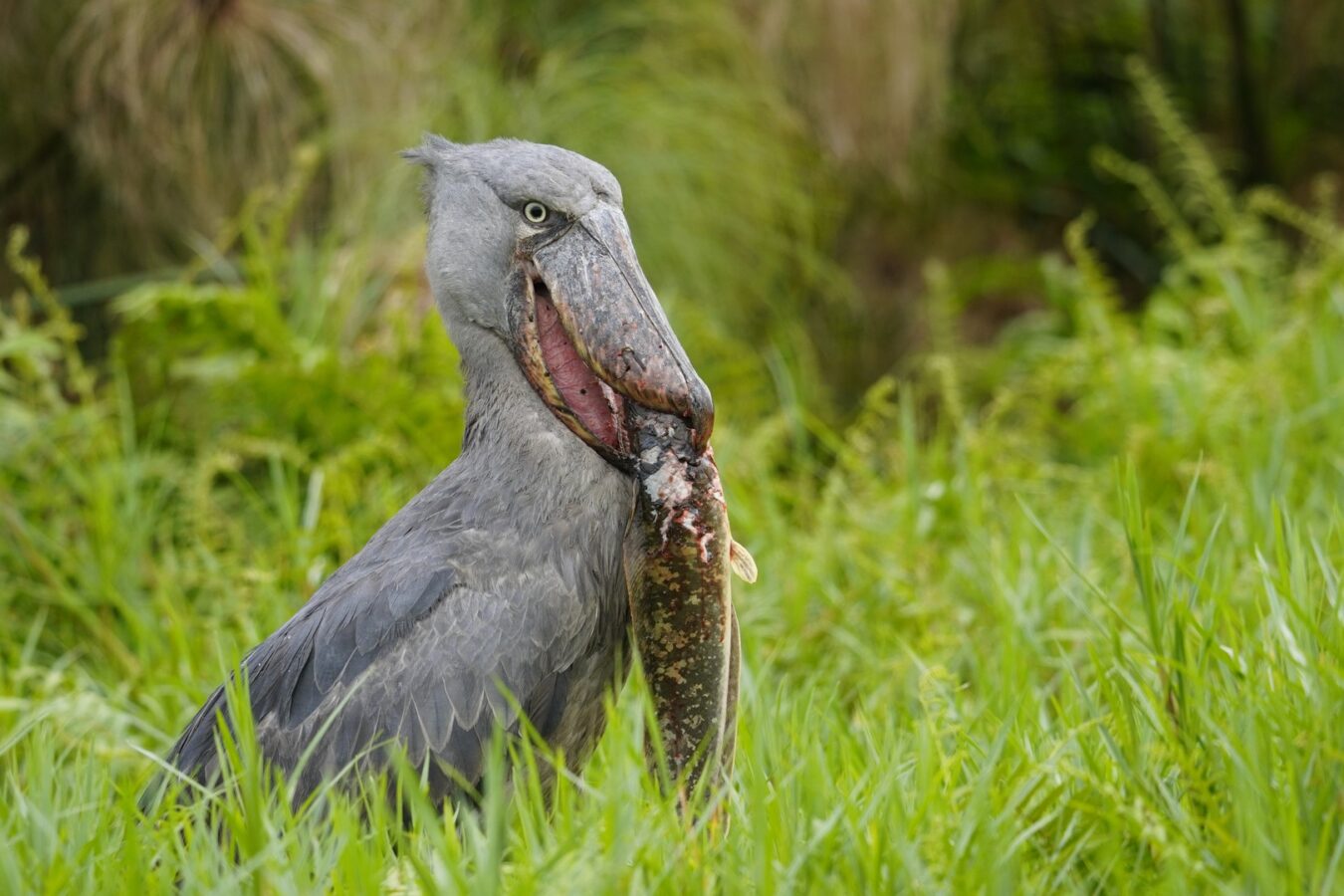
Shoebill Tracking on a Canoe
Discover East Africa on a 20-Day Uganda–Rwanda Birding Excursion Safari
Although the itinerary title refers to Uganda and Rwanda, the supplied day-by-day programme remains within Uganda and ends at Entebbe International Airport. Travellers who want a genuine Rwanda Uganda Birding Safari can extend the journey into Rwanda by adding destinations such as Volcanoes National Park, Nyungwe Forest National Park or Akagera National Park. Those additional destinations require separate planning, time allocation, accommodation arrangements and applicable activity permits.
At Deks Africa Safaris & Tours Ltd, we view a successful Uganda Birding Excursion Safari as more than a checklist of bird species. It is an opportunity to understand the landscapes that support birds, observe wildlife responsibly, learn about conservation and connect with the communities that live alongside these natural treasures.
Why Choose a 20-Day Uganda–Rwanda Birding Excursion Safari?
Explore different bird habitats in one journey
Uganda’s ecological diversity makes it an excellent destination for birding safaris. Wetlands, lakeshores, riverbanks, tropical rainforests, woodland, grassland and montane ecosystems support different bird communities. Consequently, travelling across the country allows birders to experience substantial habitat variation instead of spending the entire safari in one environment.
The journey begins around Entebbe and Mabamba Wetland before continuing north to Murchison Falls National Park and Budongo Forest. It then moves west towards Kibale Forest, Queen Elizabeth National Park and Bwindi Impenetrable National Park. The southern section covers Mgahinga Gorilla National Park and Lake Mburo National Park, followed by Mabira Forest in central Uganda.
Each destination contributes something different to the overall experience. Wetland birding creates opportunities to search for water-associated species, while forest excursions focus on birds that inhabit dense vegetation, forest edges and canopy layers. In the national parks, travellers can also combine bird watching with mammals, landscapes and other wildlife experiences.
Combine birding with Uganda wildlife safaris
A Uganda Birding Safari does not have to focus exclusively on birds. This 20-day route also includes several of Uganda’s best-known wildlife destinations, allowing visitors to observe mammals and birds within the same conservation landscapes.
Murchison Falls National Park offers savannah wildlife, river scenery and powerful waterfalls. Queen Elizabeth National Park combines diverse habitats with game drives and a boat cruise along the Kazinga Channel. Lake Mburo National Park provides a different atmosphere, with open grassland, woodland, wetlands and lakeside scenery.
These experiences make the journey suitable for travellers who want both specialist birding and a broader introduction to Uganda wildlife safaris. Wildlife sightings always depend on natural conditions, animal movements, season, weather and the time spent in suitable habitats. A knowledgeable guide can improve the chances of finding target species, but no ethical safari operator can guarantee every sighting.
Experience primates and forest biodiversity
The 20-Day Uganda–Rwanda Birding Excursion Safari includes chimpanzee tracking in Kibale Forest National Park and mountain gorilla trekking in Bwindi Impenetrable National Park. These activities add an important primate conservation dimension to the birding journey.
Kibale’s forest environment supports a rich range of primates and forest birds. Bwindi, meanwhile, protects an important area of montane forest and supports mountain gorillas alongside numerous other wildlife species. The transition between these forests gives travellers a broader understanding of Uganda’s ecological variety.
The experience also includes a Batwa cultural visit near Bwindi, creating an opportunity to learn about Batwa heritage and relationships with the forest. Responsible cultural tourism should respect local knowledge, individual privacy, community preferences and the dignity of the people who participate.
Detailed 20-Day Uganda–Rwanda Birding Excursion Safari
Day 1: Arrive in Entebbe and Begin Your Uganda Birding Safari
Arrival and transfer to your hotel
Your 20-Day Uganda–Rwanda Birding Excursion Safari begins with arrival at Entebbe International Airport. A safari representative can meet you at the airport and arrange a transfer to Lake Victoria Hotel or Green Valley Guest House, depending on availability and the final booking arrangements.
After an international flight, the first day should prioritise comfort, rest and preparation. Take time to settle into your accommodation, organise your birding equipment and review the itinerary with your guide. A relaxed start helps you prepare for the early mornings and long days that often accompany serious bird watching.
Entebbe sits beside Lake Victoria, Africa’s largest lake by surface area. The surrounding environment includes gardens, lakeshore vegetation, wetlands and urban green spaces, which create opportunities for bird observation even close to town. Depending on your arrival time, energy levels and local conditions, your guide may arrange a short introduction to the area.
Preparing for the days ahead
Use the first evening to check binoculars, cameras, spare batteries, field guides, notebooks and suitable clothing. Keep rain protection accessible because weather conditions can change quickly, particularly during forest and wetland excursions.
Your 20-Day Uganda–Rwanda Birding Excursion Safari guide can also discuss your main birding interests, preferred pace and target species. Some travellers prioritise endemic and range-restricted birds, while others enjoy photography, general bird diversity or a balanced combination of birds and mammals.
- Birds to look for: African Fish Eagle, Malachite Kingfisher, African Jacana, Speckled Mousebird, African Grey Parrot, Little Greenbul, African Thrush, and African Paradise Flycatcher.
- Wildlife possibilities: Vervet monkeys, monitor lizards, and other common lakeshore wildlife.
- Accommodation: Lake Victoria Hotel or Green Valley Guest House, subject to confirmation.
- Main experience: Arrival, airport transfer, relaxation and safari briefing.
Day 2: Mabamba Wetland Shoebill Excursion and Entebbe Botanical Gardens
Search for the Shoebill at Mabamba Wetland
Day two introduces one of Uganda’s most celebrated birding experiences: a canoe excursion through Mabamba Wetland in search of the Shoebill. Located along the northern shores of Lake Victoria, Mabamba contains extensive wetland vegetation and channels that support a variety of waterbirds.
A local guide helps navigate the narrow waterways and identify suitable areas for bird observation. The canoe allows a quiet approach through the wetland, although sightings depend on the bird’s movements, water levels, vegetation and prevailing conditions.
The Shoebill is a major attraction for birders visiting Uganda. Its distinctive shape, large bill and deliberate hunting behaviour make it particularly memorable. Nevertheless, the wetland offers more than one target species. Your guide can help identify other birds associated with papyrus, open water, reed beds and wetland margins.
For photographers, patience and careful positioning often matter more than rushing between locations. Keep equipment protected from moisture, follow the guide’s instructions and avoid disturbing birds as they feed or rest.
Afternoon birding in Entebbe Botanical Gardens
After the wetland excursion, return to Entebbe for an afternoon birding session at the Botanical Gardens, subject to opening hours and the final schedule. The gardens provide a contrasting environment of mature trees, cultivated vegetation and lakeside habitats.
Forest-edge birds, garden species and other birds that use wooded areas may offer further opportunities for observation. The slower pace also allows time to practise identification by shape, behaviour, calls and movement through the vegetation.
This combination of wetland and garden habitats makes day two a strong opening to your 20-Day Uganda–Rwanda Birding Excursion Safari.
- Accommodation: Lake Victoria Hotel or Green Valley Guest House.
- Main experiences: Mabamba canoe birding, Shoebill search and Entebbe Botanical Gardens.
Day 3: Ziwa Rhino Sanctuary and Murchison Falls National Park
White rhino tracking on foot at Ziwa
After breakfast, travel north towards Murchison Falls National Park, stopping at Ziwa Rhino Sanctuary for guided white rhino tracking on foot. The sanctuary supports rhino conservation in Uganda and provides an opportunity to learn about the protection and management of these large mammals.
A trained ranger leads the tracking experience and explains how conservation teams monitor rhinos and manage visitor safety. Follow the ranger’s instructions throughout the walk, maintain the required distance and avoid any action that could disturb the animals.
Birding can add another dimension to the visit. The sanctuary’s mix of vegetation and open areas may support a variety of bird species, making it useful for travellers who enjoy combining mammal tracking with bird observation.
Continue to Murchison Falls
After the sanctuary visit, continue towards Murchison Falls National Park. The journey introduces changing landscapes as you move towards the northern section of Uganda, where savannah, woodland and riverine environments form part of the wider Murchison ecosystem.
The 20-Day Uganda–Rwanda Birding Excursion Safari includes a visit or hike to the top of Murchison Falls. Here, the Victoria Nile forces its way through a narrow rocky gorge before plunging into the river below. The resulting spray, sound and powerful movement of water create one of Uganda’s most dramatic natural spectacles.
The waterfall area also offers scenic views and opportunities to appreciate the relationship between the river, rock formations and surrounding vegetation. Allow your guide to manage timing and access because the day includes several activities and a substantial road transfer.
- Birds to look for: African Jacana, Spur-winged Goose, Black Crake, Swamp Flycatcher, African Green Pigeon, Yellow-throated Leaflove, Great Egret, Little Egret, and African Fish Eagle.
- Wildlife possibilities: White rhino at Ziwa, Uganda kob, hippos, Nile crocodiles, and monitor lizards.
- Accommodation: Pakuba Safari Lodge or Elephant Oasis Lodge, subject to confirmation.
- Main experiences: Ziwa rhino tracking, birding, transfer to Murchison Falls and a visit to the top of the falls.
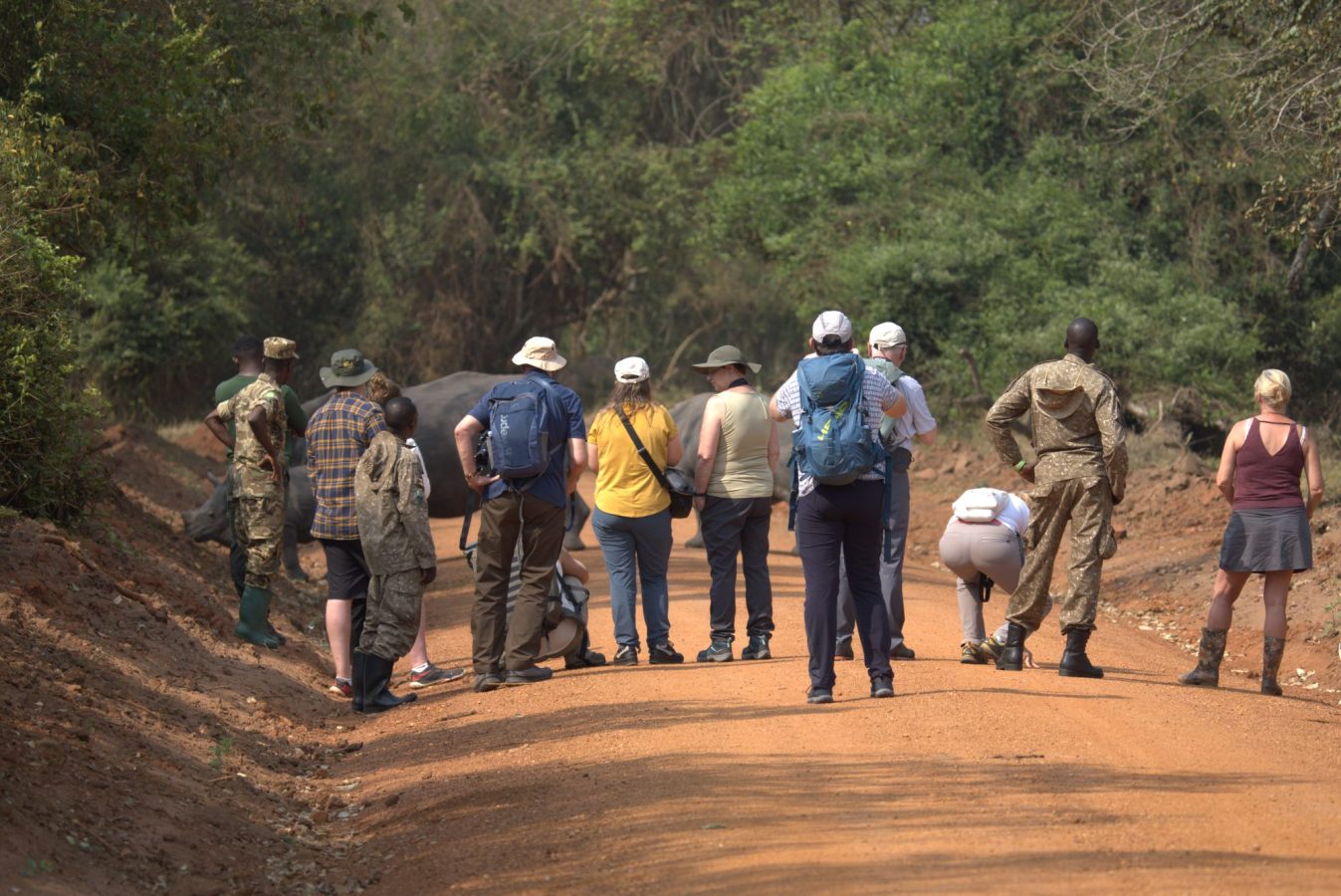
Ziwa Rhino Tracking Safari
Day 4: Birding, Game Drives and a Victoria Nile Boat Cruise
Explore Murchison Falls National Park
Murchison Falls National Park is a major highlight of this Uganda Wildlife Safari. The Park combines extensive savannah, woodland, riverine vegetation and the Victoria Nile, creating a varied setting for both bird watching and mammal viewing.
Begin with a guided game drive and birding session. Your 20-Day Uganda–Rwanda Birding Excursion Safari guide can help locate birds in different habitats and explain how vegetation, water availability and feeding behaviour influence their distribution. Open areas may provide opportunities to observe birds that forage on the ground or move through grassland, while wooded areas support species adapted to trees and shrubs.
The Park also supports a range of large mammals. Depending on the route and conditions, a game drive may reveal elephants, giraffes, buffaloes, antelopes and other wildlife. Predators can also occur in suitable habitats, although sightings vary considerably.
Cruise along the Victoria Nile
Later, enjoy a boat cruise on the Victoria Nile. The river offers a different perspective on the park, with opportunities to observe birds and mammals along the banks and near the water.
Look for birds using exposed shorelines, overhanging branches, sandbanks and aquatic habitats. Hippos and crocodiles may also appear in suitable areas. Your 20-Day Uganda–Rwanda Birding Excursion Safari guide can explain the ecological importance of the river and the ways wildlife uses its resources.
A boat excursion provides an excellent setting for photography, but light, distance and boat movement can affect image quality. Bring a lens suited to wildlife photography and protect equipment from spray.
This day demonstrates why Uganda Safaris appeal to travellers who want several experiences within one destination.
- Birds to look for: Bateleur, Martial Eagle, African Fish Eagle, Abyssinian Ground Hornbill, Black-headed Gonolek, African Skimmer, Malachite Kingfisher, and Little Egret.
- Wildlife possibilities: Elephants, lions, leopards, hippos, Nile crocodiles, Uganda kob, and Rothschild’s giraffes.
- Accommodation: Pakuba Safari Lodge or Elephant Oasis Lodge.
- Main experiences: Guided game drive, bird watching, nature exploration and Victoria Nile boat cruise.
Day 5: Full-Day Birding in Budongo Forest and an Afternoon Nile Cruise
Discover Budongo Forest Reserve
Budongo Forest offers a forest-focused contrast to the open landscapes of Murchison Falls National Park. Its mature woodland and tropical forest habitats attract birders interested in species that live in dense vegetation, forest clearings and canopy layers.
A full day of guided birding allows time to move slowly through selected trails, pause to listen for calls and examine birds that might otherwise escape attention. Forest birding often requires patience because vegetation can obstruct views and many species move quickly through branches.
Your 20-Day Uganda–Rwanda Birding Excursion Safari guide can help identify birds through a combination of plumage, size, calls, behaviour and habitat. Recording observations in a notebook or birding application can also help you remember species and compare sightings across different locations.
Return to the Victoria Nile
The afternoon programme includes another boat cruise on the Victoria Nile in Murchison Falls National Park. This additional river excursion creates another opportunity to observe birds and wildlife from the water.
Different times of day can produce different viewing conditions. Changes in light, temperature, animal activity and river conditions may influence what you encounter. However, the value of the excursion does not depend entirely on finding a particular species. The river landscape itself offers an important opportunity to observe the relationship between water, wildlife and the wider ecosystem.
- Birds to look for: African Pitta, Dusky Crimsonwing, Black-capped Apalis, African Broadbill, Olive Sunbird, Red-throated Alethe, Grey-headed Woodpecker, Black Bee-eater, and African Darter.
- Wildlife possibilities: Chimpanzees in suitable forest areas, hippos, Nile crocodiles, and other forest wildlife.
- Accommodation: Pakuba Safari Lodge or Elephant Oasis Lodge.
- Main experiences: Full-day Budongo birding and an afternoon Nile boat cruise.
Day 6: Bird Watching at the Royal Mile and Busingiro Forest Reserve
Explore the Royal Mile
Continue your birding journey through the Royal Mile and Busingiro Forest Reserve, areas associated with the wider Budongo forest landscape. These sites attract birders because their forest trails offer opportunities to explore a different range of habitats from those found in Uganda’s savannah parks.
The Royal Mile provides a forest-walk setting where careful observation and listening can be especially rewarding. Instead of covering ground quickly, allow time to examine branches, listen for movement in the canopy and identify birds by their calls.
A knowledgeable local guide can help interpret forest behaviour and distinguish species that look similar. Good birding practice also includes remaining on appropriate trails, keeping noise low and avoiding playback or other techniques that could disturb sensitive birds.
Continue to Hoima
After the birding activities, travel to Hoima for the night. This town offers a convenient overnight stop as the safari moves from the Murchison area towards western Uganda.
Hoima and its surrounding communities form part of the cultural landscape of the Bunyoro region. Depending on timing and arrangements, travellers may learn about local food, everyday trade, crafts and regional traditions. Any organised cultural activity should receive confirmation in advance rather than being treated as an automatic lodge inclusion.
- Birds to look for: Rwenzori Turaco, Yellow-eyed Black Flycatcher, Bar-tailed Trogon, Brown-throated Wattle-eye, Mountain Masked Apalis, Red-tailed Greenbul, Olive Woodpecker, and African Broadbill.
- Wildlife possibilities: Blue monkeys, vervet monkeys, forest duikers, and other forest wildlife.
- Accommodation: Golden Castle Hotel or Entuiga Cottages, Hoima, subject to confirmation.
- Main experiences: Royal Mile birding, Busingiro Forest Reserve and an overnight stay in Hoima.
Day 7: Transfer to Kibale Forest and Birding at Bigodi Wetland
Travel through western Uganda
After breakfast, continue towards Kibale Forest National Park. The road journey takes you into western Uganda, a region known for its green landscapes, agricultural communities and forest environments.
The transfer offers a gradual transition from the forests and river landscapes of the Murchison region towards the moist tropical forest of Kibale. Along the way, the scenery may include cultivated land, small trading centres and rural settlements. Your 20-Day Uganda–Rwanda Birding Excursion Safari guide can explain the local landscape and the role of agriculture and conservation in the region.
Afternoon birding at Bigodi Wetland
The afternoon focuses on Bigodi Wetland, a community-associated wetland near Kibale Forest. Its vegetation and waterways support wetland birds, forest-edge species and other wildlife that use the surrounding habitat.
A guided walk allows you to explore the wetland at a measured pace. Look for movement among reeds, shrubs and trees, and listen carefully for calls from concealed birds. Depending on conditions, you may also encounter primates and other wildlife during the walk.
Bigodi is also an important example of how community involvement can support nature-based tourism. Visitors can learn about local conservation initiatives and the relationship between tourism income, habitat protection and community livelihoods. Specific community activities and cultural presentations should be arranged through the relevant local organisers.
- Birds to look for: African Broadbill, Blue-headed Sunbird, White-spotted Flufftail, Red-headed Bluebill, Black-and-white-casqued Hornbill, Yellow-spotted Barbet, African Green Pigeon, Malachite Kingfisher, and Lesser Swamp Warbler.
- Wildlife possibilities: Red-tailed monkeys, vervet monkeys, chimpanzees in the wider area, forest duikers, and monitor lizards.
- Accommodation: Guereza Canopy Lodge or Kibale Forest Lodge, subject to confirmation.
- Main experiences: Road transfer to Kibale and guided afternoon birding at Bigodi Wetland.
Day 8: Chimpanzee Tracking and Birding in Kibale Forest National Park
Experience chimpanzee tracking
Kibale Forest National Park is one of Uganda’s leading destinations for chimpanzee tracking. Its tropical forest supports chimpanzees and several other primate species, as well as a diverse community of forest birds.
During the tracking experience, trained park staff lead visitors through the forest in search of chimpanzees. The duration and difficulty depend on the animals’ movements, trail conditions and the location of the group. Participants should follow ranger instructions, keep a respectful distance and comply with all health and wildlife regulations.
Chimpanzee tracking offers more than a close wildlife encounter. It also provides an opportunity to understand the importance of protecting forest habitat and managing tourism responsibly. Chimpanzees live in complex social groups, and their behaviour can change as they feed, travel, rest or interact.
Afternoon birding in Kibale Forest
After the chimpanzee activity, the 20-Day Uganda–Rwanda Birding Excursion Safari includes afternoon birding in Kibale Forest. The session may focus on forest trails, edges and suitable viewing locations, depending on access and the day’s schedule.
Birders should prepare for humid conditions, uneven ground and limited visibility in dense vegetation. Lightweight clothing, suitable walking shoes and protection for optical equipment make the experience more comfortable.
Combining chimpanzee tracking with bird watching makes this day a defining part of the Uganda Birding Excursion Safari. It brings together primate conservation, tropical forest ecology and specialist nature observation.
- Birds to look for: African Pitta, Dusky Crimsonwing, Grey-headed Oliveback, Black Bee-eater, Red-throated Alethe, Olive Sunbird, Yellow-spotted Barbet, African Broadbill, and Rwenzori Turaco.
- Wildlife possibilities: Chimpanzees, red-tailed monkeys, vervet monkeys, forest duikers, bushbucks, and monitor lizards.
- Accommodation: Guereza Canopy Lodge or Kibale Forest Lodge.
- Main experiences: Chimpanzee tracking and guided forest birding.
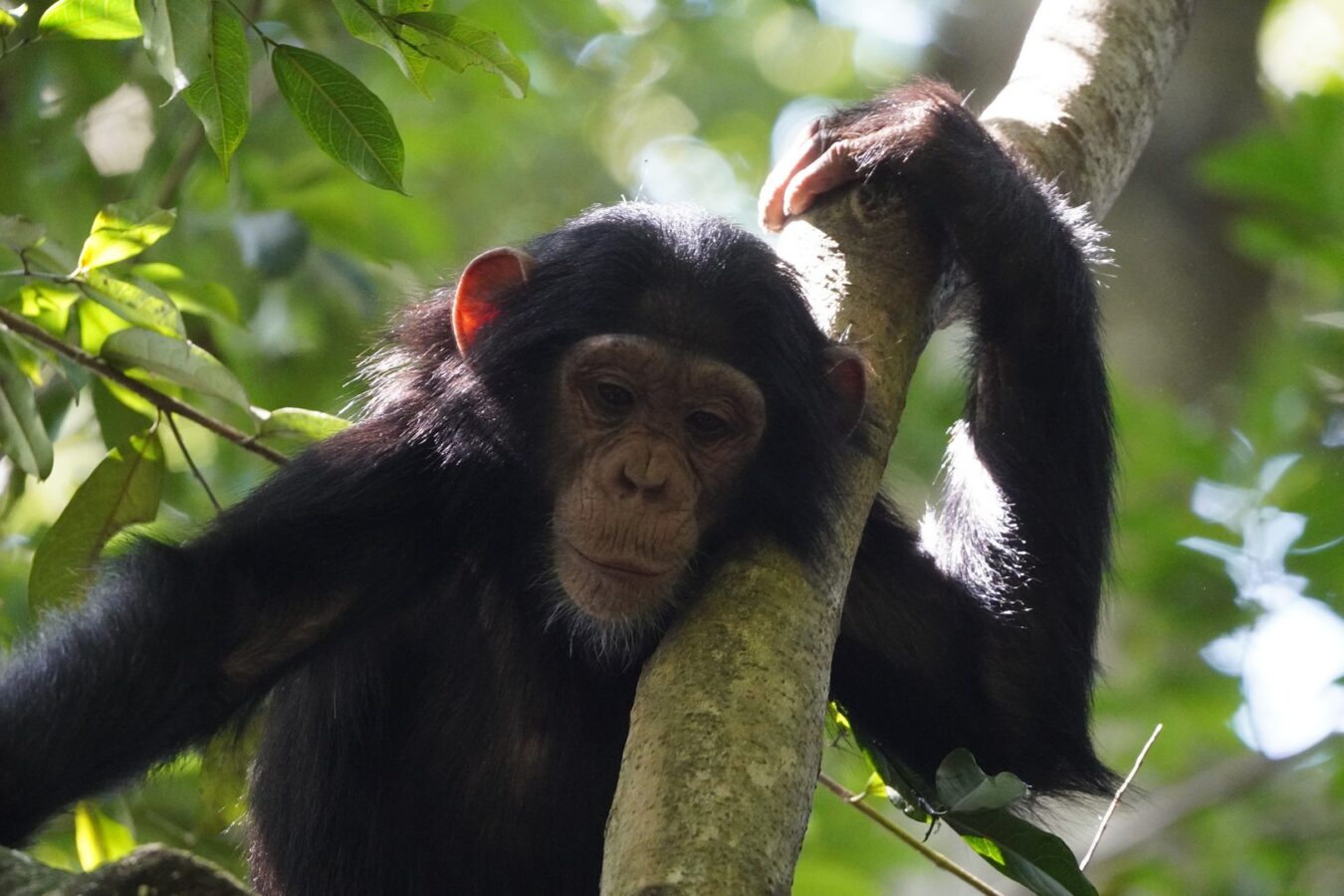
Chimpanzee Tracking in Kibale
Day 9: Transfer to Queen Elizabeth National Park
Enter Uganda’s savannah and wetland landscapes
Travel from Kibale towards Queen Elizabeth National Park, one of Uganda’s best-known destinations for wildlife viewing. The Park includes savannah, woodland, crater-lake landscapes, wetlands and the Kazinga Channel, which connects Lake Edward and Lake George.
The transition from Kibale’s forest environment introduces a different range of bird habitats. Your 20-Day Uganda–Rwanda Birding Excursion Safari guide can explain the changes in vegetation and landscape as you approach the park, helping you understand why different habitats support different bird communities.
After arrival, the itinerary includes guided game drives and a boat cruise along the Kazinga Channel. The precise order of activities will depend on driving time, park access, boat schedules and the final arrangement.
Wildlife viewing and birding
Queen Elizabeth National Park supports a wide range of mammals and birds. A game drive offers opportunities to observe wildlife across suitable routes, while birding can take place around grassland, woodland, wetlands and water margins.
The Kazinga Channel is particularly useful for water-associated birding. The combination of open water, muddy edges and nearby vegetation creates feeding and resting areas for many birds. Wildlife sightings vary with season, water levels and animal movements, so a flexible approach often produces a more enjoyable experience.
- Birds to look for: African Fish Eagle, Bateleur, Grey Crowned Crane, Red-necked Spurfowl, Black-headed Gonolek, White-headed Barbet, Woodland Kingfisher, and Purple Heron.
- Wildlife possibilities: African elephants, lions, Uganda kob, buffaloes, warthogs, Uganda mangabeys, and occasionally leopards.
- Accommodation: Twin Lakes Safari Lodge or Enshama Game Lodge, subject to confirmation.
- Main experiences: Transfer to Queen Elizabeth National Park, guided game drives, birding and a Kazinga Channel boat cruise.
Day 10: Full Wildlife and Birding Experience in Queen Elizabeth National Park
Morning game drive and bird watching
Use the day to explore more of Queen Elizabeth National Park. A guided game drive can cover selected areas according to recent sightings, road conditions and the interests of the group.
Birding during a game drive involves more than identifying birds in flight or on the ground. Your 20-Day Uganda–Rwanda Birding Excursion Safari guide can help you recognise feeding behaviour, habitat preferences and differences between similar species. Stop safely when a promising sighting appears, and allow enough time to observe the bird before moving on.
Mammals may also appear during the drive. Elephants, buffaloes, antelopes and other wildlife use different sections of the park, while predators occur in suitable habitats. Sightings depend on natural conditions rather than a fixed schedule.
Birding along the Kazinga Channel
The 20-Day Uganda–Rwanda Birding Excursion Safari includes another birding-focused boat cruise along the Kazinga Channel. This activity gives birders a closer view of the waterway’s ecological importance and offers opportunities to observe birds from a different angle.
Bring binoculars and a camera, but also take time to watch the wider landscape. Birds may feed along the shore, rest on exposed banks or move between aquatic and terrestrial habitats. Hippos and other animals can contribute to the experience.
The combination of game drives and boat-based observation demonstrates the value of a well-planned Uganda Wildlife Safari. It provides varied perspectives without requiring a change of accommodation.
- Birds to look for: Superb Starling, Grey-headed Kingfisher, Martial Eagle, African Jacana, Goliath Heron, Malachite Kingfisher, African Darter, African Skimmer, Black Crake, and African Fish Eagle.
- Wildlife possibilities: Hippos, Nile crocodiles, elephants, buffaloes, Uganda kob, lions, and warthogs.
- Accommodation: Twin Lakes Safari Lodge or Enshama Game Lodge.
- Main experiences: Game drives, birding and Kazinga Channel boat cruise.
Day 11: Travel to Bwindi Through Ishasha in Search of Tree-Climbing Lions
Explore the Ishasha sector
After breakfast, travel towards Buhoma in Bwindi Impenetrable National Park, passing through the Ishasha sector of Queen Elizabeth National Park. This part of the journey provides another opportunity to explore Uganda’s wildlife landscapes before entering the montane forest region.
Ishasha is well known for the possibility of observing tree-climbing lions. A guided game drive through suitable areas can provide an opportunity to look for lions resting in large trees or moving through the savannah. However, the behaviour is not guaranteed, and sightings depend on where the animals are at the time.
The area also supports other wildlife and birdlife. A careful scan of woodland edges, grassland and open areas can add useful birding opportunities to the transfer day.
Arrive in Buhoma
Continue towards Buhoma, a well-known access area for Bwindi Impenetrable National Park. The environment changes as the road approaches the forested hills, with cooler conditions and dense vegetation creating a striking contrast with the savannah landscapes of Queen Elizabeth National Park.
Buhoma’s tourism economy includes lodges, guides, porters, craftspeople and community initiatives. Travellers may have opportunities to purchase locally made crafts or learn about community tourism projects, depending on availability and arrangements.
- Birds to look for: Brown Snake Eagle, Yellow-throated Bush Sparrow, Abyssinian Ground Hornbill, African Olive Pigeon, White-bellied Robin-Chat, Red-faced Crimsonwing, Rwenzori Turaco, Green-headed Sunbird, and African Broadbill.
- Wildlife possibilities: Tree-climbing lions in Ishasha, Uganda kob, olive baboons, forest duikers, and other wildlife.
- Accommodation: Buhoma Community Haven Lodge or Engagi Lodge, subject to confirmation.
- Main experiences: Ishasha game drive, search for tree-climbing lions and transfer to Buhoma.
Day 12: Buhoma Birding and Batwa Cultural Experience
Guided bird watching in Buhoma
Bwindi Impenetrable National Park is one of Uganda’s most important forest destinations for birders. Its montane forest, steep terrain, dense vegetation and varied elevations create a distinctive environment for forest birding.
A guided birding walk in Buhoma allows visitors to explore selected trails and forest edges. The 20-Day Uganda–Rwanda Birding Excursion Safari guide can help locate birds through calls, movement and habitat knowledge. Some species may remain concealed in the vegetation, so patience and careful listening often prove essential.
The forest environment also requires sensible preparation. Wear suitable walking shoes, carry drinking water and protect equipment from rain. Trail conditions can become slippery, and the pace should match the group’s fitness and birding priorities.
Learn through a Batwa cultural visit
The day also includes a Batwa cultural experience. The Batwa are Indigenous Forest people with a long history of living in the forests of the Great Lakes region. A well-organised visit can provide insight into Batwa heritage, traditional knowledge, forest relationships and the challenges communities face as conservation and land-use arrangements change.
Cultural experiences should centre the community’s own perspectives and respect local protocols. Photography, performances, demonstrations and interactions should follow the permissions and guidance provided by the hosts.
The visit offers a valuable human dimension to the 20-Day Uganda–Rwanda Birding Excursion Safari, complementing the forest birding with an opportunity to understand local heritage and community tourism.
- Birds to look for: Yellow-eyed Black Flycatcher, Dusky Crimsonwing, Red-throated Alethe, African Broadbill, Grey-headed Oliveback, Blue-headed Sunbird, Black-and-white-casqued Hornbill, Red-faced Crimsonwing, and African Emerald Cuckoo.
- Wildlife possibilities: Forest duikers, vervet monkeys, olive baboons, blue monkeys, and other forest wildlife.
- Accommodation: Buhoma Community Haven Lodge or Engagi Lodge.
- Main experiences: Guided birding in Buhoma and a Batwa cultural visit.
Day 13: Mountain Gorilla Trekking in Bwindi and Transfer to Ruhija
Meet Uganda’s mountain gorillas
Mountain gorilla trekking is one of the most memorable wildlife experiences available in Uganda. Bwindi Impenetrable National Park protects a significant population of mountain gorillas and contains several trekking sectors, including Buhoma and Ruhija.
Begin with the required briefing from park staff. Rangers explain the trekking rules, health precautions and behaviour expected around the gorillas. The walk may take a few hours or much longer, depending on the gorillas’ location and the terrain.
Bwindi’s steep slopes, thick vegetation and muddy trails can make the trek physically demanding. Travellers should wear sturdy footwear, carry water and follow the guidance of the ranger team. Porters may be available for hire and can assist with bags while supporting local livelihoods.
Once the gorillas are located, visitors must observe the official viewing rules and maintain the required distance. The 20-Day Uganda–Rwanda Birding Excursion Safari offers an opportunity to see these remarkable primates in their natural environment while supporting conservation through regulated tourism.
Transfer to Ruhija
After the trekking experience, travel to the Ruhija sector of Bwindi. The transfer links two important forest areas and positions the group for the following morning’s birding excursion.
Ruhija sits in a montane landscape where cooler temperatures and steep forest terrain shape the birding experience. Rest, hydrate and prepare your equipment for an early start.
- Birds to look for: Grauer’s Warbler, African Green Broadbill, Bar-tailed Trogon, Yellow-throated Woodland Warbler, Rwenzori Batis, African Emerald Cuckoo, and Red-faced Crimsonwing.
- Wildlife possibilities: Mountain gorillas during the permitted trek, vervet monkeys, forest duikers, olive baboons, and blue monkeys.
- Accommodation: Kiho Gorilla Lodge or Gorilla Mist Camp, subject to confirmation.
- Main experiences: Mountain gorilla trekking in Buhoma and transfer to Ruhija.
Day 14: Birding at Mubwindi Swamp and Transfer to Mgahinga
Explore Mubwindi Swamp
The morning focuses on bird watching at Mubwindi Swamp in the Ruhija sector of Bwindi. The swamp and its surrounding forest form an important birding area, attracting travellers interested in montane forest and wetland-associated species.
Access and trail conditions can affect the length and difficulty of the excursion. The route may involve steep sections and muddy ground, so good footwear, adequate water and a suitable level of fitness are important. Follow the guide’s advice about trail safety and local access rules.
The main objective is to observe the birds carefully and responsibly. Listen for calls, scan suitable vegetation and allow time for identification. Forest birding rewards patience, and the guide’s knowledge of local habitats can help make the most of the morning.
Continue to Mgahinga Gorilla National Park
After the birding session, travel to Mgahinga Gorilla National Park in southwestern Uganda. The Park forms part of the Virunga volcanic landscape, which extends across Uganda, Rwanda and the Democratic Republic of the Congo.
Mgahinga’s mountain scenery and high-altitude habitats offer a distinct contrast to the wetlands, savannahs and lower-elevation forests encountered earlier in the journey. Its landscapes include montane forest and other vegetation zones shaped by altitude.
The afternoon can provide time to settle into the accommodation and prepare for the next day’s birding. Any additional activity should depend on arrival time, weather, access and the final booking.
- Birds to look for: Yellow-eyed Black Flycatcher, Grauer’s Swamp Warbler, Bar-tailed Trogon, Rwenzori Turaco, African Emerald Cuckoo, Red-throated Alethe, Dusky Crimsonwing, and Yellow-throated Woodland Warbler.
- Wildlife possibilities: Golden monkeys, blue monkeys, olive baboons, forest duikers, and other montane forest wildlife.
- Accommodation: Mutanda Lake Resort or Ichumbi Hotel in Kisoro, subject to confirmation.
- Main experiences: Mubwindi Swamp birding and transfer to Mgahinga Gorilla National Park.
Day 15: Full-Day Birding in Mgahinga Gorilla National Park
Discover the Virunga Mountain environment
Spend the day exploring Mgahinga Gorilla National Park with a guided birding excursion. The park’s mountainous terrain, elevation changes and forest habitats support a distinctive bird community, making it a valuable destination for travellers who want to explore Uganda’s highland ecosystems.
The birding route should reflect the group’s target species, fitness, weather and trail conditions. Mountain environments can involve steep climbs, changing temperatures and mist or rain. Appropriate layers, waterproof protection and sturdy footwear help visitors remain comfortable throughout the excursion.
Your 20-Day Uganda–Rwanda Birding Excursion Safari guide can explain how altitude influences vegetation and bird distribution. Changes in forest structure and plant communities create different feeding and nesting opportunities, so a route through more than one habitat can add variety to the day.
Enjoy the wider Mgahinga landscape
Birding also offers time to appreciate the wider scenery. The volcanic slopes, forested hills and mountain views form part of the wider Virunga conservation landscape. The park also protects mountain gorillas and golden monkeys, although this itinerary does not include a separate golden monkey tracking activity.
A dedicated birding day gives enthusiasts time to concentrate on observation rather than rushing between destinations. Keep a clear record of sightings, take photographs responsibly and avoid disturbing birds or damaging vegetation.
- Birds to look for: Grauer’s Swamp Warbler, Red-throated Alethe, Rwenzori Batis, Yellow-eyed Black Flycatcher, African Emerald Cuckoo, White-spotted Flufftail, Rwenzori Turaco, Dusky Crimsonwing, and African Broadbill.
- Wildlife possibilities: Golden monkeys, mountain gorillas in the park, blue monkeys, forest duikers, and olive baboons.
- Accommodation: Mutanda Lake Resort or Ichumbi Hotel in Kisoro.
- Main experiences: Full-day guided birding in Mgahinga Gorilla National Park.
Day 16: Transfer to Lake Mburo National Park and Evening Birding
Travel across southwestern Uganda
After breakfast, depart for Lake Mburo National Park. The road journey takes you away from the volcanic landscapes of southwestern Uganda and towards a conservation area known for its mixture of grassland, woodland, wetlands and lakes.
The changing landscape provides another opportunity to observe how geography and vegetation influence wildlife distribution. Depending on the route and traffic, the transfer can take a substantial part of the day, so the schedule should allow suitable time for breaks and arrival procedures.
Birding and nature walks in Lake Mburo
After reaching the park, enjoy guided bird watching and nature exploration, depending on arrival time and access. Lake Mburo’s varied habitats support birds associated with open country, woodland, water and wetland margins.
A guided walk can offer a different perspective from a vehicle-based safari. Moving at a measured pace allows visitors to notice calls, tracks, plants and smaller details that often go unnoticed during a game drive. Walks must follow the park’s rules and the guide’s safety instructions.
The wider park also supports mammals that use its open and wooded habitats. The 20-Day Uganda–Rwanda Birding Excursion Safari therefore suits travellers who want to combine birding with a broader wildlife safari.
- Birds to look for: Brown-chested Lapwing, African Jacana, Grey-headed Kingfisher, Black-headed Gonolek, White-headed Barbet, Superb Starling, Grey-capped Warbler, Yellow-throated Longclaw, and African Fish Eagle.
- Wildlife possibilities: Zebras, Uganda kob, impalas, hippos, warthogs, and Nile crocodiles.
- Accommodation: Rwakobo Rock Lodge or Mpogo Safari Lodge, subject to confirmation.
- Main experiences: Transfer to Lake Mburo, guided birding and nature walks.
Day 17: Game Drives, Nature Walks and a Lake Mburo Boat Cruise
Explore Lake Mburo National Park
Use the day to discover more of Lake Mburo National Park through guided game drives, nature walks and a boat cruise. The park’s relatively varied habitats make it a rewarding stop for visitors interested in both birds and mammals.
A game drive provides access to selected areas where wildlife may appear in open grassland, woodland and along wetland margins. Your 20-Day Uganda–Rwanda Birding Excursion Safari guide can explain the behaviour of animals and the ecological relationships between herbivores, vegetation and water.
A guided nature walk offers a more intimate experience. Walking allows you to examine tracks, plants and smaller details while learning about the surrounding environment. Follow all instructions from the guide, remain within approved areas and respect wildlife at all times.
Cruise on Lake Mburo
The boat cruise introduces a water-based perspective on the park. Birds may gather around the shoreline, feed near aquatic vegetation or rest on exposed banks. Other wildlife can also appear close to the water.
Take time to observe how the lake supports life around its margins. Seasonal water levels and weather influence the appearance of the shoreline, the availability of feeding areas and the distribution of birds.
This combination of activities makes Lake Mburo an excellent setting for a balanced Uganda Wildlife Safari, especially for travellers who appreciate varied experiences without changing lodges every day.
- Birds to look for: African Green Pigeon, Red-faced Barbet, Bronze Sunbird, Grey-headed Kingfisher, Malachite Kingfisher, African Jacana, African Swamphen, African Darter, African Spoonbill, Goliath Heron, and African Fish Eagle.
- Wildlife possibilities: Hippos, Nile crocodiles, zebras, Uganda kob, warthogs, and other savannah animals.
- Accommodation: Rwakobo Rock Lodge or Mpogo Safari Lodge.
- Main experiences: Guided game drives, nature walks, birding and a Lake Mburo boat cruise.
Day 18: Transfer to Mabira Forest and Relax at the Lodge
Travel towards central Uganda
After breakfast, depart Lake Mburo National Park and travel towards Mabira Forest. The 20-Day Uganda–Rwanda Birding Excursion Safari takes you from the open landscapes of southwestern Uganda into a forested region between Kampala and Jinja.
Mabira Forest is an important area of natural forest within a landscape influenced by roads, settlements, farming and other human activities. It offers a useful contrast to the national parks visited earlier in the safari and provides opportunities to focus on forest birds.
Because the road journey can take several hours, allow time for breaks and arrival procedures. The itinerary assigns the afternoon to relaxation at Mabira Forest Lodge rather than a full birding session.
Relax and prepare for forest birding
Use the afternoon to rest, organise camera equipment and review your birding records. A quieter period between travel and a full day in the forest can improve comfort and help you prepare for an early start.
The surrounding area forms part of central Uganda’s cultural and economic landscape. Local communities engage in farming, trade, transport and other livelihoods. Depending on the lodge’s location, time and confirmed arrangements, travellers may have opportunities to learn about local food or purchase locally made products. Such experiences require confirmation and should not be treated as guaranteed inclusions.
- Birds to look for: Black-and-white-casqued Hornbill, African Pitta, Yellow-throated Woodland Warbler, Grey-throated Barbet, White-spotted Flufftail, Red-chested Owlet, Green-headed Sunbird, African Emerald Cuckoo, African Broadbill, and Grey-headed Oliveback.
- Wildlife possibilities: Vervet monkeys, olive baboons, blue monkeys, forest duikers, and monitor lizards.
- Accommodation: Mabira Forest Lodge, subject to confirmation.
- Main experiences: Transfer to Mabira Forest and afternoon relaxation.
Birding Safari Cost Per Person in Uganda
Day 19: Full-Day Bird Watching in Mabira Forest
Explore Mabira’s forest trails
Dedicate the day to guided bird watching in Mabira Forest. Its forest vegetation provides habitat for birds that use the canopy, understory, forest edges and clearings. A full day allows time to explore selected trails without rushing through the environment.
Forest birding often requires a different approach from open-country bird watching. Birds may remain concealed by leaves or move rapidly through branches, so calls, movement and feeding behaviour become important identification clues. Your 20-Day Uganda–Rwanda Birding Excursion Safari guide can help distinguish similar species and explain the ecological role of the forest.
Wear comfortable walking shoes, carry water and prepare for humid or rainy conditions. A waterproof bag or protective cover helps safeguard binoculars, cameras and notebooks. Keep to permitted trails, avoid damaging plants and follow local conservation rules.
Understand the importance of forest conservation
Mabira provides an opportunity to consider the pressures that affect tropical forests, including habitat fragmentation, resource use and land conversion. Responsible tourism can help visitors understand why forest protection matters for birds, other wildlife, water systems and nearby communities.
The day also gives you time to review the species recorded throughout the 20-Day Uganda–Rwanda Birding Excursion Safari. Comparing observations from wetlands, savannahs, lowland forests and montane habitats can deepen your understanding of Uganda’s biodiversity.
- Accommodation: Mabira Forest Lodge, subject to confirmation.
- Main experiences: Full-day guided bird watching in Mabira Forest.
Day 20: Transfer to Entebbe International Airport
Return to Entebbe for departure
Your 20-Day Uganda–Rwanda Birding Excursion Safari concludes with a road transfer from Mabira Forest to Entebbe International Airport. The drive provides the final connection between Uganda’s forest landscapes and the country’s main international aviation gateway.
Allow sufficient time for traffic, road conditions, airport procedures and your airline’s check-in requirements. The exact departure time should determine when the transfer begins. If your flight leaves early, discuss the arrangements with your safari operator well in advance.
Reflect on your Uganda Birding Excursion 20-Day Uganda–Rwanda Birding Excursion Safari
Over 20 days, the itinerary introduces a wide range of environments, from Mabamba Wetland and the Victoria Nile to Budongo, Kibale, Bwindi, Mgahinga, Lake Mburo and Mabira Forest. It also combines birding with rhino tracking, chimpanzee tracking, mountain gorilla trekking, game drives, boat cruises and a Batwa cultural experience.
The route provides a strong foundation for an in-depth Uganda Birding Safari. Travellers who want to include Rwanda should arrange an extension rather than assume that the current schedule covers Rwanda’s national parks.
- Accommodation: None scheduled; departure transfer to Entebbe International Airport.
- Main experience: Airport transfer and departure.
Birding Habitats Featured in the 20-Day Uganda–Rwanda Birding Excursion Safari
Wetlands: Mabamba and Bigodi
Wetlands are among the most important environments for bird watching because they support birds that depend on water, aquatic vegetation, mudflats and reed beds. Mabamba Wetland offers a canoe-based experience, while Bigodi provides a guided walking environment with wetland vegetation and forest edges.
At Mabamba, the main attraction is the search for the Shoebill. However, responsible birders should approach the excursion with broader interests, allowing time to observe other wetland birds and appreciate the ecosystem.
Bigodi adds a community-conservation dimension. The wetland provides habitat for birds and other wildlife while offering opportunities for locally guided tourism. Together, the two sites demonstrate how wetlands can contribute to biodiversity and sustainable tourism.
Savannah and riverine habitats: Murchison Falls and Queen Elizabeth
Savannah and riverine habitats support a different bird community from dense forest. Open grassland and woodland offer visibility for observing birds on the ground, in trees or in flight. Riverbanks and water edges create feeding opportunities for birds that depend on aquatic environments.
Murchison Falls National Park combines savannah with the Victoria Nile, while Queen Elizabeth National Park includes open country, wetlands and the Kazinga Channel. These environments make it possible to combine bird watching with game drives and boat cruises.
The variety also helps explain why Uganda wildlife safaris appeal to travellers with broad natural-history interests. A single day can include bird observations, mammal sightings and an opportunity to learn about habitat conservation.
Tropical and montane forests: Budongo, Kibale and Bwindi
Forest birding often demands patience, strong listening skills and careful observation. Dense vegetation can make birds difficult to see, while changes in elevation and forest structure influence the species present.
Budongo and Kibale introduce travellers to different forest settings in western Uganda. Bwindi adds a montane environment with steep slopes, cool conditions and challenging trails. The birding experience changes across these locations, making it valuable to record sightings alongside habitat and elevation.
These forests also support primates, including chimpanzees in Kibale and mountain gorillas in Bwindi. Combining birding and primate experiences creates an opportunity to appreciate the wider ecological importance of forest conservation.
Mountain habitats: Mgahinga Gorilla National Park
Mgahinga provides a highland setting shaped by volcanic terrain and elevation. Mountain forests and changing vegetation zones create a distinctive environment for birding, especially for travellers interested in the biodiversity of the Virunga region.
Weather and trail conditions can affect the experience, so preparation matters. A suitable clothing system, sturdy footwear and a flexible schedule help make a mountain birding day more comfortable.
The park’s wider conservation significance extends beyond birds. It forms part of a cross-border mountain landscape that supports important wildlife populations and links Uganda’s natural heritage with neighbouring Rwanda and the Democratic Republic of the Congo.
Uganda Gorilla Trekking: A Major Highlight of the Safari
Uganda gorilla trekking adds a memorable wildlife experience to this birding-focused itinerary. The programme schedules the trek in the Buhoma sector of Bwindi Impenetrable National Park, followed by a transfer to Ruhija.
Mountain gorilla trekking requires advance planning because permits are limited and availability depends on the selected date and sector. Travellers should confirm the permit arrangements before finalising international flights and other non-refundable bookings.
The trek itself involves walking through natural forest under the guidance of park rangers. Terrain, weather and the gorillas’ location determine the duration and difficulty. Participants should prepare for steep slopes, mud and changing conditions.
Responsible viewing protects both visitors and gorillas. Follow ranger instructions, respect the official viewing distance, avoid touching the animals and comply with health requirements. Anyone feeling unwell should follow park guidance and discuss the situation with the relevant authorities before participating.
For travellers interested in photography, prepare equipment before entering the forest and avoid delaying the group to obtain an image. The goal is to observe the gorillas responsibly while allowing the ranger team to manage the encounter safely.
Chimpanzee Tracking in Kibale Forest National Park
Chimpanzee tracking is another defining activity on this journey. Kibale’s forest environment supports chimpanzees and several other primate species, making it a leading destination for primate-focused Uganda Adventure Safaris.
The tracking experience begins with instructions from park staff. Visitors then follow trained personnel into the forest, where the team searches for chimpanzees and manages the encounter according to park regulations.
The length of the walk varies. Some groups may locate chimpanzees relatively quickly, while others may travel farther through the forest. Comfortable walking shoes, drinking water, rain protection and a reasonable level of fitness help visitors prepare.
The 20-Day Uganda–Rwanda Birding Excursion Safari experience also encourages a broader understanding of conservation. Chimpanzees need suitable forest habitat, and responsible tourism can help generate support for protected areas and local conservation efforts.
Because the itinerary includes both chimpanzee tracking and gorilla trekking, travellers should plan their energy and equipment carefully. These activities involve different terrain and physical demands, and each deserves enough time for a safe and rewarding experience.
Cultural Experiences Along the Safari Route
Entebbe and the Lake Victoria region
Entebbe offers a gentle introduction to Uganda’s lakeside environment and everyday urban life. Depending on arrival time, visitors may explore suitable public areas, observe local activity or enjoy regional food at an appropriate venue.
The Botanical Gardens provide a nature-focused activity rather than a formal cultural visit. Travellers interested in local culture can ask their operator about additional options, but the schedule should allow enough time for rest and the following day’s early wetland excursion.
Hoima and the Bunyoro region
Hoima provides an overnight stop during the transfer from Murchison Falls towards Kibale. The wider Bunyoro region has its own cultural heritage, local food traditions and community life.
A short visit or locally guided experience may be possible if timing and availability permit. However, the supplied itinerary does not specify a confirmed cultural activity in Hoima, so any additional experience should be arranged separately.
Bigodi and community tourism
Bigodi offers a practical example of how community-associated tourism can support conservation and local livelihoods. A guided wetland walk can provide insight into the area’s biodiversity and the role of local participation in nature-based tourism.
Visitors may also learn about community initiatives through authorised guides or organised visits. The specific activities depend on the local arrangements available on the travel date.
Buhoma and the Batwa cultural experience
The Batwa cultural experience is the clearly specified cultural activity in this itinerary. It provides an opportunity to learn about Batwa heritage and relationships with the forest through a community-led or locally organised visit.
Respectful participation matters. Ask before taking photographs, follow local guidance and approach the experience as an opportunity to learn rather than as a performance created solely for visitors.
Lake Mburo and Mabira communities
Communities around Lake Mburo and Mabira engage in a range of livelihoods, including agriculture, trade and tourism-related work. Depending on the lodge, local guides and available time, visitors may be able to arrange additional community experiences.
These activities are not automatically included in the supplied 20-Day Uganda–Rwanda Birding Excursion Safari. Confirm the details, costs, timing and community arrangements before treating any cultural visit as part of the final package.
Accommodation During the 20-Day Uganda–Rwanda Birding Excursion Safari
The itinerary proposes a range of accommodation options near the main birding and wildlife destinations. The final properties should be selected according to availability, comfort, location, budget and access to planned activities.
Destination | Proposed accommodation |
| Entebbe | Lake Victoria Hotel or Green Valley Guest House |
| Murchison Falls | Pakuba Safari Lodge or Elephant Oasis Lodge |
| Hoima | Golden Castle Hotel or Entuiga Cottages |
| Kibale | Guereza Canopy Lodge or Kibale Forest Lodge |
| Queen Elizabeth | Twin Lakes Safari Lodge or Enshama Game Lodge |
| Bwindi, Buhoma | Buhoma Community Haven Lodge or Engagi Lodge |
| Bwindi, Ruhija | Kiho Gorilla Lodge or Gorilla Mist Camp |
| Mgahinga/Kisoro | Mutanda Lake Resort or Ichumbi Hotel Kisoro |
| Lake Mburo | Rwakobo Rock Lodge or Mpogo Safari Lodge |
| Mabira Forest | Mabira Forest Lodge |
These names represent proposed options from the itinerary, not confirmed reservations. Availability, room categories, meal plans and exact locations should be checked before booking.
Choosing accommodation for a birding safari
Location matters because birders often begin early and may return after several hours outdoors. Staying within convenient reach of the planned activity can reduce unnecessary driving and provide more time for observation.
Comfort also matters after demanding activities such as gorilla trekking, chimpanzee tracking and full-day forest walks. Travellers should consider room comfort, meals, hot water, laundry arrangements, access roads and the time required to reach the next destination.
Ask about cultural and nature activities at each lodge
Some lodges may help arrange local guides, community visits or nearby nature activities. However, services vary by property, season and staff availability. Confirm each activity directly with the operator or accommodation provider rather than assuming that every lodge offers the same experiences.
Best Time for a 20-Day Uganda–Rwanda Birding Excursion Safari
Uganda supports birding throughout the year, but conditions vary between regions and seasons. Rainfall, vegetation growth, water levels, road conditions and bird movements can all affect the experience.
Drier periods
Drier periods often make travel and walking easier, particularly in savannah parks and areas with unpaved roads. Trails may be less muddy, and wildlife viewing can benefit from favourable access conditions. Nevertheless, dry weather does not guarantee particular sightings.
Wetter periods
Rainier months can make some forest trails more challenging, but wet conditions also influence vegetation, insect activity and breeding behaviour. Birders may enjoy productive observations during different periods of the year, depending on the species and habitats they want to explore.
Plan around target species and activities
Travellers should consider the main objectives of the 20-Day Uganda–Rwanda Birding Excursion Safari when selecting dates. Those prioritising the Shoebill, forest birds, gorilla trekking or chimpanzee tracking should coordinate timing with local guides, park authorities and permit availability.
Because the 20-Day Uganda–Rwanda Birding Excursion Safari covers several ecological zones, weather may differ considerably between destinations. Pack clothing for both warm lowland conditions and cooler mountain environments.
What to Pack for 20-Day Uganda–Rwanda Birding Excursion Safari?
- Binoculars suited to bird observation.
- Camera and appropriate wildlife lenses, if required.
- Spare batteries, memory cards and charging equipment.
- Waterproof bag or protective cover for optical equipment.
- Field guide or trusted bird identification application.
- Notebook or digital birding checklist.
- Lightweight, breathable clothing in practical colours.
- Long-sleeved shirts and trousers for forest walks.
- Waterproof jacket and rain protection.
- Comfortable walking shoes or hiking boots.
- Extra socks and suitable footwear for muddy trails.
- Sun protection, including a hat and sunscreen.
- Reusable water bottle.
- Small daypack.
- Personal medication and basic first-aid items.
- Insect repellent appropriate for your needs.
- Small torch or headlamp for early starts.
- Passport, travel documents and relevant permits.
For gorilla and chimpanzee activities, follow the specific preparation instructions from park authorities. Avoid packing unnecessary items that make walking more difficult, and ensure that you can carry your equipment comfortably.
Responsible Birding and Wildlife Tourism
Keep wildlife disturbance to a minimum
Responsible birding protects the animals and habitats that make the 20-Day Uganda–Rwanda Birding Excursion Safari worthwhile. Avoid chasing birds, approaching nests, damaging vegetation or making repeated noises to force a response. Follow the guide’s instructions and remain within approved areas.
Photographers should prioritise animal welfare over images. A photograph is never worth causing a bird to abandon a feeding area, exposing a nest or disturbing a sensitive species.
Support local conservation and communities
Use authorised local guides, respect community protocols and consider purchasing genuine locally made products. Where community visits form part of the itinerary, approach them with curiosity and respect.
Tourism can create income and employment, but its benefits depend on responsible management and fair participation. Ask questions, follow local guidance and avoid treating cultural heritage as a spectacle.
Leave habitats as you find them
Carry litter out of protected areas, avoid collecting plants or feathers and stay on designated trails. Keep noise low and do not feed wildlife. Small actions help preserve habitats for birds, mammals and future visitors.
Understand that sightings cannot be guaranteed
Wildlife moves freely, and bird activity changes with weather, food availability, breeding behaviour and habitat conditions. A reliable operator explains these realities honestly and builds flexibility into the safari where possible.
Is This Itinerary a True 20-Day Uganda–Rwanda Birding Excursion Safari?
The current programme is a Uganda-focused itinerary despite its Uganda–Rwanda title. It begins in Entebbe, visits destinations within Uganda and finishes at Entebbe International Airport. It does not allocate days for Rwanda’s national parks.
Travellers who specifically want a Rwanda Uganda Birding Safari can extend the programme with suitable Rwanda destinations. The most appropriate extension depends on travel dates, birding priorities, available time, budget and the desired balance between bird watching and other wildlife activities.
Possible Rwanda extensions
Volcanoes National Park: This protected mountain landscape is associated with mountain gorilla trekking and golden monkey tracking. A visit requires additional travel time and confirmation of permits and accommodation.
Nyungwe Forest National Park: Nyungwe provides a major forest environment for birding and primate experiences, including chimpanzee tracking under the applicable park arrangements.
Akagera National Park: Akagera offers savannah, woodland, wetland and lake habitats, creating opportunities for a different style of Rwanda wildlife safari.
These destinations are possibilities for a separately planned extension, not confirmed activities within the supplied 20-Day Uganda–Rwanda Birding Excursion Safari. Adding them requires a revised itinerary with realistic transfer times, overnight stays, park activities and border arrangements.
Plan cross-border logistics carefully
A cross-border safari requires attention to entry requirements, visa eligibility, vehicle and driver arrangements, border procedures and the location of the final departure airport. Travellers should check current official entry requirements for their nationality before travel.
The East African Tourist Visa may suit some travellers visiting Uganda and Rwanda, subject to eligibility and the current rules. Visa requirements can change, so verify the applicable conditions through official government channels before purchasing a visa or finalising travel.
What Is Included in the 20-Day Uganda Birding Excursion Safari?
- Airport arrival and departure transfers in Entebbe.
- Road transfers between the listed Ugandan destinations.
- Guided bird watching at the scheduled locations.
- Mabamba canoe excursion for the Shoebill search.
- Entebbe Botanical Gardens birding.
- White rhino tracking at Ziwa Rhino Sanctuary.
- Visit to the top of Murchison Falls.
- Game drives in Murchison Falls National Park.
- Victoria Nile boat cruise.
- Budongo Forest birding.
- Royal Mile and Busingiro Forest Reserve birding.
- Bigodi Wetland birding.
- Chimpanzee tracking in Kibale Forest National Park.
- Queen Elizabeth National Park game drives.
- Kazinga Channel boat cruise and birding.
- Ishasha sector game drive and search for tree-climbing lions.
- Buhoma birding.
- Batwa cultural experience.
- Mountain gorilla trekking in Bwindi Impenetrable National Park.
- Mubwindi Swamp birding, subject to access and local conditions.
- Guided birding in Mgahinga Gorilla National Park.
- Lake Mburo birding, game drives and nature walks.
- Lake Mburo boat cruise.
- Mabira Forest birding.
- Accommodation at the confirmed properties.
- Meals, vehicle, guide, park fees and permits only as explicitly stated in the final quotation.
What Is Not Included Unless Confirmed in the Final Quotation?
- International flights.
- Visa fees and any applicable entry documentation.
- Travel, medical and evacuation insurance.
- Personal purchases and other personal expenses.
- Tips and gratuities.
- Alcoholic and soft drinks.
- Laundry services.
- Extra nights before or after the itinerary.
- Optional activities not listed in the final programme.
- Additional gorilla or chimpanzee trekking permits.
- Golden monkey tracking or other activities not scheduled in this itinerary.
- Any Rwanda national park visit added to the route.
- Personal birding equipment and camera accessories.
- Porter fees, where applicable.
- Additional meals or services outside the agreed meal plan.
- Costs arising from traveller-requested changes.
- Any service not specifically listed as included in the confirmed quotation.
Frequently Asked Questions About the 20-Day Uganda–Rwanda Birding Excursion Safari
Is this itinerary suitable for dedicated birders?
Yes, the 20-Day Uganda–Rwanda Birding Excursion Safari is well suited to dedicated birders seeking a varied bird-watching experience across Uganda. The itinerary covers wetlands, riverbanks, savannah, tropical forests and montane habitats, creating opportunities to observe different bird communities throughout the journey. Key birding destinations include Mabamba Wetland, Murchison Falls National Park, Budongo Forest, Bigodi Wetland, Kibale Forest, Bwindi Impenetrable National Park, Mgahinga Gorilla National Park, Lake Mburo National Park and Mabira Forest.
Each location provides a different environment to explore with a knowledgeable guide. Dedicated birders should share their target species, photography interests and preferred birding pace before booking. This information helps the safari team plan suitable stops and allocate time appropriately. Although the itinerary offers considerable habitat diversity, sightings depend on weather, seasonal conditions, bird movements and access. The current route covers Uganda only, so travellers seeking Rwanda’s birding destinations will need an additional extension.
Can beginners join this Uganda Birding Safari?
Yes, beginners can enjoy the 20-Day Uganda–Rwanda Birding Excursion Safari even without extensive bird-watching experience. The journey introduces visitors to several habitats, including wetlands, grasslands, riverbanks and tropical forests, allowing them to discover how different environments support birdlife. A knowledgeable birding guide can help beginners identify birds by size, shape, colour, calls, behaviour and habitat. Travellers can also keep a checklist or field notebook to record their observations and track their progress throughout the safari.
However, the itinerary includes activities that require physical preparation, particularly chimpanzee tracking in Kibale and mountain gorilla trekking in Bwindi. Some forest trails involve steep slopes, uneven ground and muddy conditions. Beginners should discuss their fitness, mobility and interests with the safari operator before travelling. With appropriate preparation, suitable equipment and a flexible approach, the journey can offer a rewarding introduction to Uganda’s birdlife while providing opportunities to experience wildlife, landscapes and local culture.
Will I see the Shoebill at Mabamba?
The 20-Day Uganda–Rwanda Birding Excursion Safari includes a canoe excursion through Mabamba Wetland, one of Uganda’s best-known destinations for searching for the Shoebill. This distinctive bird attracts birders and wildlife photographers from around the world because of its unusual appearance and fascinating behaviour. During the excursion, a local guide navigates suitable wetland channels and helps visitors look for birds among the vegetation and open-water areas. However, no responsible safari operator can guarantee a Shoebill sighting.
The bird may move to another part of the wetland, remain concealed by vegetation or prove difficult to approach on a particular day. Water levels, weather and other natural conditions can also influence the experience. Visitors should therefore enjoy the wider wetland environment rather than focus exclusively on one species. Other wetland birds may provide valuable observation opportunities along the way. Carry binoculars, protect cameras from moisture and follow the guide’s instructions to minimise disturbance to wildlife. Patience and careful observation often make wetland birding more rewarding.
Is gorilla trekking included?
Yes, the 20-Day Uganda–Rwanda Birding Excursion Safari includes mountain gorilla trekking in the Buhoma sector of Bwindi Impenetrable National Park on day 13. This activity offers an opportunity to observe mountain gorillas in their natural forest environment under the supervision of authorised park personnel.
Before the trek, rangers provide instructions on safety, gorilla behaviour and responsible viewing. The walk may take several hours, depending on the location of the gorilla group, terrain and weather conditions. Bwindi’s forest trails can be steep, slippery and physically demanding, so travellers should bring suitable hiking shoes, drinking water and rain protection.
Gorilla trekking permits require advance planning, and availability depends on the selected date and sector. Travellers should confirm the permit arrangements and payment terms before finalising the trip. The 20-Day Uganda–Rwanda Birding Excursion Safari also includes a transfer from Buhoma to Ruhija after the trek, so the day requires careful coordination. Visitors must follow ranger instructions and observe all applicable rules around the gorillas. The permit, accommodation and related costs should appear clearly in the final safari quotation.
Does the itinerary include chimpanzee tracking?
Yes, chimpanzee tracking forms part of the 20-Day Uganda–Rwanda Birding Excursion Safari on day eight in Kibale Forest National Park. Kibale protects tropical forest that supports chimpanzees and several other primate species, making it an important destination for travellers interested in wildlife and forest ecology.
During the activity, trained park staff guide visitors through the forest while searching for chimpanzees. The length of the walk depends on the animals’ movements, trail conditions and the location of the group. Travellers should prepare for humid conditions, uneven paths and possible rain.
Comfortable walking shoes, drinking water and appropriate clothing help make the experience more enjoyable. The 20-Day Uganda–Rwanda Birding Excursion Safari also schedules afternoon bird watching in Kibale Forest, giving visitors another opportunity to explore the park’s forest habitats. Combining chimpanzee tracking with birding creates a varied day that appeals to nature enthusiasts with different interests. As permits and access arrangements can affect availability, travellers should confirm the tracking date and associated costs in advance. The final quotation should specify whether the chimpanzee permit and any related fees are included.
Does the tour visit Rwanda?
Despite its title, the supplied 20-Day Uganda–Rwanda Birding Excursion Safari itinerary does not currently include a visit to Rwanda. The scheduled journey begins in Entebbe, travels through Uganda’s wetlands, forests and national parks, and finishes with a transfer from Mabira Forest to Entebbe International Airport.
Its listed destinations include Mabamba Wetland, Murchison Falls, Budongo Forest, Kibale Forest, Queen Elizabeth National Park, Bwindi Impenetrable National Park, Mgahinga Gorilla National Park, Lake Mburo National Park and Mabira Forest. Travellers who specifically want to visit Rwanda should request an extension before confirming their bookings.
A revised itinerary could include additional time for selected Rwandan destinations, subject to travel dates, transport arrangements, accommodation availability and activity permits. Cross-border travel also requires careful attention to entry requirements and vehicle arrangements. The current programme should therefore be presented accurately as a Uganda-focused birding and wildlife safari unless the route changes. Deks Africa Safaris & Tours Ltd can help plan a suitable extension based on the traveller’s birding interests, budget and available time. Confirming the route early helps avoid misunderstandings about destinations and package costs.
Can the safari include Nyungwe, Volcanoes or Akagera?
Yes, the 20-Day Uganda–Rwanda Birding Excursion Safari can potentially be redesigned to include Nyungwe Forest National Park, Volcanoes National Park or Akagera National Park in Rwanda. However, these destinations do not appear in the current day-by-day programme, so adding them requires a revised itinerary. Nyungwe offers a forest environment for birding and primate experiences, including chimpanzee tracking under the applicable park arrangements. Volcanoes National Park is known for mountain gorilla trekking and golden monkey tracking, subject to permit availability and the activities selected.
Akagera offers a different landscape of savannah, woodland, wetlands and lakes, creating opportunities for wildlife viewing and birding. Each destination requires sufficient time for road transfers, overnight stays and planned activities. Travellers should also consider whether they want to retain all the Ugandan stops or replace some destinations to accommodate Rwanda. A cross-border itinerary must account for entry requirements, transport logistics and the final departure airport. The best approach is to discuss target species, travel dates and priorities before revising the route. Any Rwanda extension should appear explicitly in the final itinerary and quotation.
Are the listed lodges guaranteed?
No, the accommodation properties listed in the 20-Day Uganda–Rwanda Birding Excursion Safari represent proposed options rather than guaranteed reservations. The itinerary names possible stays such as Lake Victoria Hotel or Green Valley Guest House in Entebbe, Pakuba Safari Lodge or Elephant Oasis Lodge near Murchison Falls, and other properties near the remaining destinations.
The final selection depends on availability, room categories, travel dates, budget and the package arrangements. Travellers should request written confirmation of each property before making non-refundable travel commitments. It is also helpful to confirm the meal plan, room occupancy, check-in arrangements and distance from the planned birding sites or park entrances.
Accommodation location matters because many birding activities begin early in the morning, while gorilla trekking and chimpanzee tracking require coordination with park schedules. If a proposed lodge becomes unavailable, the operator should discuss an appropriate alternative before making changes. Cultural activities, lodge facilities and additional services also vary between properties, so travellers should confirm these details rather than assume they are included. Clear accommodation information helps set realistic expectations and supports a smooth safari experience.
How physically demanding is this 20-Day Uganda–Rwanda Birding Excursion Safari?
The 20-Day Uganda–Rwanda Birding Excursion Safari involves a mixture of road transfers, guided walks, boat cruises, game drives, chimpanzee tracking and mountain gorilla trekking. Its physical demands vary by destination and activity. Some birding excursions take place on relatively manageable trails, while forest walks may involve uneven ground, slippery surfaces, steep sections and humid conditions. Gorilla trekking in Bwindi can be particularly demanding because the terrain is mountainous and the gorillas may travel far from the starting point. Chimpanzee tracking in Kibale also requires walking through natural forest.
Travellers should discuss their fitness, mobility and any specific needs with the safari operator before booking. Suitable hiking shoes, layered clothing, rain protection and drinking water can improve comfort during outdoor activities. Allowing adequate time to rest after strenuous excursions is also important. Anyone with concerns about walking distances or difficult terrain should raise them early so the operator can explain the expected conditions and discuss suitable arrangements. Although guides help manage activities safely, travellers should prepare for variable conditions rather than expect every excursion to follow an easy or predictable route.
Can the 20-Day Uganda–Rwanda Birding Excursion Safari be customised?
Yes, the 20-Day Uganda–Rwanda Birding Excursion Safari can be reviewed to reflect your travel dates, birding interests, accommodation preferences, photography goals and desired pace. Dedicated birders may want to allocate more time to selected forests or wetlands, while wildlife enthusiasts may prefer additional game drives or time around the lakes and rivers. Travellers who want a genuine Uganda–Rwanda journey can also discuss adding destinations such as Nyungwe Forest National Park, Volcanoes National Park or Akagera National Park. These additions require a revised route, additional travel time and confirmation of accommodation and activity availability.
Customisation should also consider the physical demands of gorilla trekking, chimpanzee tracking and long forest walks. Before confirming changes, ask for a revised day-by-day itinerary and a quotation that clearly lists inclusions, exclusions, permit costs and accommodation arrangements. This helps ensure that the final programme reflects your priorities without creating unrealistic transfer times or rushed activities. Deks Africa Safaris & Tours Ltd can use your preferred dates, target species and budget to help develop a practical safari plan. Confirm all changes in writing before booking flights or paying for permits.
Why Book Your Uganda Birding Excursion Safari with Deks Africa Safaris & Tours Ltd?
A successful safari depends on more than the number of destinations on a map. It requires sensible routing, accurate activity information, suitable accommodation, realistic timing and respect for the places and communities visited.
Deks Africa Safaris & Tours Ltd approaches safari planning with attention to the traveller’s priorities and the practical realities of travelling across Uganda. A birding-focused itinerary should leave enough time to observe birds properly, rather than treating each stop as a quick visit. Similarly, primate activities require advance permit planning and careful coordination with park authorities.
Clear communication is equally important. Travellers should receive an accurate day-by-day itinerary, confirmed accommodation details, a written list of inclusions and exclusions, and realistic information about travel times and activity conditions.
For a cross-border trip, the planning process must also distinguish between confirmed Ugandan activities and proposed Rwanda extensions. This distinction helps prevent misunderstandings and allows travellers to make informed decisions about additional costs and travel days.
A well-planned Uganda Birding Safari can combine specialist nature observation with meaningful wildlife encounters and cultural learning. The best itinerary is one that respects both the traveller’s expectations and the natural environments that make East Africa such a rewarding destination.
Plan Your 20-Day Uganda–Rwanda Birding Excursion Safari
The 20-Day Uganda–Rwanda Birding Excursion Safari provides an extensive introduction to Uganda’s bird habitats and wildlife landscapes. From the Shoebill search at Mabamba Wetland to the forests of Budongo, Kibale and Bwindi, the journey offers a changing series of environments for birders and nature enthusiasts.
The 20-Day Uganda–Rwanda Birding Excursion Safari also includes several experiences that make Uganda a compelling destination for wildlife tourism: rhino tracking, chimpanzee tracking, mountain gorilla trekking, game drives, river and lake cruises, and a Batwa cultural visit. These activities create a broad journey for travellers who want more than bird lists and photographs.
The route’s main strength lies in its habitat diversity. Wetlands, savannahs, riverbanks, lowland forests and mountain forests each provide different opportunities for observation. With a knowledgeable guide, a flexible approach and responsible wildlife practices, travellers can develop a richer understanding of Uganda’s natural heritage.
However, travellers seeking a genuine Rwanda Uganda Birding Safari should add Rwanda to the confirmed route rather than rely on the title alone. Volcanoes National Park, Nyungwe Forest National Park and Akagera National Park require separate planning and should appear explicitly in the final day-by-day itinerary if included.
For a well-organised 20-Day Uganda–Rwanda Birding Excursion Safari, contact Deks Africa Safaris & Tours Ltd to discuss travel dates, birding interests, accommodation preferences and any proposed Rwanda extension. A carefully prepared itinerary can help you make the most of East Africa’s remarkable wildlife, forests, wetlands and cultural heritage.
Related Africa Safaris & Tour Holidays
- 30-Day African Overland Experiential Safari
- 27 Days Uganda Rwanda Kenya Tanzania Safari
- 20 Days East Africa Safari Experience
- 20-Day Uganda Birding Excursion Safari
- 20-Day Uganda–Rwanda Birding Excursion Safari
- 19 Days Tanzania Uganda Safari
- 19 Days Signature East Africa Luxury Safari Expedition
- 19 Days Kenya Tanzania and Uganda Safari Holiday
- 18 Days Tanzania and Uganda Safari
- 18 Days Tanzania and Uganda Safari Experience
- 19 Days Kenya Tanzania and Uganda Safari Holiday
- 22 Days Africa Safari of a Lifetime Experience
- 22 Days Uganda Kenya Victoria Falls and Botswana Safari Experience
- 23 Days Africa Safari of a Lifetime
- 19 Days Uganda Kenya and Diani Beach Safari
- 17 Days Zimbabwe–Botswana–Tanzania–Uganda Safari
- 23 Days Uganda Rwanda Burundi Tanzania and Mozambique Tour
- 21 Days East Africa Wildlife Tour & Zanzibar Safari
- 20 Days Namibia–Uganda Safari Experience
- 20 Days Uganda, Tanzania, and Mafia Island Beach Safari
- 20-Day Rwanda Tanzania Zanzibar Safari Experience
- 18-Day Rwanda Gorilla Trekking and Kenya Safari
- 22 Days Africa Wildlife Safari Experience
- 30 Days Best of East Africa Safari Experience
- 21 Days Africa Adventure Safari Holiday