Serengeti Safari in February
August 20, 2026
Serengeti Safari in July
August 20, 2026Serengeti Safari in January – Witness the Great Migration Herd Calving Season
A Serengeti Safari in January offers an exciting introduction to Tanzania’s remarkable wildlife and landscapes. January falls within the green season, bringing fresh grazing and beautiful scenery.
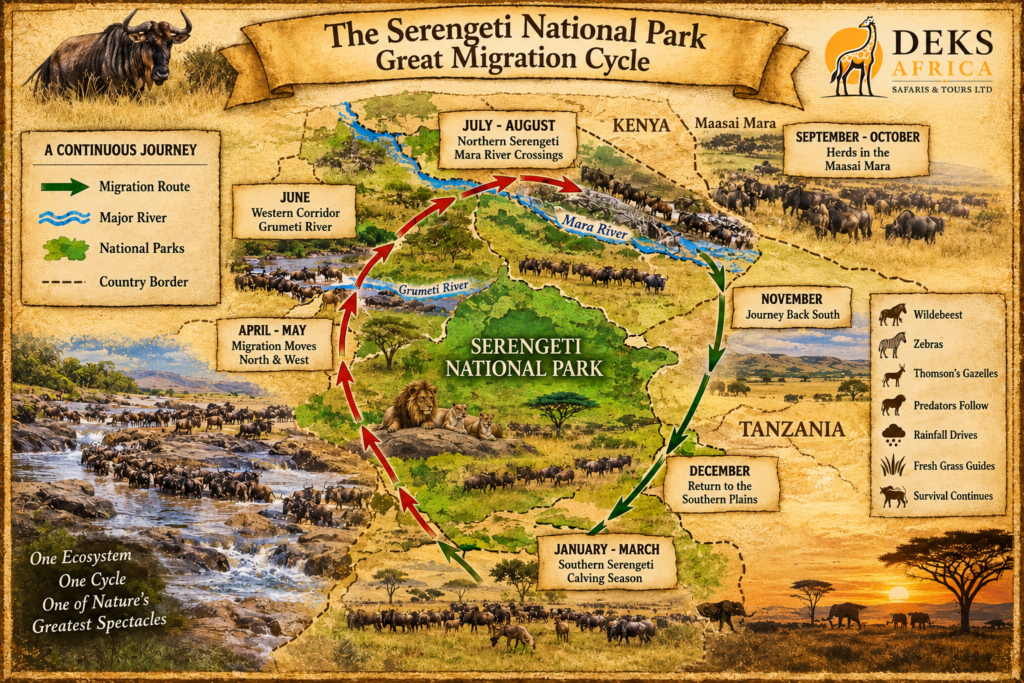
The Serengeti Safari in January attracts travelers seeking the Great Wildlife Migration and exceptional predator encounters. Large herds often occupy southern Serengeti and Ndutu areas during this period.
Fresh grass supports wildebeest, zebras, gazelles, and other grazing animals. Consequently, the southern plains can offer outstanding wildlife concentrations and rewarding photography opportunities.
A January journey also provides a different atmosphere from the famous river-crossing season. Instead of dramatic Mara River scenes, travelers can experience vast herds across green plains.
The Serengeti Safari in January can suit photographers, wildlife enthusiasts, families, couples, and first-time Africa travelers. Every game drive presents opportunities to discover changing wildlife behavior.
Moreover, January creates excellent conditions for combining several destinations. Visitors can explore Serengeti National Park, Ngorongoro Conservation Area, and other Northern Tanzania attractions.
Deks Africa Safaris and Tours Ltd creates carefully planned Tanzania Safaris that match seasonal wildlife movements. Our itineraries focus on realistic planning, responsible tourism, and meaningful African experiences.
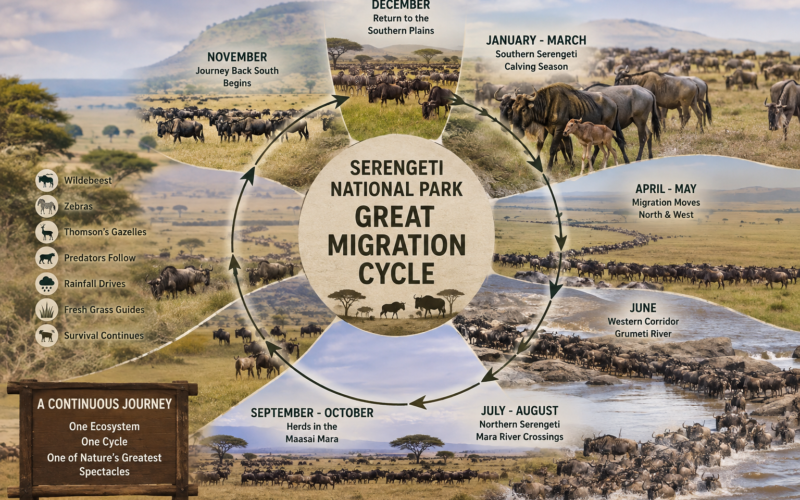
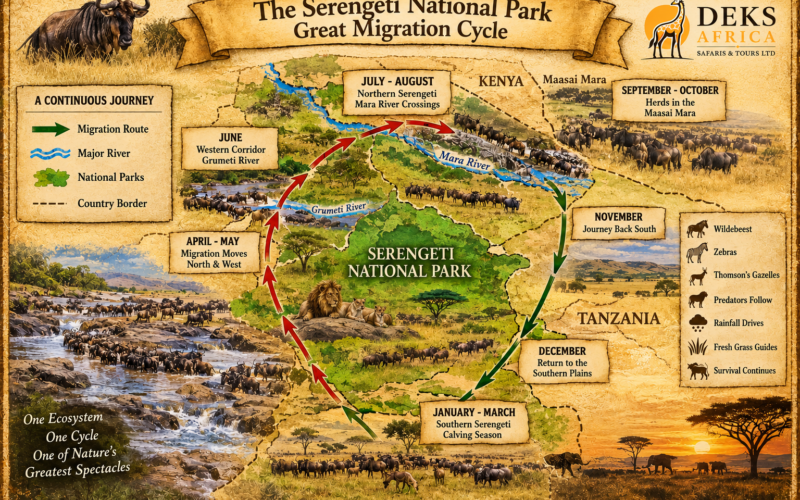
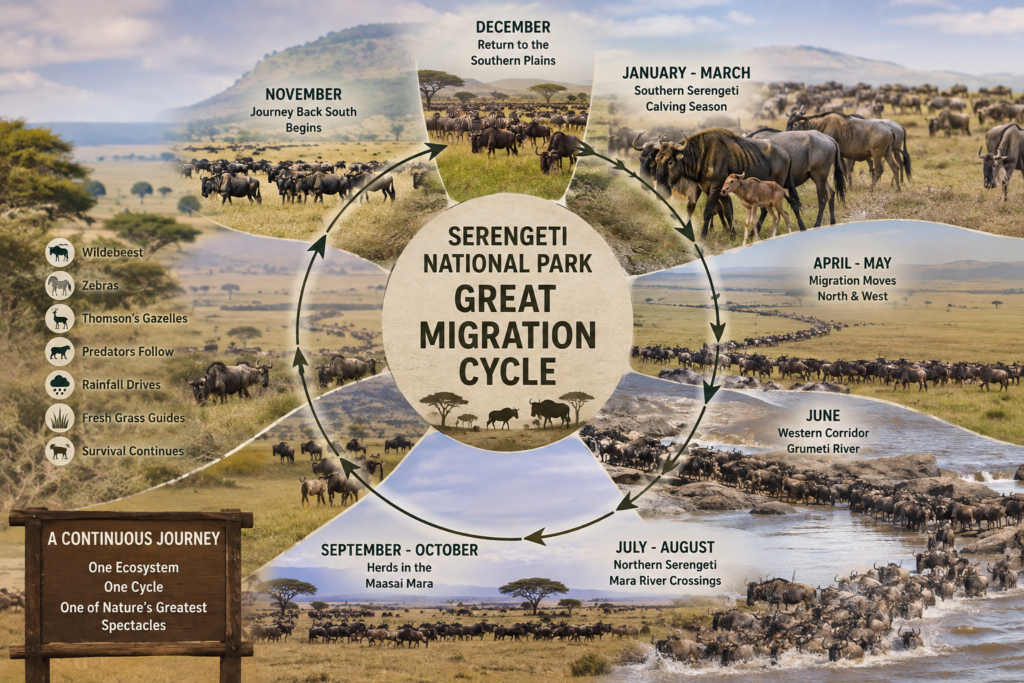
Serengeti Migration Dates
Why Choose a Serengeti Safari in January?
Follow the Great Wildlife Migration
A Serengeti Safari in January provides excellent opportunities to follow the Great Wildlife Migration. The migration continues throughout the year and follows changing rainfall patterns.
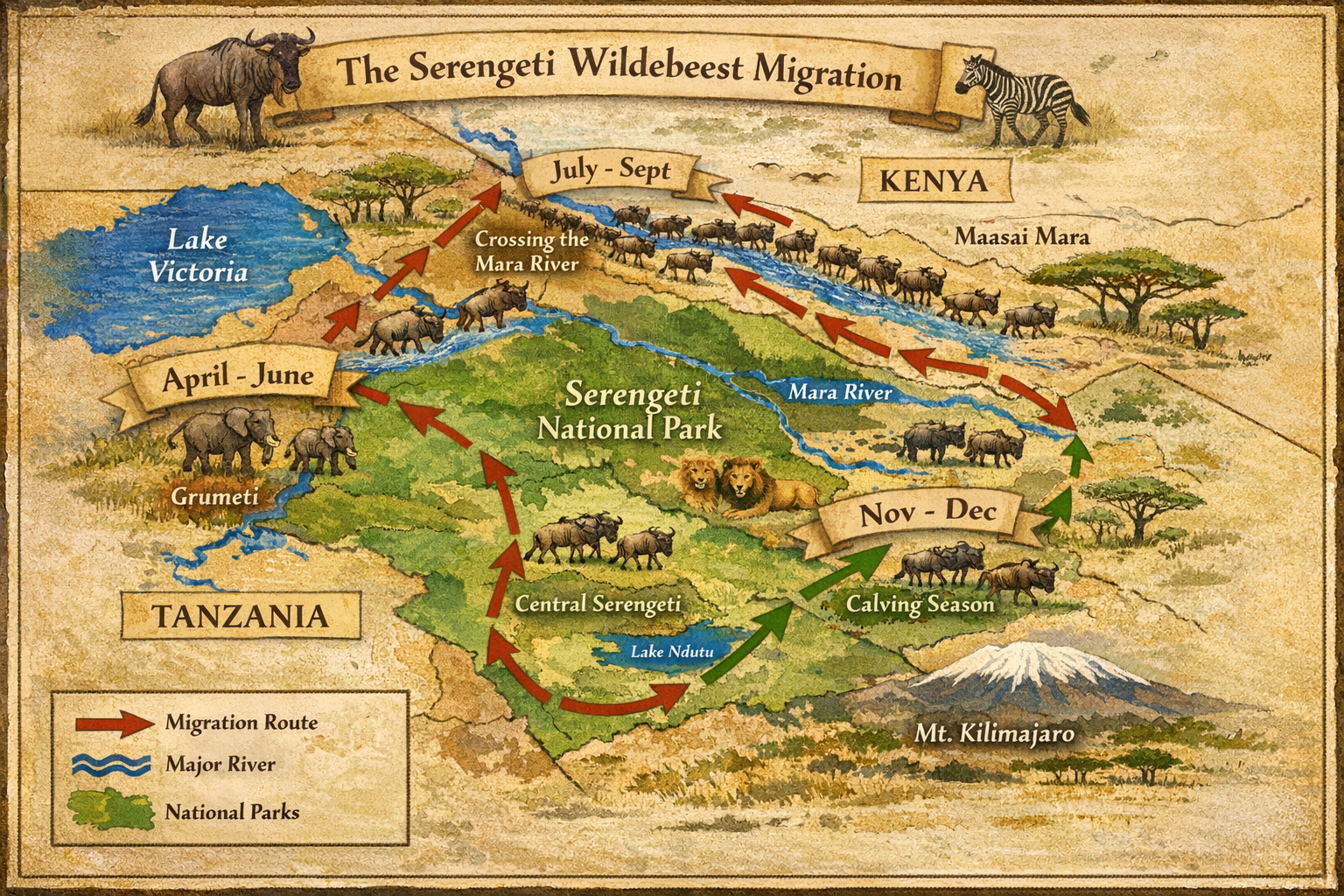
During January, many migration herds can occupy southern Serengeti and the wider Ndutu region. Fresh grass attracts large groups of wildebeest and zebras.
However, exact wildlife locations can change from year to year. Rainfall patterns influence grazing conditions and affect the movement of migrating animals.
Therefore, travelers should view Serengeti Migration Dates as useful planning guidance rather than fixed guarantees. A flexible itinerary creates better opportunities for successful wildlife viewing.
The southern plains provide wide, open landscapes with excellent visibility. These conditions can make it easier to observe large wildlife concentrations.
A Serengeti Safari in January also reveals the impressive scale of migration movement. Thousands of animals may stretch across the horizon in every direction.
This experience offers a powerful introduction to Africa Safaris. It combines dramatic landscapes, wildlife diversity, and authentic wilderness experiences within one extraordinary destination.
Wildebeest Calving Season
Witness New Life on the Plains
The Serengeti Safari in January can offer the beginning of the wider calving period. Conditions vary each year because rainfall influences the migration’s timing.
The southern grasslands provide rich feeding areas for pregnant wildebeest. As the season progresses, large numbers of calves are born across the plains.
Newborn wildebeest quickly learn to stand and move with the herd. Their survival depends on keeping close to their mothers and surrounding animals.
This period also attracts predators searching for hunting opportunities. Lions, cheetahs, hyenas, and leopards remain active throughout the southern ecosystem.
Therefore, a Serengeti Wildebeest Migration Safari can provide remarkable predator encounters during this season. Wildlife behavior remains natural and unpredictable during every game drive.
Travelers can witness peaceful grazing scenes before encountering intense predator activity nearby. This contrast creates one of the most fascinating aspects of Tanzania Wildlife Safaris.
A Serengeti Safari in January offers more than spectacular wildlife numbers. It also reveals the constant cycle of birth, survival, movement, and natural selection.
Explore the Ndutu Plains
The Heart of January Wildlife Viewing
The Ndutu Plains deserve special attention during a Serengeti Safari in January. This important wildlife area connects southern Serengeti with the wider Ngorongoro Conservation Area.
Open grasslands provide suitable feeding conditions for large numbers of grazing animals. Wildebeest, zebras, gazelles, and antelopes can gather across the plains.
The landscape also supports excellent predator viewing. Lions rest near productive hunting areas, while cheetahs scan the open grasslands.
Hyenas move throughout the ecosystem and play an important ecological role. Their presence adds further excitement to wildlife drives.
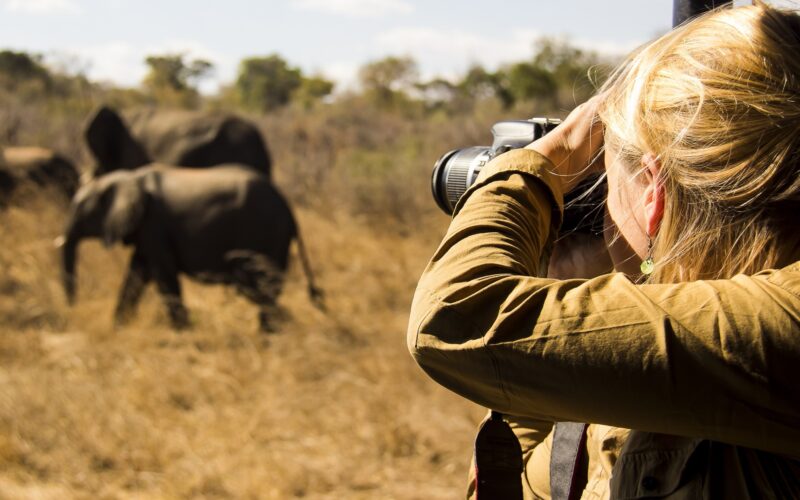
Photography opportunities can become exceptional during this period. Green grass, dramatic skies, wildlife herds, and soft seasonal light create beautiful natural scenes.
Moreover, the open plains provide wide viewing opportunities. Visitors can appreciate both close animal encounters and enormous migration landscapes.
A Serengeti Safari in January around Ndutu can therefore deliver a complete wildlife experience. Large herds and resident animals create rewarding game drives throughout the day.
Deks Africa Safaris and Tours Ltd can help travelers select accommodation with practical access to productive January wildlife areas.
Discover Southern Serengeti
Vast Plains and Moving Herds
Southern Serengeti forms another important area for a Serengeti Safari in January. The vast grasslands provide dramatic scenery and excellent wildlife viewing.
Migration herds can spread widely across the plains. Consequently, experienced guides play an important role in locating productive wildlife areas.
Wildebeest often dominate the landscape with large numbers of zebras nearby. Gazelles and other grazing species add further diversity to the experience.
Predators follow areas with suitable prey concentrations. Lions remain among the most frequently encountered large carnivores across the wider Serengeti ecosystem.
Cheetahs also benefit from the open terrain. Their speed and hunting behavior make them particularly fascinating animals to observe.
A Serengeti Safari in January allows travelers to explore these changing wildlife relationships. Every species plays a role within the wider natural ecosystem.
Unlike fixed attractions, wildlife encounters develop naturally. Each game drive therefore offers a different story and unexpected opportunities.
Furthermore, the southern landscapes create a peaceful sense of wilderness. The open horizon allows visitors to appreciate the immense scale of Serengeti National Park.
Weather During a Serengeti Safari in January
Green Landscapes and Changing Skies
A Serengeti Safari in January takes place during a season with changing weather conditions. Travelers can enjoy warm days and cooler mornings or evenings.
Short rains may occur during parts of the month. However, rainfall often arrives in localized showers rather than continuing throughout every day.
These rains contribute to the green landscapes that characterize this period. Fresh grass supports grazing animals and attracts large wildlife concentrations.
The changing skies can also create excellent photography conditions. Clouds, sunlight, and open landscapes produce dramatic scenes across the Serengeti plains.
Travelers should pack lightweight clothing for warm daytime temperatures. A warm layer remains useful during early morning and evening activities.
A waterproof jacket can also prove helpful during occasional showers. Comfortable walking shoes and sun protection should form part of your safari packing list.
Therefore, proper preparation can improve your overall Serengeti Safari in January experience. Practical clothing allows travelers to remain comfortable during changing conditions.
Wildlife to Expect in January
Beyond the Migration Herds
A Serengeti Safari in January provides much more than wildebeest viewing. Serengeti National Park supports one of Africa’s most impressive wildlife populations.
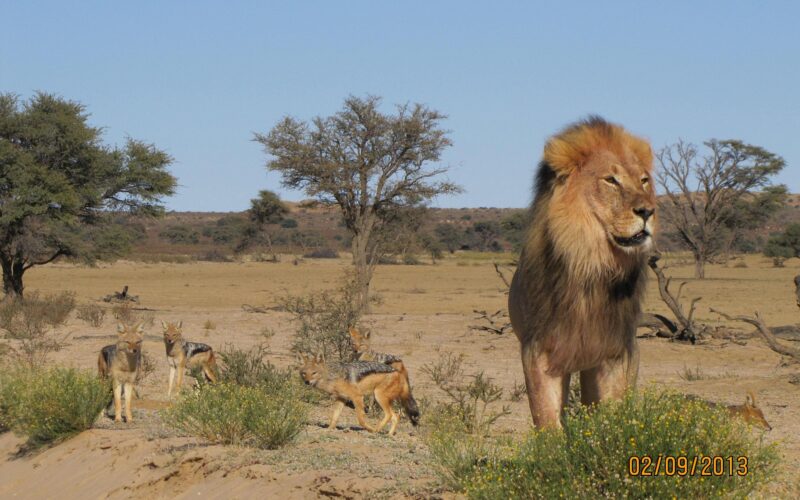
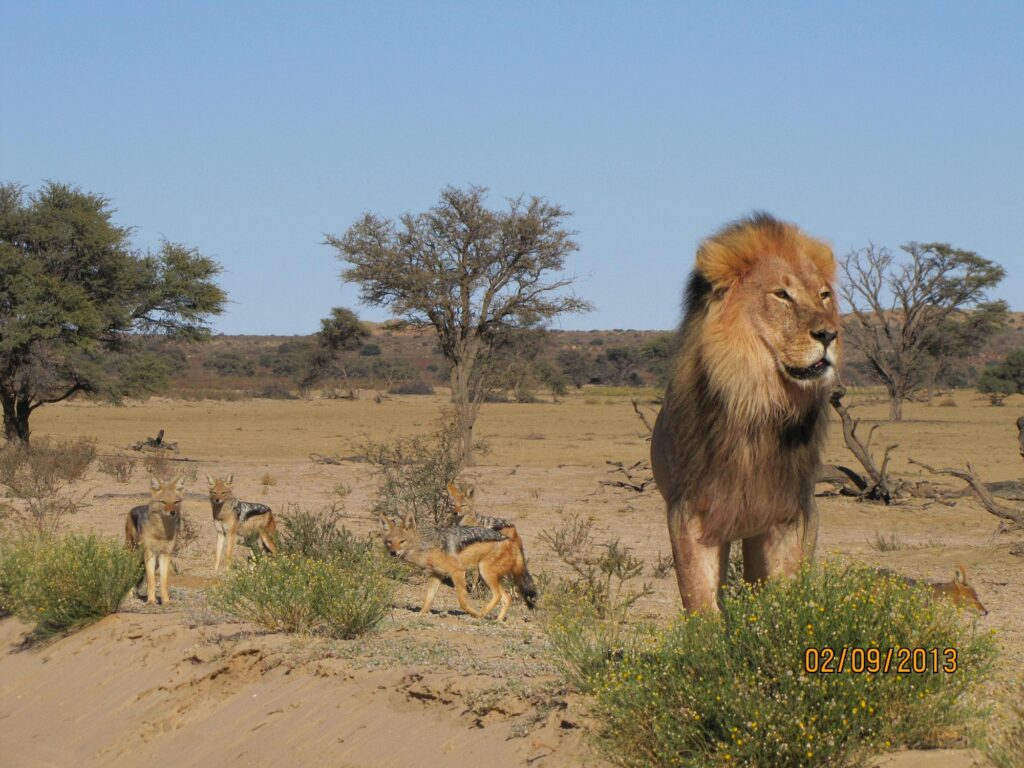
Lions remain a major highlight throughout the ecosystem. Travelers may observe prides resting, socializing, or searching for suitable hunting opportunities.
Cheetahs thrive in suitable open habitats. Their elegant appearance and remarkable speed create memorable wildlife encounters.
Leopards can appear in riverine areas and wooded landscapes. Their secretive behavior makes every sighting especially exciting.
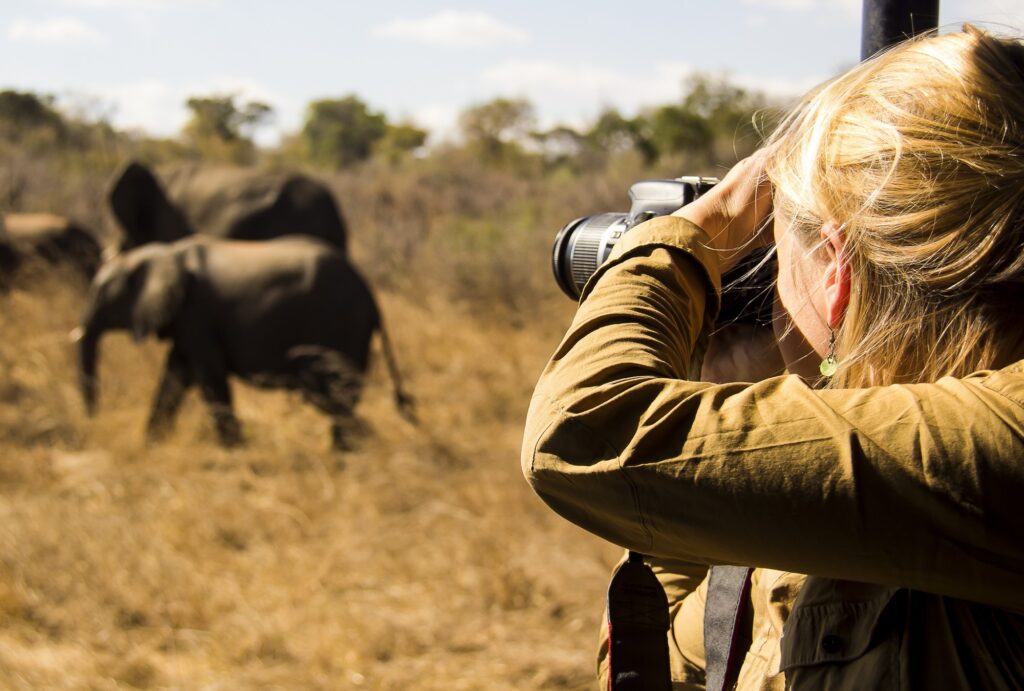
Elephants move through different Serengeti habitats and offer excellent photography opportunities. Giraffes, buffaloes, hyenas, jackals, and antelopes add further diversity.
Birdwatchers can also enjoy rewarding experiences during January. The wider Serengeti ecosystem supports numerous resident and migratory bird species.
Consequently, a Serengeti Safari in January delivers a broad Tanzania wildlife experience. The migration enhances the journey, while resident wildlife ensures rewarding game viewing.
This diversity makes January suitable for travelers with different interests. Photographers, families, couples, and wildlife specialists can all enjoy the region.
Add Ngorongoro to Your January Safari
Explore a Unique Wildlife Destination
A Serengeti Safari in January can combine perfectly with the Ngorongoro Conservation Area. This combination creates a varied and rewarding Tanzania Safari.
Ngorongoro Crater contains a remarkable concentration of wildlife within its distinctive landscape. Visitors can encounter elephants, buffaloes, lions, zebras, and many other animals.
The crater also offers opportunities to search for black rhinos. Wildlife viewing conditions can change according to weather and animal movements.
Beyond wildlife, the Ngorongoro highlands provide beautiful scenery and cultural opportunities. The surrounding landscapes contrast strongly with the open Serengeti plains.
Combining these destinations creates greater wildlife diversity during Africa Tours. Travelers experience different habitats within a single carefully designed itinerary.
Furthermore, Ngorongoro can provide a valuable transition between Arusha and Serengeti National Park. The route allows visitors to experience Tanzania’s changing geography.
Deks Africa Safaris and Tours Ltd can create customized Tanzania Safaris that combine Serengeti, Ngorongoro, Tarangire, and other destinations.
Cultural Experiences Around Your Safari Lodge
Connect With Tanzania’s Living Heritage
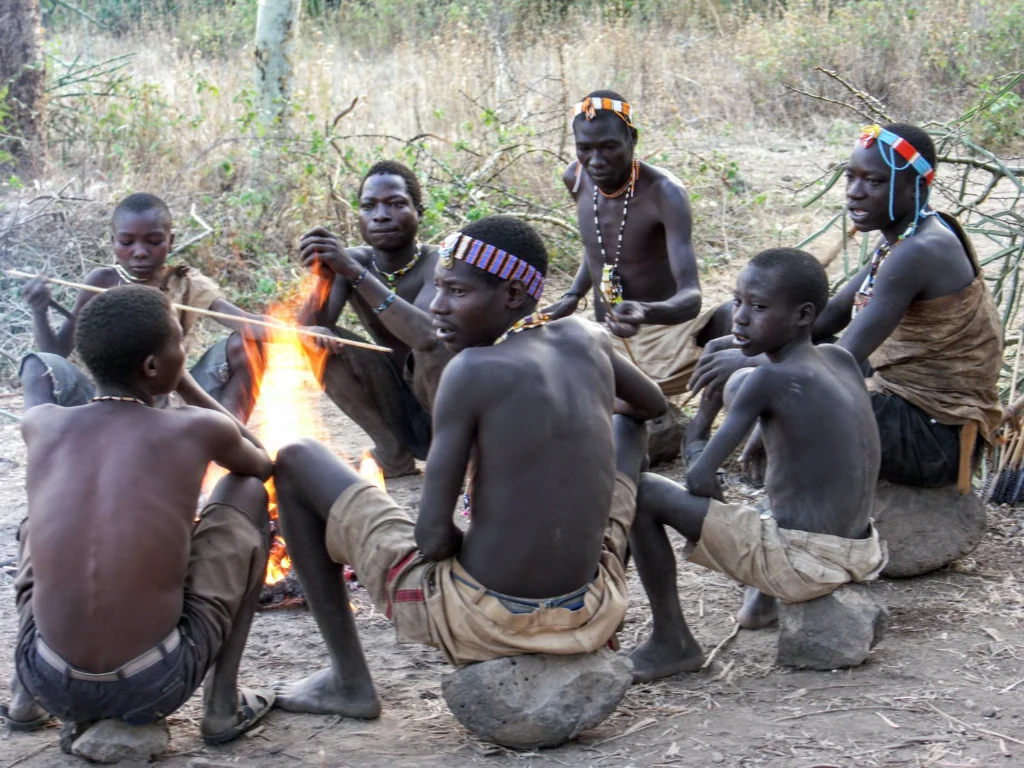
A Serengeti Safari in January can include meaningful cultural experiences around selected safari locations. These activities create stronger connections with Tanzania beyond wildlife viewing.
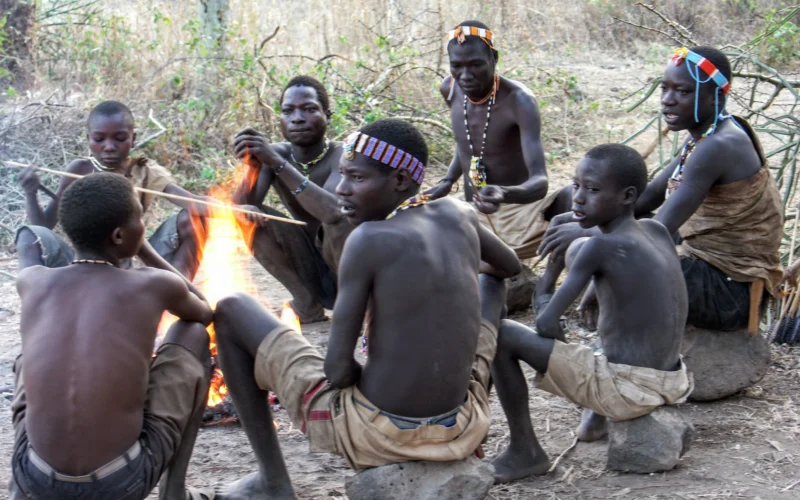
Travelers can visit selected Maasai communities through respectful and organized cultural programs. Such experiences may introduce visitors to aspects of traditional pastoral life.
Guests can learn about Maasai beadwork, clothing, homesteads, and cultural traditions. Local hosts guide these experiences and provide important cultural context.
Traditional music and dance can also create memorable cultural encounters. Visitors can enjoy these activities while respecting community customs and participation rules.
Some areas offer guided cultural walks with local community members. These walks can introduce traditional knowledge about landscapes, livestock, plants, and daily life.
Craft experiences provide another opportunity for meaningful interaction. Travelers may observe artisans creating jewelry and other locally inspired products.
Purchasing authentic crafts can also support local livelihoods. Responsible tourism should create positive connections between visitors and host communities.
Deks Africa Safaris and Tours Ltd supports respectful cultural experiences that value local knowledge, traditions, and community participation.
Enjoy a Hot Air Balloon Ride
See the Serengeti From Above
A Hot Air Balloon Ride can add a remarkable perspective to a Serengeti Safari in January. The adventure usually begins before sunrise.
Guests travel from their camp or lodge while the landscape remains quiet and dark. The experience becomes more exciting as the balloon prepares for flight.
As the balloon rises, the Serengeti plains appear beneath you. Rivers, grasslands, wildlife trails, and acacia trees create impressive patterns.
The morning sunlight gradually transforms the landscape. This peaceful experience provides a strong contrast to traditional game drives.
Depending on the balloon location, travelers may observe wildlife from above. Giraffes, elephants, zebras, and other animals can create remarkable scenes.
A Hot Air Balloon Ride also reveals the enormous scale of Serengeti National Park. From the air, visitors can appreciate the size and beauty of this famous wilderness.
Advance booking remains important because availability can become limited. Weather conditions also influence daily balloon operations.
Adding this activity to a Serengeti Safari in January can create an unforgettable highlight for special celebrations and luxury Africa Safaris.
Accommodation Options for January
Choose the Right Safari Base
Accommodation location plays an important role during a Serengeti Safari in January. The migration can cover wide areas, making proximity to wildlife valuable.
Mobile tented camps can follow seasonal wildlife movements. These camps often provide strategic access to important migration locations.
Permanent tented camps offer a combination of wilderness atmosphere and comfortable facilities. Many travelers enjoy sleeping close to the sounds of nature.
Safari lodges provide another accommodation option. Choices range from practical midrange properties to exclusive luxury experiences.
January availability can vary according to location and travel dates. Therefore, travelers should consider booking well before their preferred departure period.
Selecting the right camp can reduce daily driving distances. More time near wildlife areas often improves the overall safari experience.
Deks Africa Safaris and Tours Ltd can recommend accommodation based on budget, comfort, travel style, and expected wildlife movements.
A carefully selected safari base supports a more relaxed and rewarding Serengeti Safari in January.
Practical Tips for Planning
Prepare for a Successful Safari
Start planning your Serengeti Safari in January by choosing your preferred wildlife experience. Migration viewing, photography, predators, and cultural activities may require different planning approaches.
Next, consider your available Serengeti Migration Dates. Early and late January can present different wildlife conditions depending on rainfall.
Book accommodation early, especially during popular travel periods. Strategic camps and lodges may have limited availability during high-demand dates.
Choose a knowledgeable safari guide and experienced operator. Local expertise helps identify productive wildlife areas and manage changing conditions.
Pack practical clothing for warm days and cooler mornings. Include sun protection, a light waterproof jacket, comfortable shoes, and suitable camera equipment.
Private Tanzania Safaris provide additional flexibility for travelers with specific interests. Guides can adjust daily activities according to wildlife sightings and personal preferences.
Finally, allow enough time for your journey. Wildlife movement remains unpredictable, and additional days provide greater flexibility.
A well-planned Serengeti Safari in January should balance wildlife viewing, comfort, travel distances, and personal interests.
Why Book with Deks Africa Safaris and Tours Ltd?
Professional Planning for Africa Safaris
Deks Africa Safaris and Tours Ltd creates personalized journeys for travelers seeking meaningful Tanzania Wildlife Safaris. Our approach combines careful planning with an understanding of changing safari conditions.
We consider seasonal wildlife movements when designing every route. This helps travelers choose appropriate destinations and accommodation for their available travel dates.
Our team values honest and realistic safari planning. Wildlife moves freely, and no responsible operator can guarantee exact sightings.
Instead, we focus on increasing opportunities through suitable timing and location. This approach builds trust and creates more realistic travel expectations.
We can customize Africa Safaris for couples, families, photographers, groups, and individual travelers. Every itinerary can reflect your budget, preferred accommodation, and desired experiences.
Cultural activities, wildlife experiences, and optional adventures can also complement your journey. Our goal is to create a complete and meaningful Africa travel experience.
A Serengeti Safari in January with Deks Africa Safaris and Tours Ltd combines expert planning with unforgettable wilderness experiences.
Safari Inclusions
- Airport transfers
- Professional safari driver-guide
- Private 4×4 safari vehicle
- Accommodation
- Meals as scheduled
- Drinking water
- Game drives
- Park entrance fees
- Conservation fees
- Government taxes
- Safari activities listed in the itinerary
Safari Exclusions
- International flights
- Visa fees
- Travel insurance
- Hot Air Balloon Ride
- Alcoholic drinks
- Personal expenses
- Laundry services
- Tips and gratuities
- Optional activities
- Additional accommodation
- Items of a personal nature
Book Your Serengeti Safari in January
Secure Your African Wildlife Adventure
A Serengeti Safari in January offers an exceptional opportunity to experience Tanzania’s green landscapes and remarkable wildlife. The season combines migration activity, predator encounters, and beautiful scenery.
The southern Serengeti and Ndutu region can provide outstanding opportunities for wildlife viewing. Fresh grazing attracts large herds and supports the continuing Great Wildlife Migration.
Moreover, January allows travelers to combine Serengeti National Park with Ngorongoro and other iconic destinations. This combination creates diverse and rewarding Tanzania Safaris.
A Serengeti Safari in January can also include cultural experiences and a memorable Hot Air Balloon Ride. These additions create a deeper and more complete African journey.
For the best accommodation choices, consider planning your journey early. Popular safari camps can experience strong demand around important travel periods.
Deks Africa Safaris and Tours Ltd can help you design a personalized Serengeti Safari in January. We can match your itinerary with your travel dates, interests, budget, and preferred accommodation style.
Secure your place with the required 30% deposit and begin planning an unforgettable adventure. We recommend early planning for travelers seeking preferred safari locations and accommodation.
Choose a Serengeti Safari in January and discover the beauty of the Great Wildlife Migration. Experience extraordinary Tanzania Wildlife Safaris and create lasting memories through unforgettable Africa Tours.
Proposed East Africa Safari Holidays for the USA Travelers
- 9-Day Rwanda & Tanzania Luxury Wildlife Tour
- 9-Day Rwanda, Uganda & Tanzania Luxury Wildlife Safari
- 9-Day Rwanda Gorilla Trekking & Tanzania Safari
- 9-Day Tanzania Safari & Uganda Gorilla Trekking
- 10-Day Serengeti & Ngorongoro Crater Safari Experience
- 10-Day Tanzania and Rwanda Adventure Safari
- 11-Day Rwanda Uganda Tanzania Safari
- 20 Days Uganda, Tanzania, and Mafia Island Beach Safari
- 18 Days Uganda, Tanzania, and Mafia Island Beach Safari
- 14-Day Rwanda Uganda Tanzania Tour
- 14-Day Rwanda, Kenya, Tanzania & Beach Holiday
- 20-Day Rwanda Tanzania Zanzibar Safari Experience
- 16-Day Tanzania Safari & Rwanda Gorilla Trekking Experience
- 14 Days Kenya-Tanzania-Rwanda-Uganda Safari
- 24 Days Zanzibar-Uganda-Tanzania-Kenya Safari
- 5 Days Serengeti Great Migration Safari
- 6 Days Serengeti Great Migration Safari
- 7 Days Serengeti Great Migration Safari
- 8 Days Serengeti Great Migration Safari