
Serengeti Great Wildlife Migration Calendar
The Serengeti Great Wildlife Migration Calendar guides travellers through Africa’s most remarkable annual wildlife movement. Millions of animals travel across Tanzania and Kenya in search of fresh grazing and water. Wildebeest dominate the movement, while zebras and gazelles travel alongside them.
However, the migration does not follow an exact timetable. Seasonal rainfall controls the availability of grass and water. Therefore, the Serengeti Great Wildlife Migration Calendar works best as a planning guide. It helps travellers understand likely migration areas and major wildlife events.
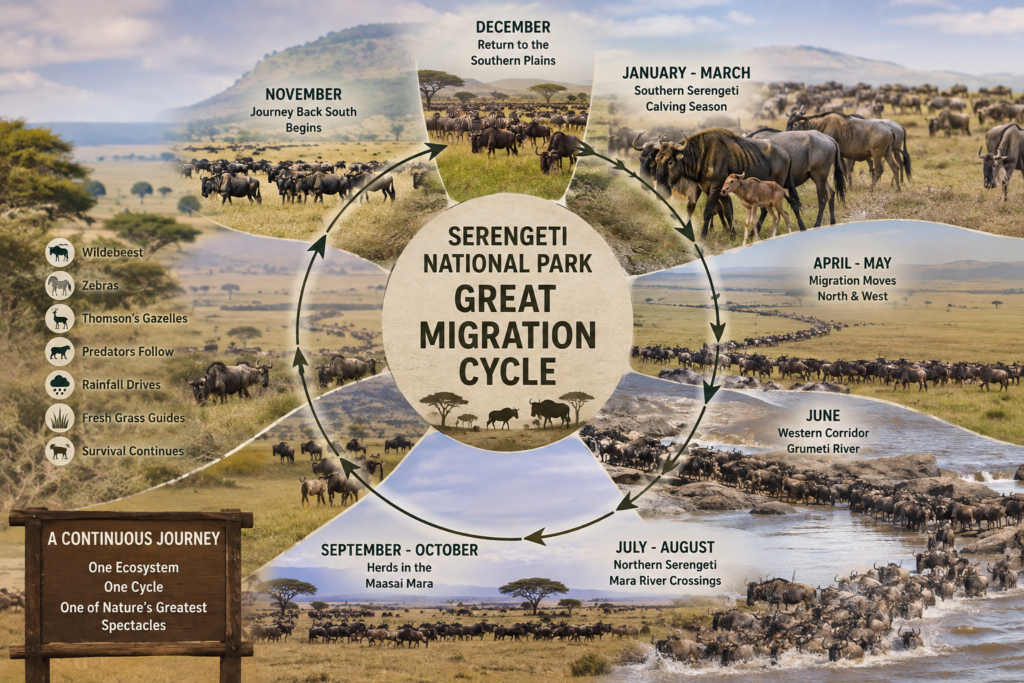
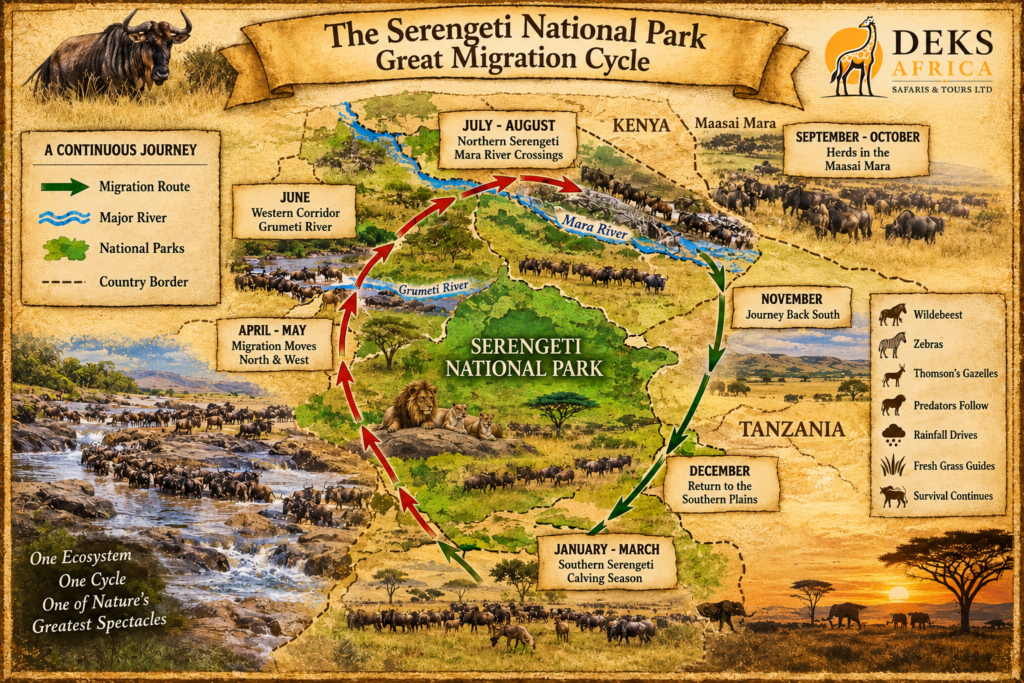
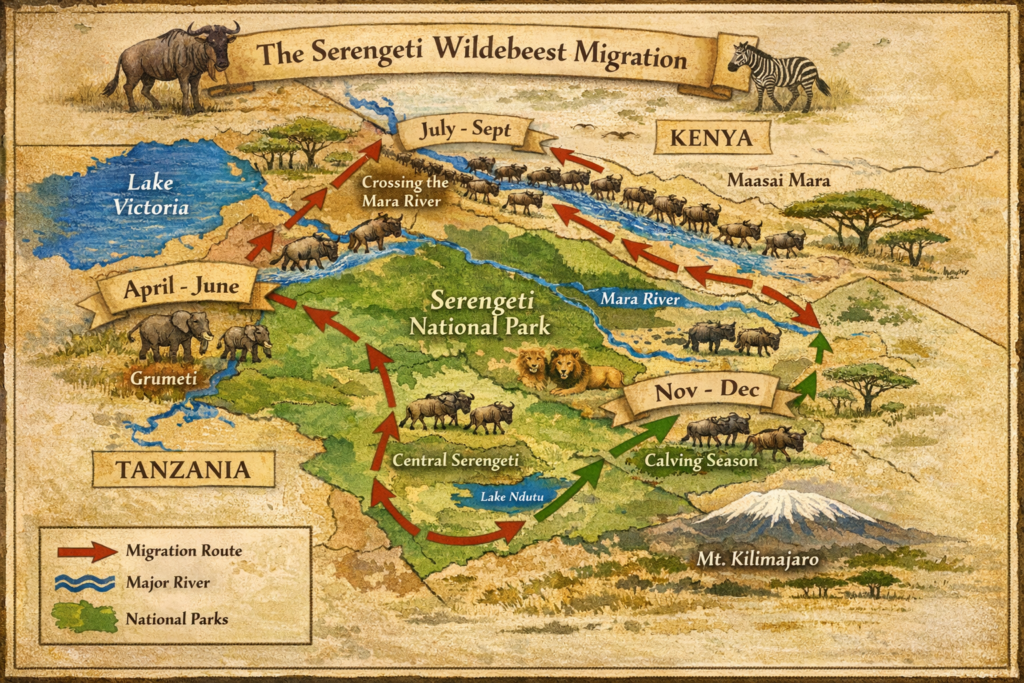
The journey follows a broad clockwise movement across the Serengeti ecosystem. Herds usually gather on southern plains before moving westward and northward. Later, many animals return toward eastern and southern grazing areas.
A Serengeti Safari offers wildlife encounters throughout the year. Travellers should therefore choose destinations according to their preferred experiences. Some visitors want to witness calving. Others dream about dramatic river crossings or large herds across endless grasslands.
Deks Africa Safaris and Tours Ltd creates carefully planned Tanzania Safaris for travellers seeking meaningful wildlife experiences. Our local safari knowledge helps guests select suitable regions, camps, and travel periods.
This complete Serengeti Great Wildlife Migration Calendar explains the migration month by month.
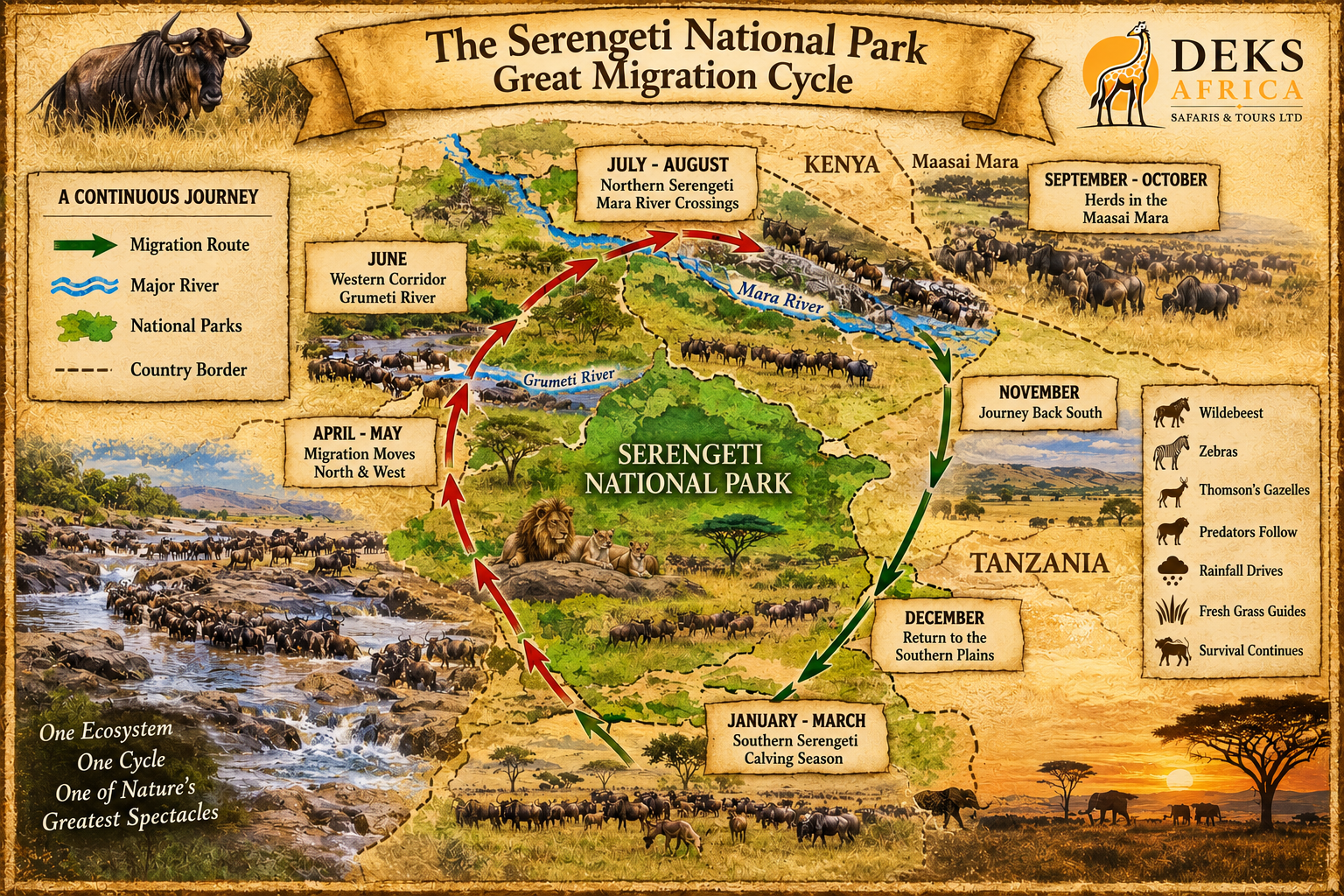
Serengeti Great Migration Cycle
Understanding the Great Wildlife Migration
A Journey Driven by Rainfall
The Great Wildlife Migration is not a single event that begins and ends suddenly. Instead, it forms a continuous cycle of movement, feeding, breeding, and survival. Millions of grazing animals follow seasonal rainfall across the wider Serengeti ecosystem.
Wildebeest lead the largest concentrations of animals. Zebras and gazelles also form an important part of this extraordinary wildlife movement. Together, these animals travel across vast landscapes while predators follow their movements.
Fresh grass remains the primary attraction for migrating herds. Rainfall stimulates new vegetation across different areas of the ecosystem. Consequently, animals move toward regions offering better grazing conditions.
This natural movement explains why Serengeti Migration Dates can vary each year. Rainfall may arrive early, late, or unevenly across the landscape. Therefore, travellers should avoid expecting wildlife events on guaranteed dates.
Instead, successful Great Migration Safaris require flexible planning. Selecting the correct safari region often matters more than choosing an exact calendar day.
The Great Wildlife Migration Calendar provides expected seasonal patterns. Experienced safari planning then helps travellers match their interests with likely migration locations.
Why the Migration Changes Every Year
Nature Controls the Journey
No human schedule controls the migration. Rainfall, grazing conditions, water availability, and animal behaviour influence the movement. Therefore, every year produces slightly different migration patterns.
The Serengeti Great Migration Calendar identifies traditional movement periods rather than guaranteed wildlife positions. Herds may arrive earlier or later than expected. Some groups can also remain within an area longer.
Furthermore, the migration often spreads across large distances. Travellers may encounter separate herds in different Serengeti regions. This creates excellent wildlife viewing opportunities beyond the famous river crossings.
A successful Serengeti Great Migration Safari therefore requires realistic expectations. River crossings can happen unpredictably. Herds may approach a river repeatedly before crossing. They can also change direction suddenly.
Patience often becomes part of the safari experience. A guide may follow wildlife movements while searching for suitable viewing opportunities. This flexibility improves the quality of Tanzania Wildlife Safaris.
The best approach involves choosing your preferred wildlife action first. Afterwards, you can select suitable travel months and safari locations. Deks Africa Safaris and Tours Ltd helps travellers build itineraries around realistic seasonal patterns.
January: Migration on the Southern Plains
Fresh Grazing and Growing Herds
January often finds large migration concentrations across southern and southeastern areas of the Serengeti ecosystem. The Ndutu region and nearby short-grass plains can provide excellent grazing after seasonal rains.
Fresh vegetation attracts enormous numbers of wildebeest, zebras, and gazelles. The open landscape also creates rewarding wildlife viewing conditions. Travellers can often enjoy wide scenes filled with grazing animals.
The Serengeti Great Wildlife Migration Calendar places January within an important preparation period. Many pregnant wildebeest gather across productive southern plains before the main calving season.
Predators also benefit from the large concentrations of prey. Lions, cheetahs, hyenas, and other predators remain active throughout these wildlife-rich areas. Consequently, January can offer rewarding predator encounters.
A Serengeti Safari during January suits travellers seeking vast herds and dramatic landscapes. The experience focuses less on river crossings and more on wildlife density.
January also offers opportunities to explore cultural attractions near safari areas. Visitors can enjoy respectful Maasai cultural experiences through suitable community visits. These experiences may include traditional crafts, music, dance, and insights into pastoral lifestyles.
Therefore, January combines wildlife, landscapes, and culture during an exciting African adventure.
Recommended Reading: Plan a Serengeti Safari in January
Recommended Reading: Where Will the Great Migration be in January?
February: The Peak Calving Experience
New Life Across the Plains
February remains one of the most exciting periods within the Serengeti Great Wildlife Migration Calendar. Large numbers of wildebeest give birth across the nutrient-rich southern plains.
The calving season creates an extraordinary wildlife spectacle. Newborn calves begin walking quickly and soon follow their mothers across the open grasslands. Large wildlife concentrations make the landscape feel alive with constant movement.
This abundance also attracts predators. Lions patrol the plains, while cheetahs search open areas for hunting opportunities. Hyenas and other scavengers also remain active around the migration.
Consequently, February creates excellent conditions for travellers interested in predator interactions. Wildlife photographers also appreciate the open landscapes and dramatic animal behaviour.
A Serengeti Great Migration Safari during this period focuses on life, survival, and renewal. The experience demonstrates the powerful connection between prey, predators, and seasonal grasslands.
The nearby Ngorongoro Conservation Area can also complement southern Serengeti travel. Travellers can explore Maasai cultural experiences and learn about pastoral traditions. Responsible visits should always respect community values and local privacy.
February therefore provides a memorable combination of wildlife action and cultural discovery. For many travellers, this period represents a major highlight of Great Migration Safaris.
Recommended Reading: Plan a Serengeti Safari in February
Recommended Reading: Where Will the Great Migration be in February?
March: Herds Begin Moving
Changing Conditions on the Plains
March often brings changing weather patterns across the Serengeti ecosystem. Rainfall continues influencing grass growth and wildlife movement. As grazing conditions change, herds begin preparing for longer movements.
The exact Serengeti Migration Dates remain difficult to predict. However, many animals may start shifting away from southern feeding areas. Some herds move westward toward new grazing opportunities.
The migration can still offer impressive wildlife viewing during March. Large numbers of animals may remain visible across the plains. Therefore, travellers should not assume the migration disappears after February.
Predator activity also remains rewarding. Young animals and large prey concentrations continue attracting carnivores. Lions, cheetahs, leopards, and hyenas may provide excellent safari sightings.
March suits travellers seeking fewer crowds in some areas. The changing skies can also create dramatic photographic conditions. Green landscapes often contrast beautifully with dark clouds.
A well-planned Serengeti Safari during March should include flexible routing. Guides can respond to recent wildlife movements and weather conditions.
Cultural activities can complement the journey through visits to nearby Maasai communities. Travellers may explore local crafts, traditional architecture, music, and selected cultural programmes.
Thus, March offers a transitional chapter within the Serengeti Great Wildlife Migration Calendar.
Recommended Reading: Plan a Serengeti Safari in March
Recommended Reading: Where Will the Great Migration be in March?
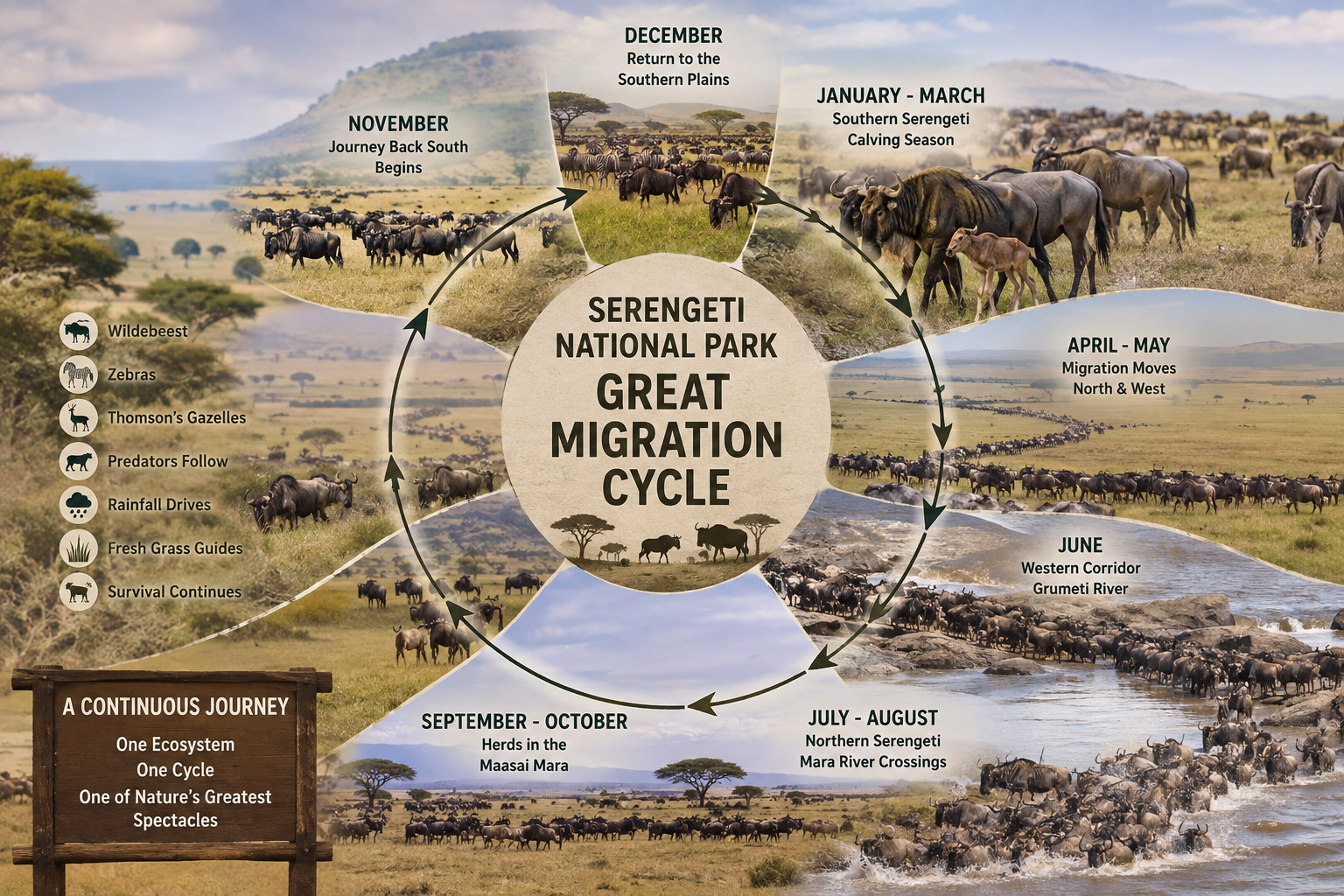
Great Wildlife Migration Calendar
April: The Long Rains and Western Movement
Following New Grazing Areas
April often brings heavier rainfall across parts of the Serengeti ecosystem. The landscape becomes greener, while migration routes may change according to available grazing.
Large herds can begin moving through central and western areas. However, rainfall conditions may affect road access. Therefore, travellers should choose experienced guides and suitable vehicles.
A Tanzania Safari during April offers a different atmosphere. The landscapes can appear lush and dramatic. Storm clouds, green plains, and fewer visitors may appeal strongly to photographers.
Wildlife remains abundant throughout the Serengeti. A safari should never focus only on migration positions. Resident wildlife includes lions, leopards, elephants, giraffes, and many antelope species.
The Great Wildlife Migration Calendar identifies April as a movement period. Herds often continue shifting toward western grazing areas. Nevertheless, actual positions depend on rainfall and grass conditions.
Comfortable accommodation becomes particularly important during wetter months. Well-located safari lodges and camps can reduce long daily travel distances. This allows more time for wildlife viewing.
Cultural experiences around selected safari lodges may include Maasai community visits and local handicraft activities. Travellers can also enjoy traditional food experiences where available.
April therefore suits visitors seeking green scenery, diverse wildlife, and a quieter Serengeti Safari.
Recommended Reading: Plan a Serengeti Safari in April
Recommended Reading: Where Will the Great Migration be in April?
May: The Great Northern Journey Begins
Long Columns Across the Landscape
May often marks a more visible stage of northward movement. Large herds may form long columns as animals travel across central and western Serengeti.
These wildlife movements create remarkable scenes across open landscapes. Thousands of animals can stretch across the plains while following ancient seasonal routes.
The Serengeti Great Wildlife Migration Calendar identifies May as an important transition period. Herds increasingly move toward the Western Corridor as grazing conditions change.
May can provide excellent opportunities for Great Migration Safaris. Travellers may witness large wildlife concentrations without focusing exclusively on river crossings.
The movement itself creates dramatic photographic opportunities. Long lines of wildebeest, zebras, and gazelles move through open landscapes under changing African skies.
Moreover, the mating season may create additional activity among wildebeest. Males compete for territory and breeding opportunities. This behaviour adds another layer to the wildlife experience.
Cultural activities can complement lodge stays around central Serengeti routes. Visitors may enjoy selected Maasai cultural programmes and craft experiences.
A carefully designed Serengeti Safari during May balances migration tracking with resident wildlife exploration. Flexible guiding remains essential because herds can spread across broad areas.
Recommended Reading: Plan a Serengeti Safari in May
Recommended Reading: Where Will the Great Migration be in May?
June: Western Corridor and Grumeti River
The First Major River Challenges
June often marks an important chapter within the Serengeti Great Wildlife Migration Calendar. Drier conditions encourage continued northward movement, particularly toward western Serengeti.
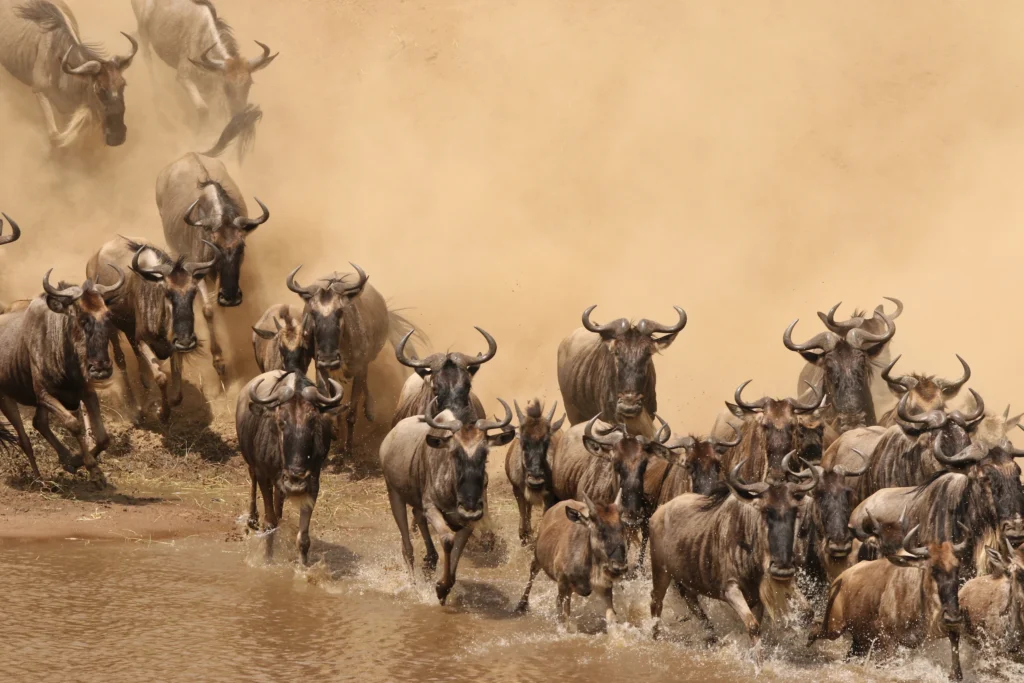
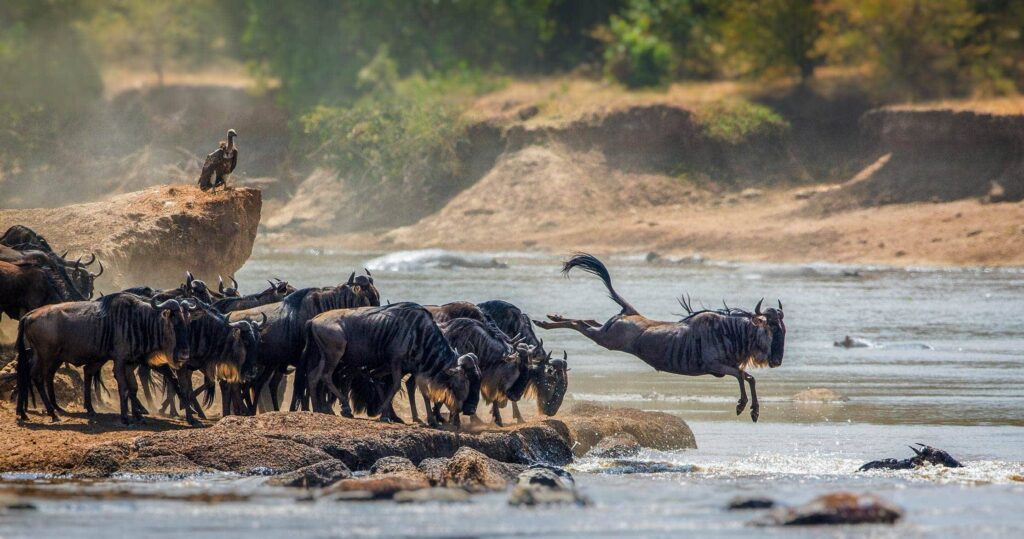
Many herds may move through the Western Corridor. The Grumeti River becomes an important obstacle along the migration route. River crossings can create intense wildlife encounters.
Crocodiles inhabit sections of the river and create additional danger for crossing animals. However, not every herd crosses immediately. Animals may gather, hesitate, and change direction before entering the water.
This unpredictability defines the excitement of a Serengeti Great Migration Safari. Nature determines the timing. No safari operator can guarantee a crossing at a specific hour.
June also offers rewarding predator sightings. Large prey concentrations attract lions and other carnivores. The Western Corridor provides diverse wildlife beyond the migration itself.
A lodge or camp in the correct region can improve safari efficiency. Staying close to expected migration routes reduces unnecessary driving.
Cultural activities around safari lodges may include guided visits to local communities, traditional music, craft displays, and food experiences. Availability depends on each lodge location.
June therefore offers dramatic movement, river challenges, and excellent wildlife diversity during Tanzania Wildlife Safaris.
Recommended Reading: Plan a Serengeti Safari in June
Recommended Reading: Where Will the Great Migration be in June?
July: The Northern Serengeti Beckons
Approaching the Mara River
July often brings many migration herds toward northern Serengeti. However, the movement varies according to rainfall and grazing conditions. Some animals may still remain farther south or west.
The Serengeti Great Migration Calendar identifies July as an important period for northern migration. Travellers often focus on areas near Kogatende and other northern regions.
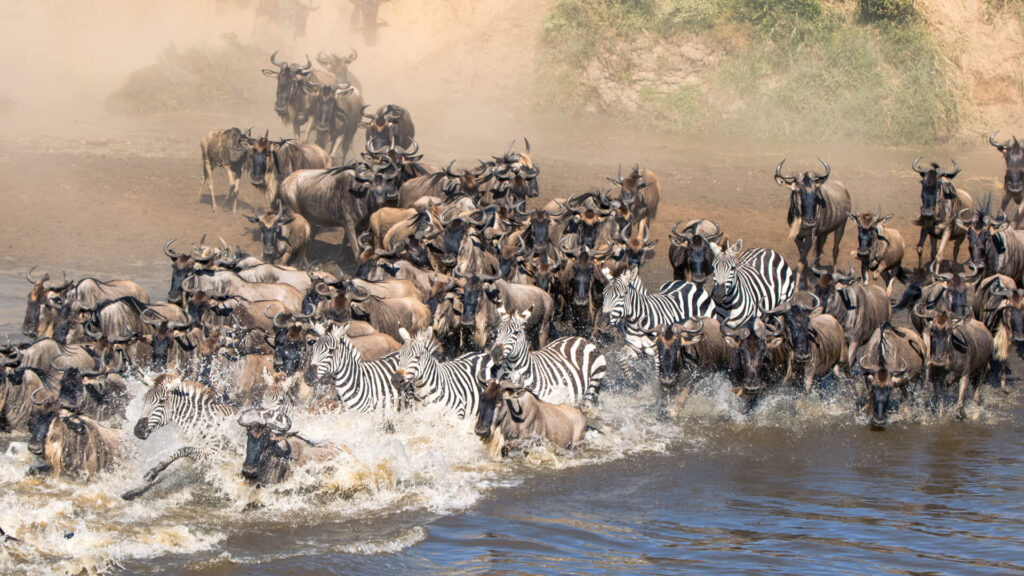
The Mara River creates one of Africa’s most famous wildlife barriers. Herds gather along riverbanks before deciding whether to cross. This behaviour can create hours of anticipation.
A crossing may happen suddenly. Thousands of animals can rush into the water within minutes. At other times, the herd may retreat and wait.
Therefore, travellers seeking river crossings should allow enough time in northern Serengeti. Several nights in the region can improve viewing opportunities.
A Serengeti Great Migration Safari in July also includes excellent general wildlife viewing. Lions, elephants, giraffes, hippos, and numerous birds inhabit the region.
Additionally, northern safari areas provide beautiful landscapes and a sense of remote wilderness. Travellers can combine wildlife activities with a Hot Air Balloon Safari where available.
July remains one of the most popular months for Africa Safaris focused on migration action.
Recommended Reading: Plan a Serengeti Safari in July
Recommended Reading: Where Will the Great Migration be in July?
August: River Crossings and Wildlife Drama
The Iconic Migration Season
August represents a highly popular period within the Great Wildlife Migration Calendar. Many travellers visit northern Serengeti hoping to witness dramatic Mara River crossings.
However, river crossings remain unpredictable. The migration does not follow a daily schedule. Herds may cross several times, return, or divide into separate groups.
This uncertainty makes every experience authentic. Safari guides track fresh wildlife signs and recent herd movements. Their local knowledge helps travellers position themselves effectively.
A Serengeti Safari in August should focus on the complete ecosystem. The Mara River, northern plains, resident wildlife, and dramatic landscapes all contribute to the experience.
Travellers can also consider combining northern Serengeti with Kenya’s Maasai Mara. Such journeys create broader Africa Adventure Tours across the migration ecosystem.
Cultural experiences remain available around selected safari areas. Maasai cultural visits may introduce guests to traditional clothing, crafts, homesteads, music, and pastoral practices.
Responsible travellers should choose experiences that respect communities and support locally beneficial tourism.
August provides excellent opportunities for wildlife photography. Clearer conditions and dramatic migration action can create powerful images.
For travellers seeking the classic river-crossing experience, August remains a strong option within the Serengeti Great Wildlife Migration Calendar.
Recommended Reading: Plan a Serengeti Safari in August
Recommended Reading: Where Will the Great Migration be in August?
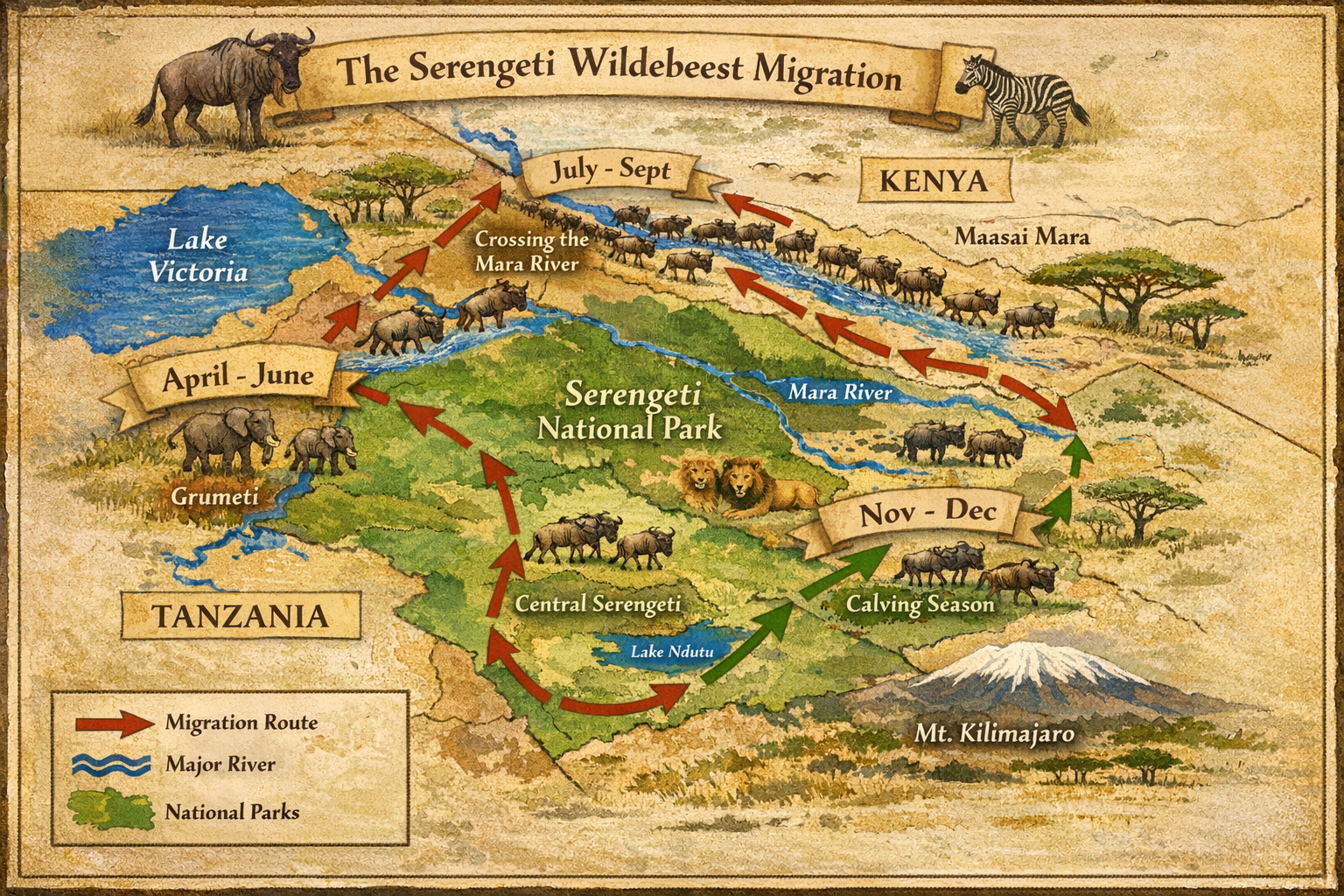
Serengeti Migration Dates
September: Herds Across the Northern Ecosystem
Expanding Into the Maasai Mara
September often finds major migration concentrations within northern Serengeti and the wider Maasai Mara ecosystem. The exact distribution depends on grazing and water conditions.
Some herds may remain in Tanzania, while others cross into Kenya. This cross-border movement demonstrates the enormous scale of the migration ecosystem.
The Serengeti Migration Dates therefore require flexibility. A traveller should select the appropriate region according to current conditions rather than rigid expectations.
September offers excellent wildlife viewing throughout the northern ecosystem. River crossings may still occur, while resident wildlife remains active across the landscape.
A Serengeti Great Migration Safari can include extended stays in northern Tanzania. Travellers may also combine the journey with Kenya for a wider East African experience.
Accommodation location remains particularly important during this season. Camps closer to likely wildlife areas can reduce travel times.
Moreover, a Hot Air Balloon Safari offers another perspective on the northern landscape where operators provide suitable flights. Floating above the plains creates unforgettable views of rivers, wildlife, and sunrise.
September therefore remains an excellent month for travellers seeking migration action, classic game viewing, and high-quality Africa Safaris.
Recommended Reading: Plan a Serengeti Safari in September
Recommended Reading: Where Will the Great Migration be in September?
October: The Final Northern Chapter
Grazing Before the Return
October often represents the later northern phase of the migration cycle. Many animals continue grazing across northern Serengeti and the Maasai Mara ecosystem.
The exact movement varies significantly. Some herds may begin responding to changing rainfall patterns farther south. Others can remain in northern grazing areas.
Therefore, the Serengeti Great Migration Calendar should remain flexible during October. Travellers can still enjoy excellent wildlife concentrations and potential river activity.
Predators remain an important part of the experience. Lions, leopards, cheetahs, and hyenas continue hunting throughout the ecosystem.
October can also provide excellent photographic conditions. Dry landscapes, open skies, and active wildlife create strong visual opportunities.
A Serengeti Safari during this period should include diverse activities. Guided game drives remain essential, while selected camps may offer walking experiences or cultural programmes.
Visitors can enjoy Maasai cultural activities around suitable lodge locations. These may include community walks, traditional music, beadwork demonstrations, and local storytelling experiences.
Consequently, October provides a rewarding alternative for travellers seeking northern migration experiences without relying on a specific crossing event.
Recommended Reading: Plan a Serengeti Safari in October
Recommended Reading: Where Will the Great Migration be in October?
November: The Short Rains Begin
Following the Herds South
November often brings changing conditions across the Serengeti ecosystem. The arrival of short rains can stimulate fresh grass farther south and east.
As grazing improves, many migration herds begin moving away from northern areas. The return journey marks another important stage within the Serengeti Great Wildlife Migration Calendar.
The movement can happen quickly when suitable rainfall arrives. Large groups may travel through eastern and central Serengeti while following new grazing opportunities.
November therefore offers an exciting period for travellers who enjoy changing landscapes. The scenery often becomes greener, while wildlife continues moving across broad areas.
A flexible Serengeti Safari works particularly well during this period. Guides can adjust routes according to recent herd positions.
The migration may appear less concentrated than during major calving periods. However, the movement itself creates fascinating wildlife scenes.
Selected safari lodges can also arrange cultural experiences with nearby communities. Travellers may visit local markets, enjoy traditional meals, and explore handicraft traditions.
November demonstrates why Great Migration Safaris should not focus only on river crossings. Every season offers different wildlife behaviour and unique safari rewards.
Recommended Reading: Plan a Serengeti Safari in November
Recommended Reading: Where Will the Great Migration be in November?
December: Return to the Southern Plains
Completing the Annual Cycle
December often brings the migration closer to southern Serengeti and the Ndutu region. Fresh grazing following seasonal rains attracts wildebeest, zebras, and gazelles.
The southern plains begin preparing for another important calving season. Pregnant wildebeest increasingly gather across productive grasslands.
The Serengeti Great Wildlife Migration Calendar therefore enters a new cycle. December creates a bridge between the northern return and the upcoming birth season.
Travellers can enjoy large wildlife concentrations across beautiful green landscapes. Predator sightings also remain rewarding because the ecosystem supports abundant prey.
A December Serengeti Safari can work well during holiday travel periods. Early planning becomes important because popular lodges may fill quickly.
Cultural activities can enrich the journey around selected safari camps and lodges. Maasai community experiences, traditional crafts, and local food activities can create meaningful memories.
Responsible cultural tourism should remain respectful and mutually beneficial. Deks Africa Safaris and Tours Ltd encourages carefully selected experiences that value local communities.
December completes another chapter within the Great Wildlife Migration Calendar. Soon, the cycle moves toward the southern calving season again.
Recommended Reading: Plan a Serengeti Safari in December
Recommended Reading: Where Will the Great Migration be in December?
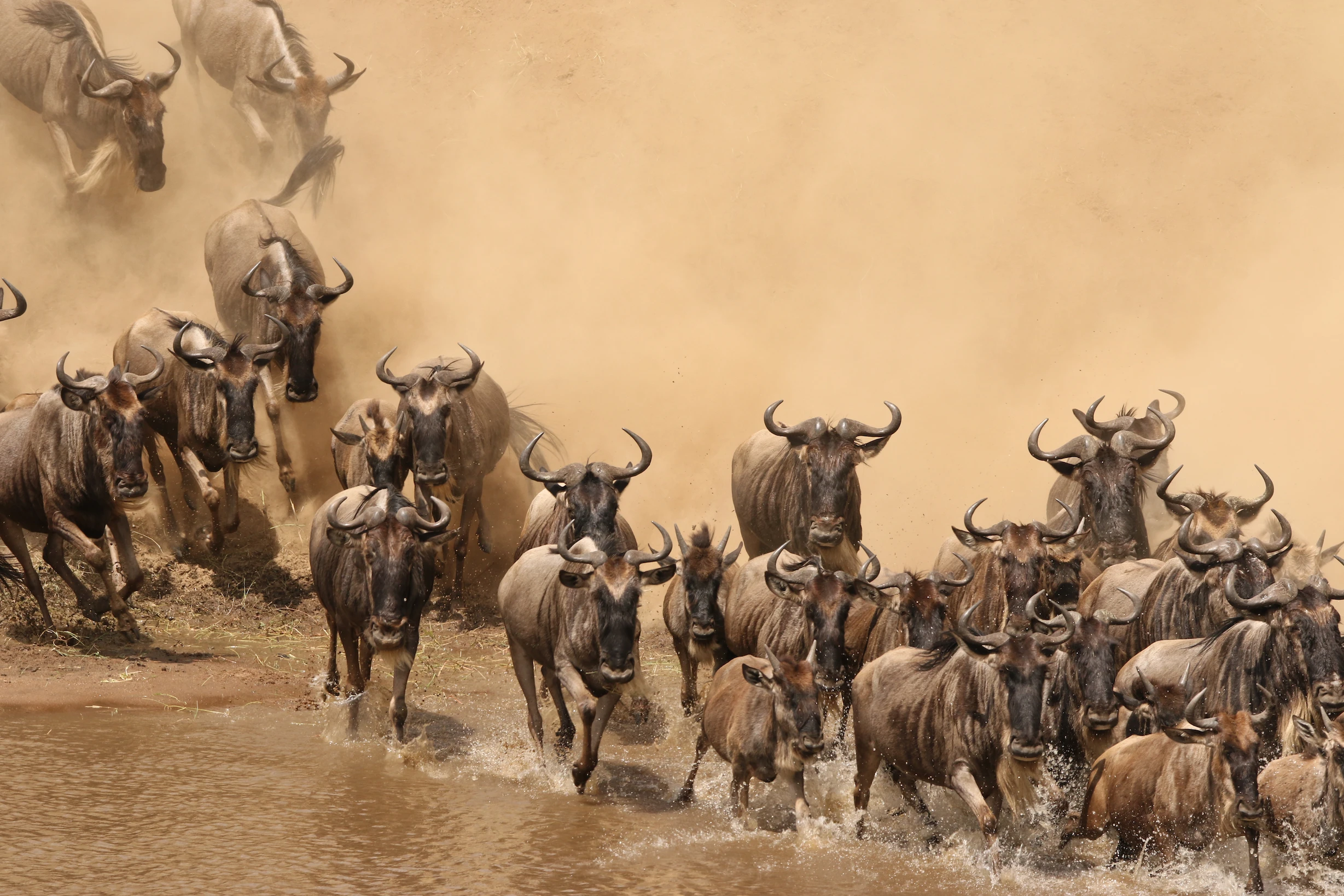
Tanzania Combo Guided Safari
Choosing the Best Serengeti Migration Dates
Match Your Safari to Your Wildlife Interests
The best Serengeti Migration Dates depend on your preferred wildlife experience. Travellers should first identify what they most want to witness.
January through March generally suits visitors interested in southern plains and calving activity. Large wildlife concentrations and predator encounters create memorable safari experiences.
May and June can appeal to travellers interested in mass movement and the Western Corridor. Long wildlife columns and potential Grumeti River activity create dramatic scenes.
July through October generally suits visitors interested in northern Serengeti and possible Mara River crossings. However, no specific crossing can receive a guarantee.
November and December suit travellers interested in the southern return journey. Fresh grass, changing landscapes, and moving herds create rewarding experiences.
Therefore, the Serengeti Great Migration Calendar should guide your planning rather than control it completely. Weather patterns always influence wildlife movement.
Deks Africa Safaris and Tours Ltd helps travellers select suitable destinations, routes, and accommodation based on realistic migration expectations.
A Serengeti Safari Beyond the Migration
Discover Resident Wildlife
A Serengeti Safari offers exceptional wildlife experiences even when migration herds remain elsewhere. The national park supports abundant resident wildlife throughout the year.
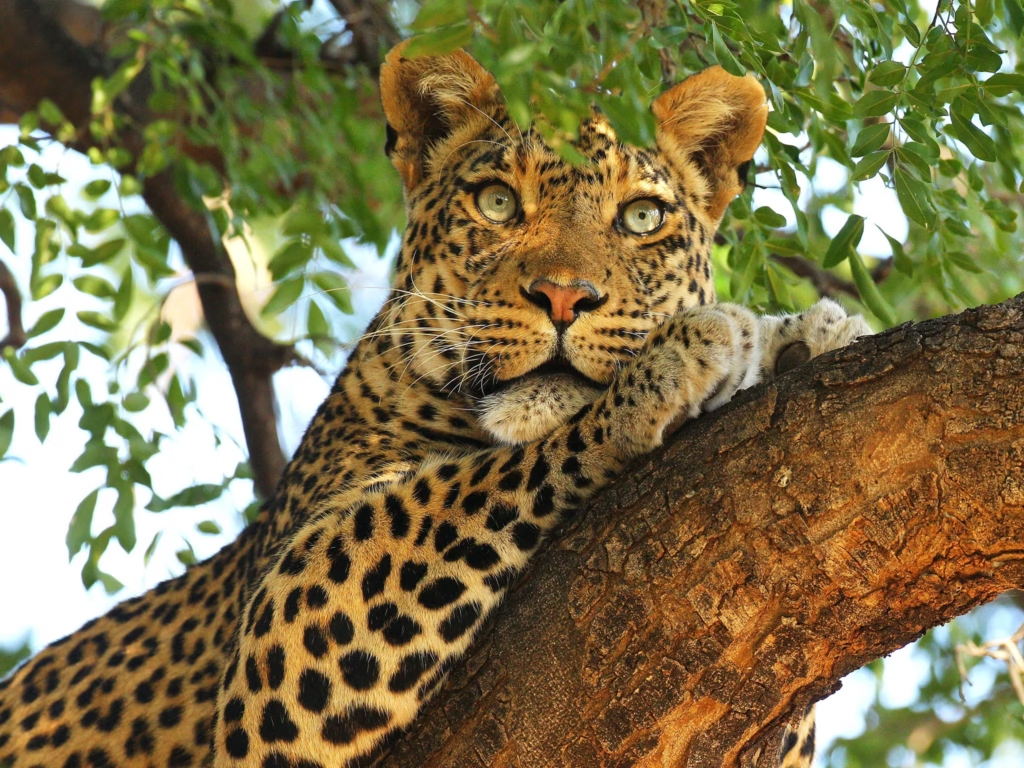
Lions inhabit many Serengeti regions and provide excellent game viewing opportunities. Leopards often rest near riverine woodlands and rocky areas. Cheetahs favour open plains where visibility supports hunting.
Elephants move through suitable habitats, while giraffes browse across woodland areas. Buffaloes, hyenas, jackals, hippos, and numerous antelope species also enrich the ecosystem.
Birdwatchers can enjoy a remarkable diversity of species. Large raptors, colourful smaller birds, and water-associated species provide additional interest.
Therefore, Tanzania Wildlife Safaris should include the entire ecosystem rather than one migration event. A well-planned itinerary balances migration tracking with broader wildlife exploration.
This approach reduces disappointment when herds change direction. Every day still offers opportunities for exceptional wildlife encounters.
The Serengeti remains one of Africa’s greatest wildlife destinations throughout the year.
Guided Game Drives in Serengeti National Park
Explore With Safari Expertise
Guided game drives remain the foundation of a successful Serengeti Safari. Professional guides understand animal behaviour, tracks, habitats, and the practical realities of safari travel.
Early morning drives often reveal active wildlife before temperatures rise. Predators may remain active, while herbivores graze across open landscapes.
Afternoon drives provide another opportunity to explore different habitats. Changing light can also improve photography and landscape viewing.
A skilled guide helps guests understand what they see. Wildlife viewing becomes more meaningful when travellers learn about behaviour, ecosystems, and conservation.
Furthermore, guides can adjust routes according to wildlife movements. This flexibility becomes especially important during Great Migration Safaris.
Deks Africa Safaris and Tours Ltd values knowledgeable guiding and responsible wildlife viewing. We believe a guide should add context, safety, and deeper understanding to every journey.
Guided exploration transforms a simple drive into a complete Africa Safari experience.
Hot Air Balloon Safari Over the Serengeti
See the Migration From Above
A Hot Air Balloon Safari offers a unique perspective on Serengeti National Park. The experience usually begins before sunrise and provides unforgettable views across the plains.
As the balloon rises, travellers can observe the landscape from above. Rivers, kopjes, woodland areas, and wildlife movements create extraordinary patterns below.
During migration periods, large herds can create remarkable scenes across the grasslands. However, balloon wildlife sightings depend on flight routes and natural conditions.
A Hot Air Balloon Safari complements traditional guided game drives. The two experiences provide completely different perspectives of the same ecosystem.
The peaceful flight also allows travellers to appreciate the enormous scale of the Serengeti. From above, the vastness of the landscape becomes easier to understand.
This activity works well for couples, photographers, and travellers celebrating special occasions. Advance planning remains important because availability can vary.
A balloon experience can therefore add a memorable highlight to Africa Adventure Tours and Tanzania Safaris.
Cultural Experiences Around Serengeti Safari Lodges
Connect With Tanzania’s Living Heritage
A safari near Serengeti National Park can include carefully selected cultural experiences. The exact activities depend on your lodge location and safari route.
Maasai cultural visits remain among the most popular options. Travellers can learn about pastoral traditions, traditional homesteads, clothing, crafts, and livestock practices.
Visitors may also watch traditional music and dance performances. Local artisans can demonstrate beadwork and other creative skills. Purchasing crafts directly from artisans can support local livelihoods.
Some journeys can include community walks and visits to local markets. These experiences provide insight into everyday life beyond the national park.
Near the Ngorongoro and southern Serengeti areas, cultural experiences may include Maasai communities and selected local heritage activities. Each visit should follow respectful tourism practices.
Travellers should avoid treating communities as tourist attractions. Meaningful cultural experiences require curiosity, respect, consent, and responsible guidance.
Deks Africa Safaris and Tours Ltd supports experiences that create genuine value for both visitors and host communities.
Consequently, cultural encounters can add depth to a Serengeti Great Migration Safari and create a more complete understanding of Tanzania.
Serengeti Safari Accommodation and Camp Locations
Stay Close to the Wildlife Action
Accommodation location can significantly influence your Serengeti Safari experience. A well-positioned lodge or camp reduces long daily driving distances.
Migration-focused safaris often benefit from seasonal camps. These camps may operate near likely migration areas during specific periods.
For southern migration experiences, accommodation around Ndutu can provide convenient access to calving grounds. Central Serengeti camps often suit travellers seeking resident wildlife and flexible exploration.
Western Serengeti accommodation can support Grumeti-focused itineraries. Northern camps near Kogatende can provide easier access to Mara River areas.
However, seasonal wildlife movement can change quickly. Therefore, camp selection should consider current migration information and expected conditions.
A good itinerary may also use more than one accommodation location. Moving between regions allows travellers to follow the migration while exploring different Serengeti habitats.
Deks Africa Safaris and Tours Ltd can help travellers select accommodation according to travel dates, comfort preferences, and wildlife priorities.
The right lodge location creates more time for wildlife and less unnecessary time on the road.
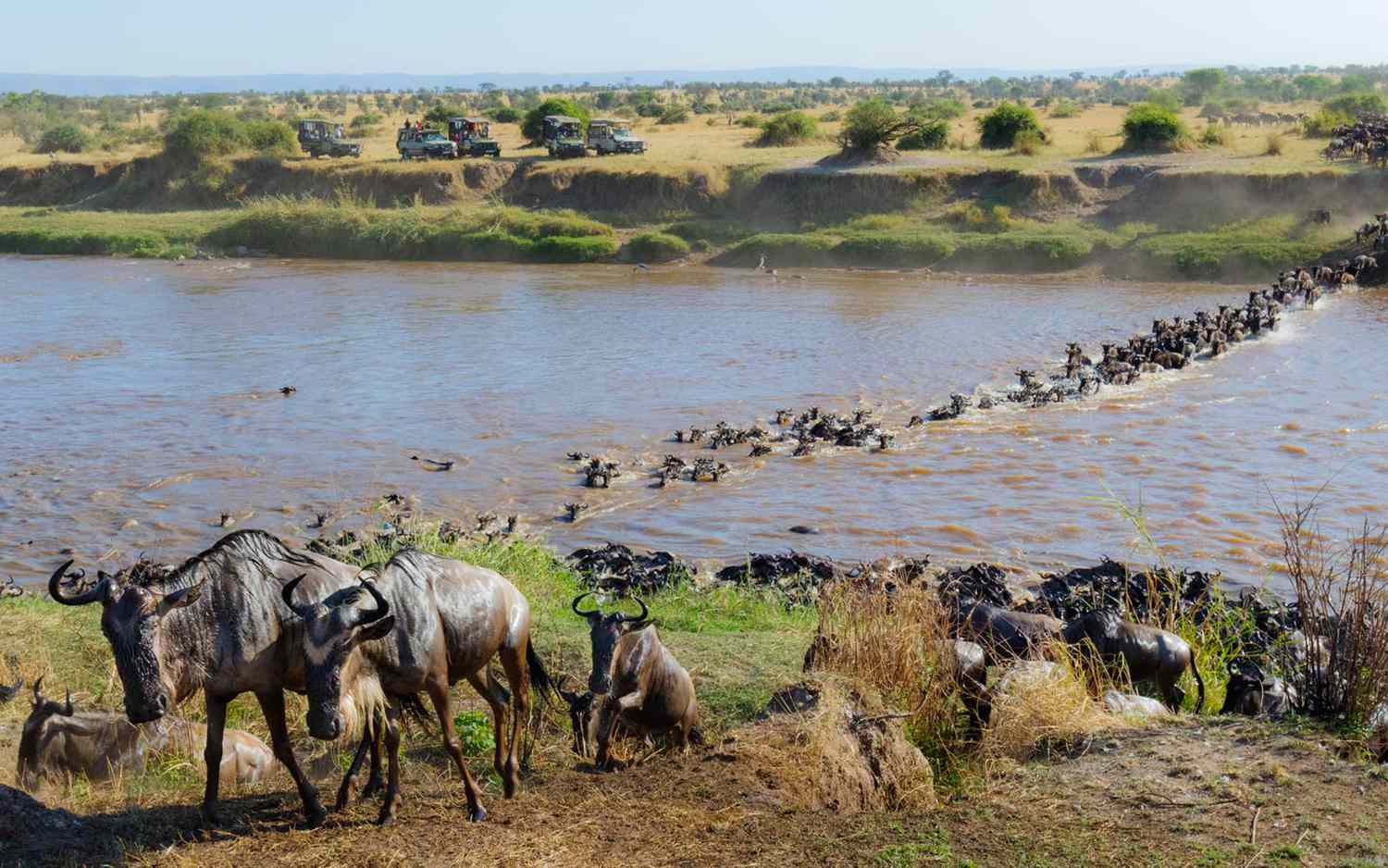
Great Wildebeest Migration in Tanzania
Tanzania Safaris Beyond Serengeti
Create a Complete Northern Circuit Adventure
Tanzania Safaris can combine Serengeti National Park with several other remarkable destinations. The northern circuit offers excellent opportunities for wildlife, landscapes, and cultural exploration.
Ngorongoro provides dramatic scenery and concentrated wildlife viewing within its famous conservation landscape. Tarangire offers elephants, baobab trees, and seasonal wildlife movements.
Lake Manyara can add forest, lake scenery, and birdlife to a broader itinerary. These destinations create a diverse safari experience alongside the Serengeti.
Combining parks also improves wildlife variety. Travellers experience different habitats and animal concentrations throughout their journey.
A carefully planned itinerary can include a Serengeti Great Migration Safari and other classic Tanzania Wildlife Safaris experiences.
Cultural activities can also connect these destinations. Maasai community visits, local markets, craft centres, and food experiences can enrich the journey.
Therefore, Tanzania offers more than one famous migration. The country’s diversity creates opportunities for complete Africa Adventure Tours.
Great Migration Safaris for Photographers
Capture Movement and Wildlife Behaviour
Photographers find exceptional opportunities during Great Migration Safaris. The Serengeti offers dramatic wildlife action, wide landscapes, and changing natural light.
However, successful photography requires patience. Animal behaviour cannot follow a predetermined schedule. A crossing may occur suddenly or not during a particular viewing period.
Longer stays can therefore improve photographic opportunities. Spending several nights in one migration region allows more time to observe wildlife behaviour.
Early mornings and late afternoons often provide softer light. These periods can also coincide with increased wildlife activity.
A professional safari guide can position the vehicle responsibly while respecting wildlife space. Ethical photography should never interfere with natural animal behaviour.
The Great Wildlife Migration provides subjects beyond dramatic crossings. Calving, grazing, mating, predator behaviour, and long-distance movement all create powerful photographic stories.
A Serengeti Safari therefore offers rewarding opportunities for beginners and experienced photographers alike.
Family-Friendly Africa Safaris
Create Meaningful Travel Memories
Families can enjoy carefully planned Africa Safaris in Tanzania. However, the itinerary should match children’s ages, interests, and travel comfort.
Shorter driving days often improve the family experience. Well-located lodges can also provide comfortable spaces for rest between activities.
Wildlife viewing creates natural educational opportunities. Children can learn about animal behaviour, ecosystems, conservation, and cultural diversity.
A family Serengeti Safari should balance game drives with relaxation. Too many long activities can reduce enjoyment.
Some accommodation options offer family rooms or connected arrangements. Early booking can improve access to suitable choices.
Cultural experiences can also create meaningful family memories. Crafts, music, food, and guided community activities may help younger travellers connect with Tanzania.
Deks Africa Safaris and Tours Ltd can tailor Africa Adventure Tours according to family needs and preferred travel styles.
Responsible Tourism and Wildlife Conservation
Travel With Respect for Nature
The Great Wildlife Migration depends on healthy ecosystems, open landscapes, and responsible conservation. Visitors therefore play an important role through thoughtful travel choices.
Responsible safari practices include respecting wildlife distance and following park regulations. Visitors should never pressure guides to approach animals too closely.
Travellers can also choose operators committed to ethical wildlife viewing and responsible community engagement. These choices help protect the destinations that make Africa Safaris possible.
Plastic reduction, proper waste management, and respect for local cultures also support responsible tourism.
Furthermore, travellers should understand that wildlife sightings remain unpredictable. Nature provides authentic experiences without guarantees.
A responsible Serengeti Safari values the complete ecosystem rather than one dramatic photograph. Every species and habitat contributes to the landscape’s ecological balance.
Deks Africa Safaris and Tours Ltd encourages respectful travel that values conservation, communities, and authentic experiences.
Planning Your Serengeti Great Migration Safari
Start With Your Travel Priorities
Planning begins with a simple question. What wildlife experience matters most to you?
Travellers seeking calving should focus on southern Serengeti periods. Visitors seeking mass movement can consider western and central migration routes.
Those hoping for Mara River action should consider northern Serengeti during the traditional crossing season. However, travellers should allow flexibility because crossings remain unpredictable.
Comfort preferences also influence planning. Luxury lodges, tented camps, mid-range accommodation, and budget options offer different experiences.
Trip duration matters as well. A longer journey provides greater flexibility and more time for wildlife viewing.
International travellers should also plan arrival logistics, accommodation, travel insurance, and necessary travel documentation.
Deks Africa Safaris and Tours Ltd can create tailored Tanzania Safaris based on your dates, budget, travel style, and wildlife interests.
How Many Days Do You Need?
Allow Time for Wildlife
A short Serengeti visit can provide rewarding wildlife viewing. However, migration-focused travel benefits from additional time.
Three or four nights in one region can allow deeper exploration. Travellers gain more opportunities to follow wildlife movements and changing conditions.
Longer Great Migration Safaris can include several Serengeti regions. This approach creates flexibility when herds move unexpectedly.
A seven-day journey can combine Serengeti with another northern circuit destination. Longer itineraries can provide a more relaxed pace.
Travellers seeking a Hot Air Balloon Safari should also allow sufficient time for weather-related adjustments.
Therefore, itinerary length should reflect your priorities. A carefully paced safari often provides a better experience than a rushed schedule.
Best Time for a Serengeti Safari
Every Season Offers Something Different
There is no single best month for every traveller. The ideal season depends on your wildlife priorities.
January and February often attract visitors interested in southern herds and calving. March offers changing conditions and continued wildlife activity.
April and May provide greener landscapes and movement toward western areas. June can bring Western Corridor action and potential Grumeti crossings.
July through October remain popular for northern migration experiences. Mara River activity attracts travellers from around the world.
November brings the possibility of southward movement following seasonal rains. December introduces renewed grazing across southern areas.
Therefore, the Serengeti Great Wildlife Migration Calendar offers valuable planning guidance throughout the year.
Why Choose Deks Africa Safaris and Tours Ltd?
Experience Tanzania with Confidence
Deks Africa Safaris and Tours Ltd creates journeys that focus on meaningful wildlife experiences and practical travel planning. We understand that every traveller has different priorities.
Some guests dream of the southern calving season. Others want dramatic northern river crossings or a peaceful balloon flight above the plains.
Therefore, we help travellers design safaris around their interests. We consider travel dates, wildlife priorities, accommodation preferences, and available time.
Our approach focuses on realistic planning. We explain that Serengeti Migration Dates can change because rainfall influences wildlife movement.
This honest approach helps travellers prepare for an authentic experience. Wildlife remains free, and nature always determines the final story.
We also encourage travellers to explore Tanzania beyond a single migration event. Resident wildlife, landscapes, cultural experiences, and conservation stories all add value.
A well-designed Serengeti Safari should feel personal, informative, and memorable.
Final Thoughts on the Serengeti Great Wildlife Migration Calendar
The Serengeti Great Wildlife Migration Calendar remains one of the best tools for planning a migration-focused safari. However, travellers should use it with flexibility and realistic expectations.
Rainfall determines the movement of grass, water, and grazing animals. Consequently, the migration can arrive earlier or later than traditional estimates suggest.
Still, every month offers remarkable wildlife opportunities. January brings southern herds. February highlights calving. May and June reveal major movement toward western regions.
July through October can provide northern migration action and possible river crossings. November and December begin the journey toward southern grazing grounds.
The Serengeti Great Wildlife Migration Calendar therefore represents a living cycle rather than a fixed timetable. This unpredictability makes the experience even more remarkable.
A Serengeti Great Migration Safari offers much more than one famous wildlife event. It reveals the relationships between rainfall, grass, herbivores, predators, rivers, and landscapes.
Deks Africa Safaris and Tours Ltd invites you to explore Tanzania through expertly planned Tanzania Safaris, authentic cultural experiences, and unforgettable wildlife encounters.
Whether you choose calving season, river crossings, or a Hot Air Balloon Safari, the Serengeti offers extraordinary experiences.
The Serengeti Great Wildlife Migration Calendar can guide your journey. Nature will provide the adventure.
Proposed East Africa Safari Holidays for the USA Travelers
- 9-Day Rwanda & Tanzania Luxury Wildlife Tour
- 9-Day Rwanda, Uganda & Tanzania Luxury Wildlife Safari
- 9-Day Rwanda Gorilla Trekking & Tanzania Safari
- 9-Day Tanzania Safari & Uganda Gorilla Trekking
- 10-Day Serengeti & Ngorongoro Crater Safari Experience
- 10-Day Tanzania and Rwanda Adventure Safari
- 11-Day Rwanda Uganda Tanzania Safari
- 20 Days Uganda, Tanzania, and Mafia Island Beach Safari
- 18 Days Uganda, Tanzania, and Mafia Island Beach Safari
- 14-Day Rwanda Uganda Tanzania Tour
- 14-Day Rwanda, Kenya, Tanzania & Beach Holiday
- 20-Day Rwanda Tanzania Zanzibar Safari Experience
- 16-Day Tanzania Safari & Rwanda Gorilla Trekking Experience
- 14 Days Kenya-Tanzania-Rwanda-Uganda Safari
- 24 Days Zanzibar-Uganda-Tanzania-Kenya Safari
- 5 Days Serengeti Great Migration Safari
- 6 Days Serengeti Great Migration Safari
- 7 Days Serengeti Great Migration Safari
- 8 Days Serengeti Great Migration Safari
Recommended Reading About Serengeti Great Wildlife Migration Calendar
Can families enjoy Serengeti Wildlife Safaris?
Can families enjoy Serengeti Wildlife Safaris? Can families enjoy Serengeti Wildlife Safaris? Absolutely, with thoughtful planning and the right safari […]
The Ultimate Serengeti Great Migration Travel Guide
The Ultimate Serengeti Great Migration Travel Guide The Ultimate Serengeti Great Migration Travel Guide introduces one of Africa’s most remarkable […]
The Great Migration
The Great Migration: Africa’s Ultimate Race for Life The Great Migration takes travelers into one of the planet’s greatest wildlife […]
Tanzania Great Migration Safari
Tanzania Great Migration Safari A Tanzania Great Migration Safari offers one of the world’s most extraordinary wildlife experiences. Millions of […]
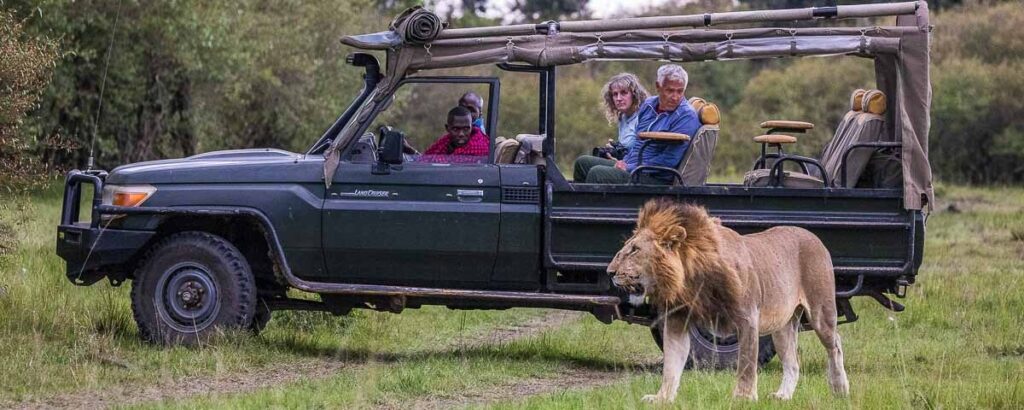
Serengeti Safari Areas
Serengeti Safari Areas: A Complete Guide to Exploring Serengeti National Park Serengeti Safari Areas offer some of Africa’s most remarkable […]
Serengeti Great Wildlife Migration Safari Cost
Serengeti Great Wildlife Migration Safari Cost Understanding the Serengeti Great Wildlife Migration Safari Cost helps travelers plan one of Africa’s […]
Going on a Tanzania Safari in Serengeti National Park
Going on a Tanzania Safari in Serengeti National Park Going on a Tanzania Safari in Serengeti National Park offers an […]
A Complete Map Guide to the Great Migration Route
A Complete Map Guide to the Great Migration Route A Complete Map Guide to the Great Migration Route introduces one […]
Are Serengeti Migration Dates Exact?
Are Serengeti Migration Dates Exact? Are Serengeti Migration Dates Exact? This question matters when planning a successful wildlife adventure in […]
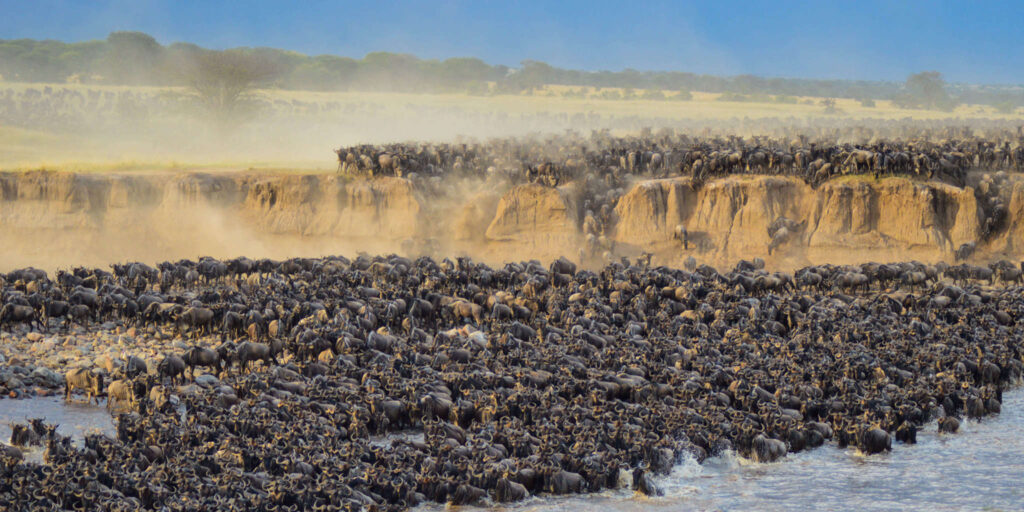
Serengeti Migration Dates
Serengeti Migration Dates: Complete Guide to the Great Wildlife Migration Serengeti Migration Dates provide an important guide for planning one […]
Wildlife Photography Tips for Serengeti Safaris
Wildlife Photography Tips for Serengeti Safaris Wildlife Photography Tips for Serengeti Safaris can transform your safari into a rewarding visual […]
Walking Safari Experiences Near the Serengeti
Walking Safari Experiences Near the Serengeti Walking Safari Experiences Near the Serengeti provide a deeper connection with Tanzania’s extraordinary wilderness. […]
The Best Serengeti National Park Areas for the Migration
The Best Serengeti National Park Areas for the Migration The Best Serengeti National Park Areas for the Migration depend on […]
Small Group Safaris to Serengeti National Park
Small Group Safaris to Serengeti National Park Small Group Safaris to Serengeti National Park offer an exciting way to explore […]
Serengeti Migration Versus Maasai Mara Migration
Serengeti Migration Versus Maasai Mara Migration The Serengeti Migration Versus Maasai Mara Migration comparison helps travelers understand one remarkable ecosystem. […]
Serengeti Great Migration Family Safaris
Serengeti Great Migration Family Safaris Serengeti Great Migration Family Safaris create unforgettable opportunities for parents and children. Families can explore […]
Luxury Versus Budget Great Migration Safaris
Luxury Versus Budget Great Migration Safaris Luxury Versus Budget Great Migration Safaris offer different ways to experience Africa’s greatest wildlife […]
June Versus July for Serengeti River Crossings
June Versus July for Serengeti River Crossings June Versus July for Serengeti River Crossings creates an exciting choice for travelers […]
How to Plan a Serengeti Great Migration Safari
How to Plan a Serengeti Great Migration Safari How to Plan a Serengeti Great Migration Safari requires careful timing, location […]
How to Book a Private Serengeti Great Migration Safari?
How to Book a Private Serengeti Great Migration Safari How to Book a Private Serengeti Great Migration Safari requires thoughtful […]
How Much Does a Serengeti Great Migration Safari Cost?
How Much Does a Serengeti Great Migration Safari Cost? How Much Does a Serengeti Great Migration Safari Cost? This question […]
Hot Air Balloon Safaris During the Great Migration
Hot Air Balloon Safaris During the Great Migration Hot Air Balloon Safaris During the Great Migration create one of Africa’s […]
Honeymoon Safaris and the Serengeti Migration
Honeymoon Safaris and the Serengeti Migration Honeymoon Safaris and the Serengeti Migration create an unforgettable journey across Tanzania’s most iconic […]
Fly-in Versus Driving During a Serengeti Migration Safari
Fly-in Versus Driving During a Serengeti Migration Safari Fly-in Versus Driving During a Serengeti Migration Safari is an important decision […]
February Versus August for a Great Migration Safari
February Versus August for a Great Migration Safari: Choosing the Right Season Choosing between February and August can shape your […]
Choosing the Best Time for a Great Migration Safari
Choosing the Best Time for a Great Migration Safari Choosing the Best Time for a Great Migration Safari can transform […]
Best Lodges for Serengeti Great Migration Safari
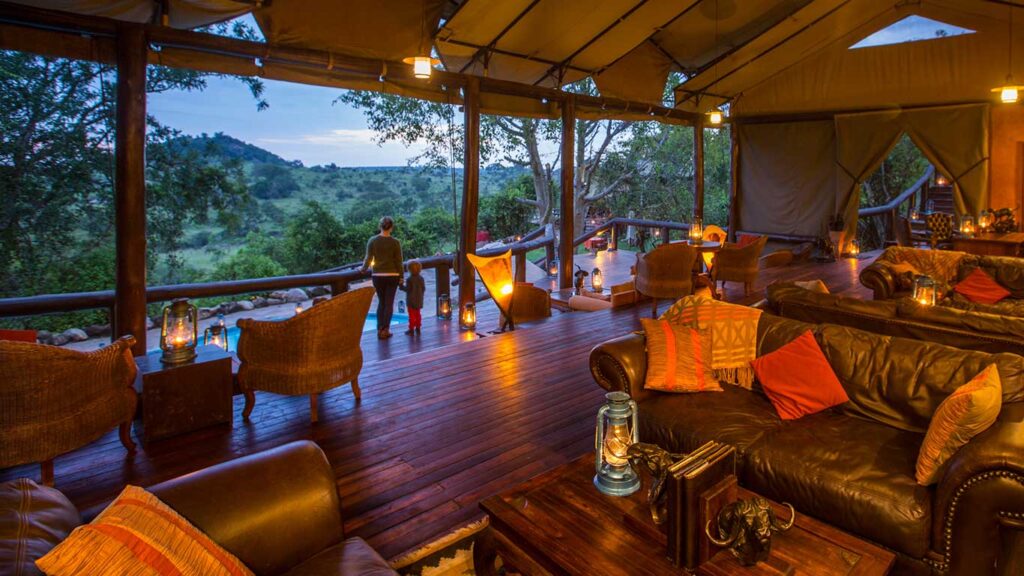
Best Lodges for Serengeti Great Migration Safari Best Lodges for Serengeti Great Migration Safari can transform an already remarkable journey […]
Best Airstrips in Serengeti National Park
Best Airstrips in Serengeti National Park The Best Airstrips in Serengeti National Park depend on your safari region and travel […]
August Versus September for the Wildebeest Migration
August Versus September for the Wildebeest Migration August Versus September for the Wildebeest Migration presents one of Africa’s most exciting […]
What Is the Best Month to See the Great Migration?
What Is the Best Month to See the Great Migration? What Is the Best Month to See the Great Migration? […]
The Best Time to Visit the Western Corridor of Serengeti National Park
The Best Time to Visit the Western Corridor of Serengeti National Park The Best Time to Visit the Western Corridor […]
The Best Time to Visit the Central Serengeti
The Best Time to Visit the Central Serengeti The Best Time to Visit the Central Serengeti depends on your safari […]
The Best Time to Visit Northern Serengeti
The Best Time to Visit Northern Serengeti The Best Time to Visit Northern Serengeti depends on your safari goals, wildlife […]
The Best Time to See Mara River Crossings
The Best Time to See Mara River Crossings The Best Time to See Mara River Crossings generally falls between August […]
The Best Time to See Great Wildebeest Calving
The Best Time to See Great Wildebeest Calving The Best Time to See Great Wildebeest Calving falls between late January […]
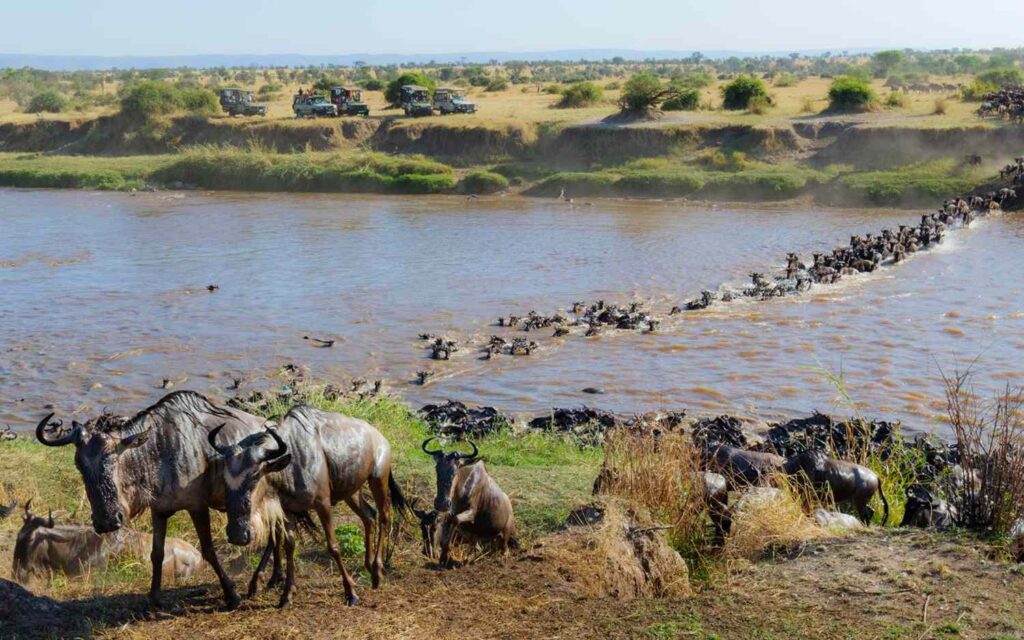
The Best Great Migration Safari for Photographers
The Best Great Migration Safari for Photographers The Best Great Migration Safari for Photographers combines wildlife action, dramatic landscapes, cultural […]
The Best Great Migration Safari for Families
The Best Great Migration Safari for Families: An Unforgettable Family Adventure The Best Great Migration Safari for Families combines extraordinary […]
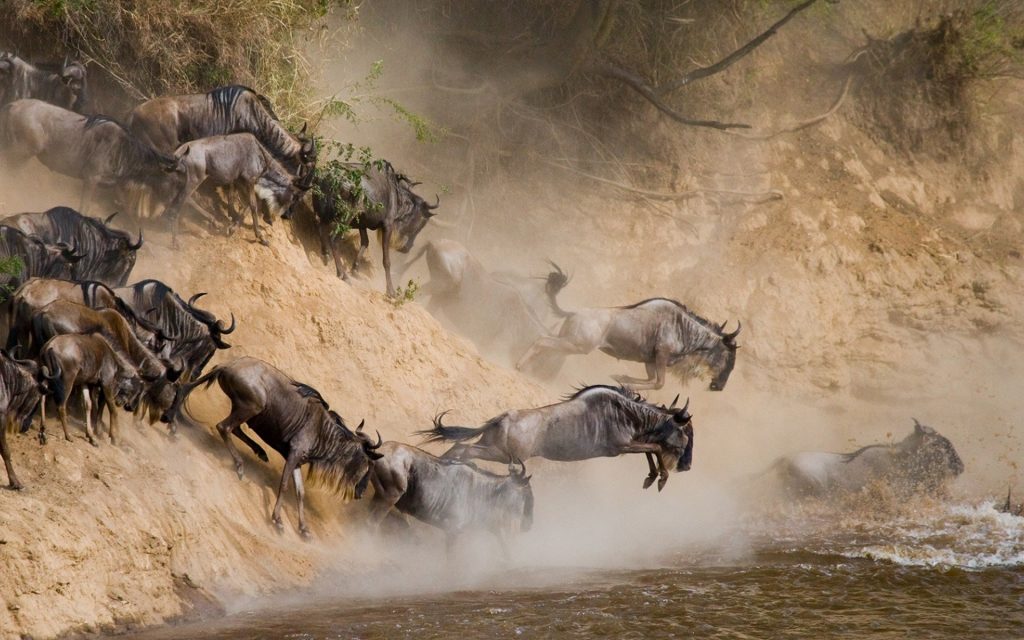
The Best Great Migration Safari for Budget Travelers
The Best Great Migration Safari for Budget Travelers The Best Great Migration Safari for Budget Travelers combines affordability, wildlife, adventure, […]
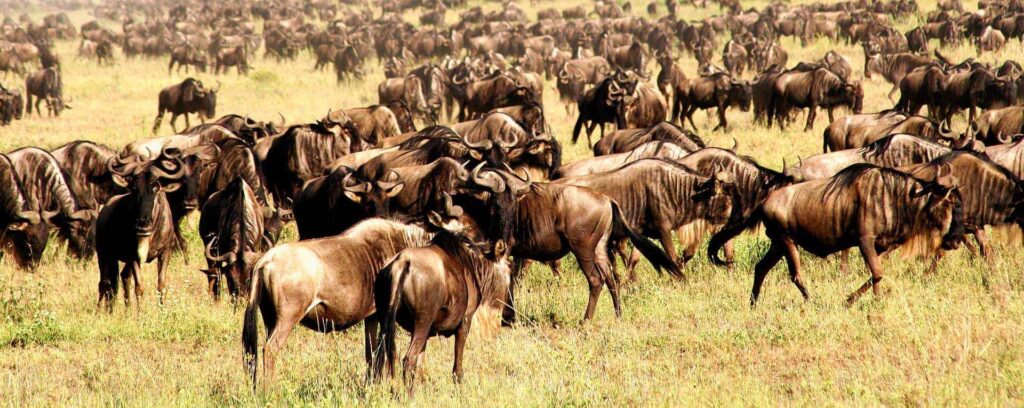
How to Choose the Right Month for Your Serengeti Safari?
How to Choose the Right Month for Your Serengeti Safari? How to Choose the Right Month for Your Serengeti Safari […]
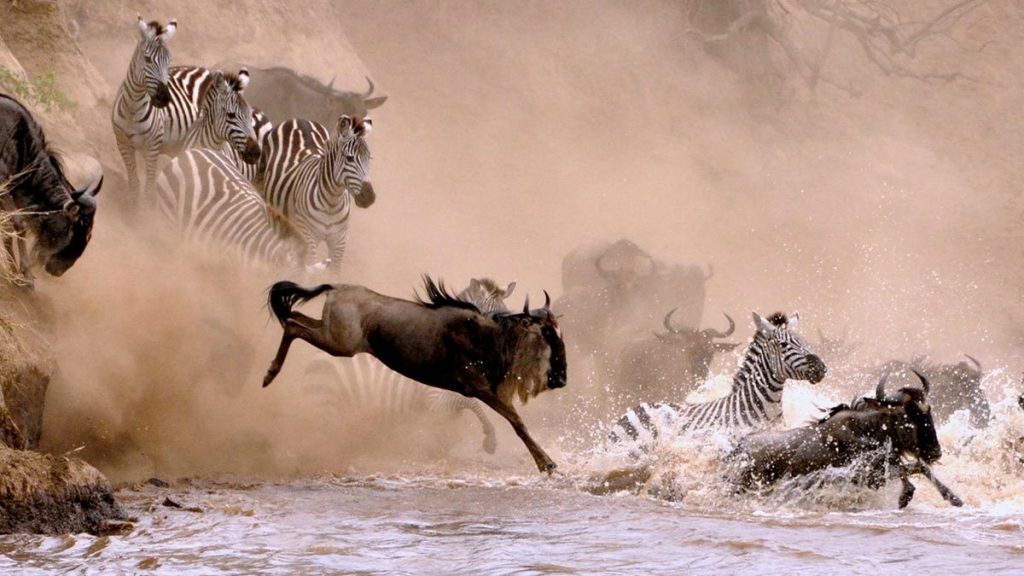
Calving Season Versus River Crossing Season
Calving Season Versus River Crossing Season Calving Season Versus River Crossing Season presents two extraordinary ways to experience Tanzania’s Great […]
Serengeti National Park Safari
Serengeti National Park Safari Discover Tanzania’s Legendary Wildlife Destination A Serengeti National Park Safari delivers one of Africa’s greatest wildlife […]
Where Is the Migration in September?
Where Is the Migration in September? Where Is the Migration in September? September can continue offering exceptional migration viewing across […]
Where Is the Migration in October?
Where Is the Migration in October? Where Is the Migration in October? October can still offer excellent migration experiences across […]
Where Is the Migration in November?
Where Is the Migration in November? Where Is the Migration in November? November often marks an important transition within the […]
Where Is the Migration in May?
Where Is the Migration in May? Where Is the Migration in May? May often brings spectacular movement across central and […]
Where Is the Migration in March?
Where Is the Migration in March? Where Is the Migration in March? March can continue offering remarkable southern Serengeti migration […]
Where Is the Migration in June?
Where Is the Migration in June? Where Is the Migration in June? June often brings significant migration movement toward the […]
Where Is the Migration in July?
Where Is the Migration in July? Where Is the Migration in July? July can bring major migration movement toward northern […]
Where Is the Migration in January?
Where Is the Migration in January? Where Is the Migration in January? January commonly finds major migration herds in southern […]
Where Is the Migration in February?
Where Is the Migration in February? Where Is the Migration in February? February often finds large migration herds across southern […]
Where Is the Migration in December?
Where Is the Migration in December? Where Is the Migration in December? December can bring increasing herd movement toward southern […]
Where Is the Migration in April?
Where Is the Migration in April? Where Is the Migration in April? April often brings an important transition within the […]
When Is the Best Time to See the Great Wildebeest Migration?
When Is the Best Time to See the Great Wildebeest Migration? When Is the Best Time to See the Great […]
When Do Wildebeest Give Birth?
When Do Wildebeest Give Birth? When Do Wildebeest Give Birth? This question guides travelers planning one of Africa’s most exciting […]
When Do Wildebeest Cross the Mara River?
When Do Wildebeest Cross the Mara River? When Do Wildebeest Cross the Mara River? This question attracts travelers planning an […]
What Triggers the Serengeti Migration?
What Triggers the Serengeti Migration? What triggers the Serengeti migration remains one of the most fascinating questions for Africa Safari […]
What Are Serengeti Migration Dates?
What Are Serengeti Migration Dates? What Are Serengeti Migration Dates? This question helps travelers understand one of Africa’s greatest natural […]
Serengeti Safari in September
Serengeti Safari in September: The Final Act of the Great Migration A Serengeti Safari in September offers exceptional wildlife viewing […]
Serengeti Safari in October
Serengeti Safari in October: A Tranquil End to the Dry Season A Serengeti Safari in October offers exceptional wildlife viewing, […]
Serengeti Safari in November
Serengeti Safari in November: The Start of the Green Season A Serengeti Safari in November offers a refreshing change across […]